Ghost in the Cell review – Indonesian prison-slasher-satire contains the most unhinged punch-up in decades
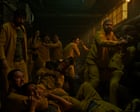
Given the 2020s horror boom, Indonesia’s prolific Joko Anwar – who has worked more often in that genre than any other – should be better known. Using horror for social commentary, as Anwar has done often in the past, this prison-slasher-satire features the kind of scabrous broadsides against injustice you see in Bong Joon-ho’s films, and Park Chan-wook’s recent No Other Choice. But in skewering the corruption and hypocrisy of the director’s native country, it has its own likable silliness and raucous energy. As the inmates keep saying: this is Indonesia, not Norway!
Fitted up for the murder of his boss, who is found gutted and spreadeagled on a ceiling fan, timid investigative journalist Dimas (Endy Arfian) winds up in the slammer. But murder, immediately followed by the flamboyant flaying of the victim, dogs him wherever he goes: the prison hitman assigned to dispose of him is in turn found in the washroom rendered into flesh origami. Charismatic prison refusenik Anggoro (Abimana Aryasatya) takes Dimas under his wing; as the victims stack up, an apparently clairvoyant member of his clique called Six (Yoga Pratama) admits that all of them manifested a red aura, signifying anger, prior to dying.
You suspect Anwar himself is no stranger to the old red aura from time to time: from the warden-facilitated drug-dealing network to the separate wing of pampered elitist offenders, his film overspills with droll outrage over Indonesian corruption. Dimas’s exposé of an illegal forestry scheme is what appears to have dislodged the demonic entity that is now attached to him, and feeding off the local abundance of negative energy. But Six figures out that partaking in wholesome activities, like praying and dancing, lowers their chances of being picked off.
Little more than a string of showpiece slaughters, Ghost in the Cell’s thin plot is really an excuse for Anwar to reel off his hitlist: he takes aim at cronyism, institutional brutality, private militias, secret mistresses, lapsed political idealism and the general degrading influence of money. But his film kidney-punches even harder when fully disguised and dramatised as comedy. This includes scenes where the aura-obsessed lags take a sudden interest in Qur’anic and twerking classes, and the most unhinged punch-up since John Carpenter’s They Live, during which Anggoro must periodically break into dancing to de-escalate his rage. Dynamically shot by Anwar, this is a very enjoyable blend of grand-guignol camp and political manifesto.
KioskNews shows a cleaned-up reading view extracted from the publisher’s page — the original always lives on their site, not ours.