‘I went to IIT Guwahati to study BTech, but found my calling on the javelin track’ | Life in an IIT
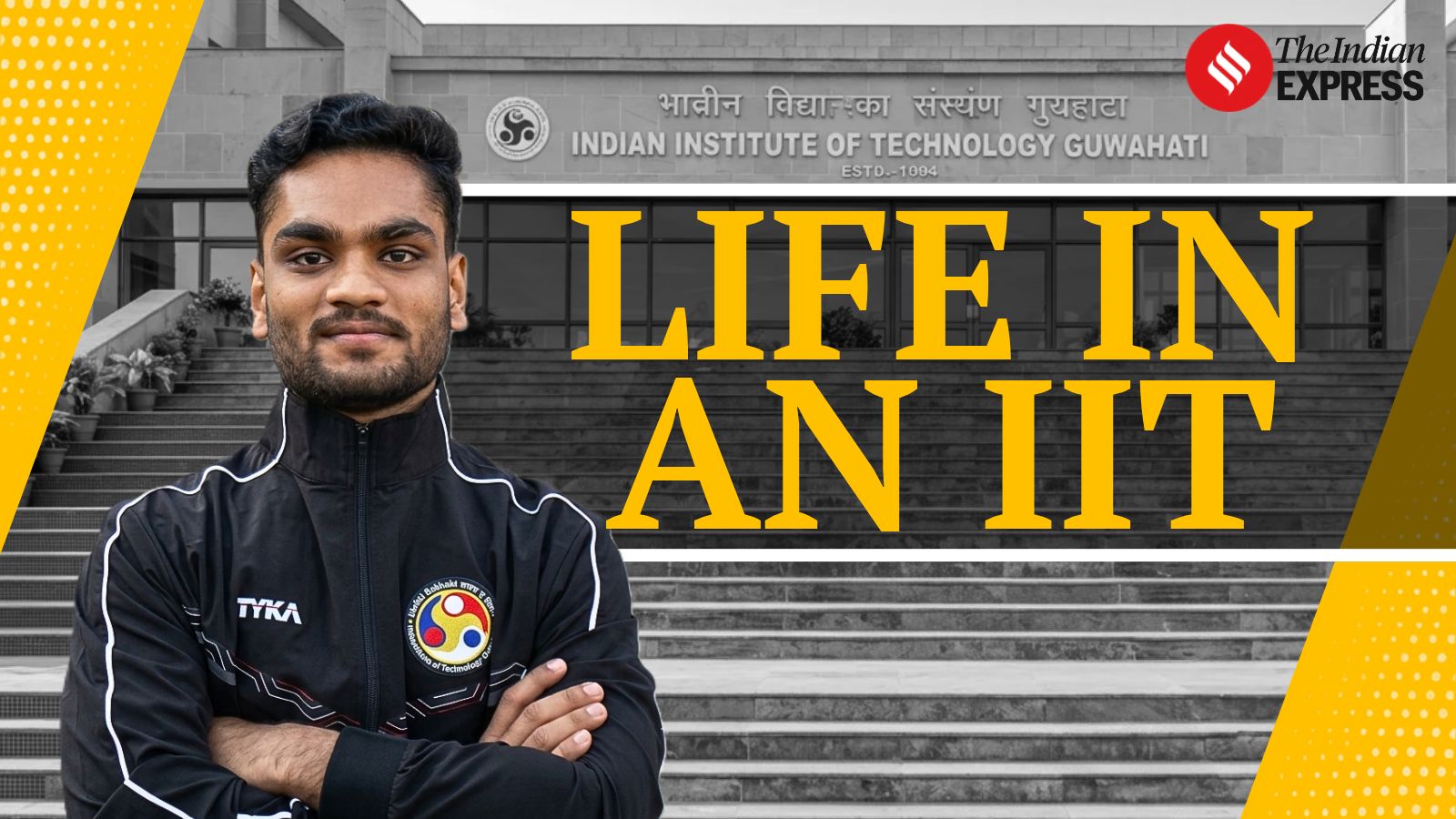
I grew up in a house where education was taken very seriously. Both my parents are teachers. My grandfather is a retired professor from a degree college. Learning, academics, the idea of building a career through study — these were not aspirations in my household; they were assumptions. When I left Azamgarh after Class 10 and moved to Kota for JEE preparation, nobody had javelin in mind.
I am 20 years old, from Azamgarh in Uttar Pradesh, and I am currently in my third year of Chemical Engineering at IIT Guwahati. My JEE Main rank was AIR 4716, and my JEE Advanced rank was 5013. What I could not have told you when I arrived here was that the most significant part of my IIT experience would have very little to do with chemical engineering.
Kota was a useful education in its own way. Moving at 16, managing your own schedule, learning to study in a room full of people who are all preparing for the same exam, it teaches you quickly that consistency matters more than intensity. You can have a great day of preparation, and it counts for nothing if you disappear for a week after. By the time I sat for JEE in 2024, I had a clearer sense of how I worked, what I needed, and how I dealt with pressure.
I chose Chemical Engineering at IIT Guwahati for the combination of science and practical application, and for the campus itself, I had heard enough about IIT Guwahati to know it was a place where you could build something beyond your department.
Assam, a genuinely new territory
Coming from Uttar Pradesh, Assam was genuinely new territory. A different region, different food, a different cultural pace. But the adjustment happened faster than I expected, mostly because everyone around me was in some version of the same situation, figuring out a new city, a new routine, new people. I got involved in Alcheringa, E-Cell, and the Consulting and Analytics Club. I started attending sports events. And somewhere in there, I tried athletics.
I had not been a competitive athlete in school. But something about the training clicked. I started with javelin. It is a specific and unusual choice, and I am aware of that. There is a particular discipline that throwing a javelin requires: technique, timing, a concentrated explosive effort followed by complete stillness. I kept coming back to it. I took up strength training and weightlifting alongside athletics, and over time sport became a fixed part of my daily life, not just as preparation for competition but as something I genuinely needed. It gave me a break from academic work that nothing else quite replicated. After a long training session, I could think more clearly than I had before it.
Story continues below this ad
I eventually represented IIT Guwahati in the Inter-IIT Sports Meet through athletics. Being part of Inter-IIT is different from participating in sports within campus. When you are representing an institute, you feel that responsibility differently; you are not competing only for yourself. I did not come back with a medal. But I came back with a clearer sense of what sport meant to me, and with my eyes open to what it took to actually organise something at that scale.
That was where things began to shift. I started noticing the work that happened behind the preparations, the coordination, the logistics, the decisions that had to be made long before any athlete stepped on a track. Someone had to manage all of that. I grew curious about how the Sports Board functioned, how competitions were put together, how the institute’s sporting ecosystem actually worked. That curiosity led me deeper into the Sports Board, and eventually to become its joint secretary.
The role changed the question I was asking. As an athlete, the question had always been some version of: How do I get better? How do I improve my technique, my training, my performance? The Sports Board forced me to ask something different: how do we make this better for everyone? How do we make sport accessible not just to competitive athletes but to students who simply want to play, stay active, or try something new? Those are not the same question, and working through the second one has been the more interesting education.
Patience with slow progress
One of the things IIT taught me through sport is patience with slow progress. When you train consistently, you often cannot see the improvement while it is happening. You show up, you put in the work, and for weeks nothing seems to change. Then, at some point, you realise you are better than you were, and you cannot identify the exact moment when that happened. Progress is not always visible from the inside. Learning to trust the process, to stay patient and keep showing up even when things feel flat, that lesson has extended well beyond the training ground. It has shown up in my coursework, in the Sports Board work, in most things I have tried.
Story continues below this ad
IIT Guwahati has also given me the Brahmaputra, the hills, the late nights in hostel rooms, and the spontaneous food runs after training with a group of people who came from completely different parts of the country and have become some of my closest friends. The big events are memorable, but friendships are usually built in the smaller, unplanned moments.
I am still in my third year. I do not know yet exactly what comes after IIT. One of the biggest things this place has given me is a comfort with not having that answer, a genuine openness to where the path leads, rather than a need to have mapped it out in advance.
Both my parents have spent their careers helping others learn. I did not expect that what IIT was quietly building in me, through a javelin track and a Sports Board role, was a version of the same instinct.
KioskNews shows a cleaned-up reading view extracted from the publisher’s page — the original always lives on their site, not ours.