9 Most Overrated Fantasy Books

Tom is a Senior Staff Writer at Screen Rant, with expertise covering everything from hilarious sitcoms to jaw-dropping sci-fi epics.
Initially he was an Updates writer, though before long he found his way to the TV and movies team. He now spends his days keeping Screen Rant readers informed about the TV shows of yesteryear, whether it's recommending hidden gems that may have been missed by genre fans or deep diving into ways your favorite shows have (or haven't) stood the test of time.
Tom is based in the UK and when he's not writing about TV shows, he's watching them. He's also an avid horror fiction writer, gamer, and has a Dungeons and Dragons habit that he tries (and fails) to keep in check.
Every fantasy reader remembers the books and series they were told to cut their teeth on by older fans. Lists of the best fantasy books are dominated by many of the same titans of the genre, the iconic titles that it can feel almost sacrilegious to point out the flaws of. However, many readers quietly agree (in incredibly hushed tones) that some of fantasy literature's biggest novels and series are also among its most overrated, with formidable reputations disguising some incredibly frustrating reads.
There is no denying that these books are popular, influential, or both. However, popularity and influence do not automatically equate to quality, especially when the experience of actually reading them is considered. Their places in the history of literary fantasy will never disappear, but these fantasy books and novel series don’t live up to the extraordinary hype surrounding them.
The Magicians Trilogy By Lev Grossman (2009-2014)
Obsessively Deconstructing The Genre Makes The Magicians Feel Like A Chore

Few fantasy series make dismantling the rest of the genre its mission like Lev Grossman’s The Magicians. The trilogy follows edgy Harry Potter-facsimile Quentin Coldwater as he discovers that magic is real, attends Brakebills University, and eventually encounters Fillory, the supposedly fictional fantasy world he idolized growing up. It is essentially a deliberately adult, cynical collision between Harry Potter and The Chronicles of Narnia, and that premise understandably earned the series a lot of attention.
Unfortunately, being a clever deconstruction does not necessarily make something enjoyable. Quentin is simply unlikeable, and spending so much time inside his perspective is exhausting. The trilogy's detached tone also drains much of the wonder from concepts that should be extraordinary and fantastical. Grossman is deliberately challenging the genre's most comforting conventions, yet The Magicians often seems embarrassed to be a fantasy story at all. Its intelligence is obvious, but it has very little else left to offer that makes for a satisfying read.
The Shadow And Bone Trilogy By Leigh Bardugo (2012-2014)
The Grishaverse Became Far More Interesting After Shadow And Bone

The fact that Shadow and Bone remains the most well-known series in the Grishaverse is criminal, since Leigh Bardugo's fictional universe became so much better after it. The books introduced the Grishaverse through Alina Starkov, an apparently ordinary orphan who discovers extraordinary magical abilities and becomes central to the conflict surrounding the Shadow Fold. Bardugo's Russian-inspired setting and Grisha magic immediately distinguished the series from countless other young adult fantasy novels, helping turn it into a major franchise.
However, the original trilogy is considerably more conventional and less innovative than its reputation suggests. Alina's journey leans heavily on familiar chosen-one storytelling, while the central romantic drama repeatedly slows down a far more interesting political and magical conflict. It’s later entries like the Six of Crows duology that contain the personality, complexity, and narrative momentum Bardugo’s world is known for. The Shadow and Bone trilogy deserves credit for creating the Grishaverse, but its reputation is built on qualities that only exist elsewhere in the franchise.
The Sword Of Shannara Trilogy By Terry Brooks (1977-1985)
Shannara's Debt To Tolkien Is Almost Impossible To Ignore

There’s no disputing the historical importance of The Sword of Shannara. Terry Brooks' 1977 novel and it sequels became a major commercial success at a crucial moment for modern fantasy publishing, demonstrating that there was an enormous audience for epic fantasy beyond Tolkien. Its initial trilogy takes readers into the Four Lands, where heroes like Shea Ohmsford become embroiled in sprawling conflicts against existential threats like the Warlock Lord, Brona, one of the most powerful dark lords in fantasy fiction.
Reading the Sword of Shannara trilogy is difficult, however, because its similarities to The Lord of the Rings are impossible to ignore. The reluctant hero, mysterious wizard figure, dangerous journey, dark supernatural enemy, and quest involving a crucial magical object create a story that feels strikingly familiar. Brooks developed the Shannara setting considerably as the series progressed, but its reputation is based much more on what it achieved commercially rather than what it accomplished creatively. Historically significant fantasy is not automatically timeless fantasy, and The Sword of Shannara trilogy now feels far more derivative than revolutionary.
The Malazan Book Of The Fallen Series By Steven Erikson (1999-2011)
A Lesson On Why Not To Confuse Difficulty With Depth

For masochistic readers who want fantasy to be enormously complicated and relentlessly demanding, Malazan Book of the Fallen certainly delivers. Steven Erikson's 10-volume epic takes place in a vast world of competing empires, ancient races, gods, sorcerers, and civilizations with millennia of history. Its sheer scale can’t be overstated, while Erikson's refusal to hold readers' hands has gained Malazan a reputation as fantasy made for the especially committed. However, that uncompromising approach is also the series' greatest weakness.
1999’s Gardens of the Moon, the first Malazan novel, drops readers into an ongoing history lesson without giving them the notes, and subsequent books continue introducing new characters, unfamiliar terminology, and complicated metaphysics without stopping for breath. There is a difference between trusting an audience to assemble a story themselves and making even the basics unnecessarily difficult to grasp. The Malazan books are tremendously ambitious and imaginative, but getting through enough chapters to be able to appreciate this is an extraordinary investment. A fantasy series shouldn’t need its notorious difficulty to become part of its appeal, and Malazan is arguably a case of impenetrability being mistaken for sophistication.
The Kingkiller Chronicle Series By Patrick Rothfuss (2007-Present)
Kvothe's Endless Brilliance Makes His Story Increasingly Hard To Swallow

The Name of the Wind arrived in 2007 and became an instant fantasy phenomenon. Patrick Rothfuss' lyrical prose and conversational storytelling transformed Kvothe's recollection of his own life into an elaborate legend filled with plenty of heroic feats. Too many, in fact, and this is the problem. It’s Kvothe himself that makes the Kingkiller novels frustrating, as he’s far too capable for the story to have any tension or emtional weight.
Patrick Rothfuss’ protagonist is an exceptional musician, talented magician, brilliant student, quick thinker, and seemingly irresistible romantic figure, meaning his repeated brilliance often feels less like characterization than wish fulfillment. 2011’s The Wise Man's Fear magnifies this problem across an enormous page count. What’s more, the overarching mysteries Kvothe’s involved in advance painfully slowly. The beautiful prose remains a genuine strength, but the two huge novels have spent astonishing amounts of time embellishing Kvothe's legend without bringing its central story any closer to a resolution.
The Inheritance Cycle By Christopher Paolini (2002-2011)
A Collage Of Familiar Fantasy Ingredients That Are Too Easy To Recognize
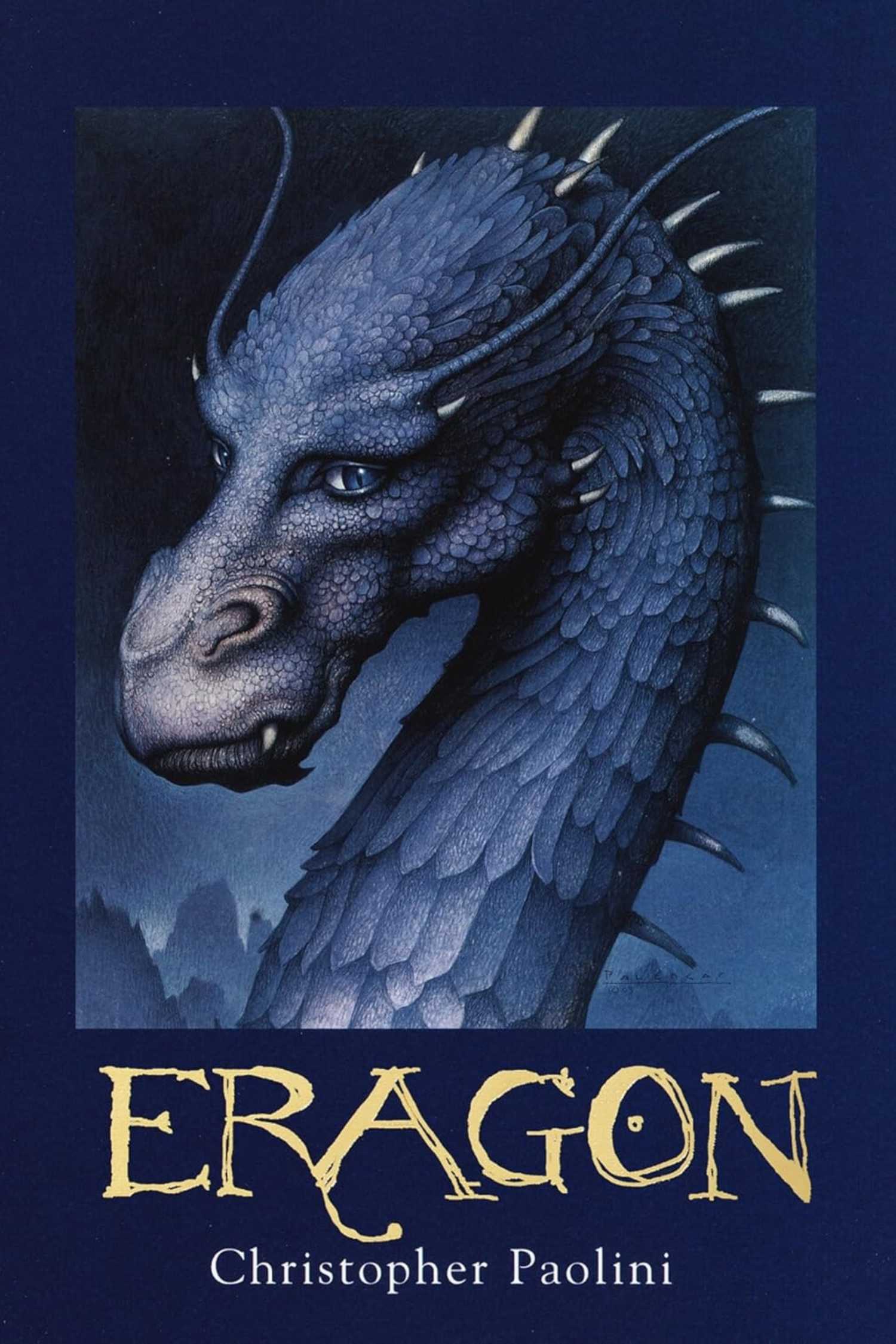
There is an undeniably impressive story behind 2002’s Eragon, the first novel in The Inheritance Cycle. Author Christopher Paolini began writing the novel as a teenager, and its eventual success turned The Inheritance Cycle into one of the defining YA fantasy sagas of the 2000s. Its story of farm boy Eragon discovering a dragon egg, bonding with the dragon Saphira, learning magic, and becoming involved in a rebellion against the tyrannical Galbatorix provided exactly the sweeping adventure young adult readers at the time were looking for.
The problem is that virtually every ingredient feels borrowed from somewhere else. Eragon's quest closely follows the hero's journey popularized across countless fantasy stories, while the Dragon Riders, evil empire, wise mentor, elves, dwarves, and mystical training offer few surprises for even the most casual fantasy readers. Paolini's worldbuilding becomes more elaborate as the books progress, but not enough to disguise its derivative roots. The Inheritance Cycle is an accessible gateway into epic fantasy for younger readers, but revisiting it after experiencing the genre more broadly exposes just how little of its central storytelling feels original.
A Song Of Ice And Fire Series By George R.R. Martin (1996-Present)
Ever-Expanding Scope Becomes The Iconic Series’ Biggest Enemy

Few modern fantasy series have had a larger impact on the genre than A Song of Ice and Fire. George R.R. Martin's Westeros helped popularize a style of epic fantasy built around political maneuvering, morally complicated characters, shocking deaths, and an unusually brutal treatment of traditional heroic conventions (and was, of course, the source material for HBO’s megahit TV show Game of Thrones). The early books have some admittedly exceptional moments, particularly when competing perspectives collide and seemingly separate schemes suddenly become part of the same devastating political chain reaction.
However, expansion and ever-increasing complexity gradually replaced narrative momentum. Each book of George R.R. Martin's unfinished saga seems to introduce more perspectives, locations, factions, subplots, and political complications at precisely the point when the story desperately needs its existing threads to converge. A common complaint of the ASOIAF novels is that a reader can get through dozens of pages only to find the plot hasn't moved an inch. Its reputation rests heavily on its tremendous opening volumes, but as a series, A Song of Ice and Fire demonstrates how epic fantasy doesn’t hit as hard when an author tries to fill literally every corner of their fiction world.
A Court Of Thorns And Roses Series By Sarah J. Maas (2015-Present)
ACOTAR's Romance Helps Hide A Less-Than-Convincing Fantasy World

The phenomenal success of A Court of Thorns and Roses is impossible to separate from the rise of romantasy. Sarah J. Maas' series begins with Feyre Archeron killing a faerie and being taken into the magical land of Prythian, then dramatically expanding its mythology to incorporate a range of fantastical ideas that can be harnessed as a platform for a unique love story. Its combination of fantasy adventure and increasingly explicit romance has attracted an enormous readership and helped make Maas one of modern fiction's biggest authors. As a fantasy reading experience, however, ACOTAR is much less impressive than its pop-culture footprint suggests.
There are some interesting ideas in its lore, but much of its worldbuilding feels designed primarily to facilitate romantic relationships and escalating character drama rather than function as a particularly convincing setting. Its powerful characters also develop new abilities or reveal greater strength whenever the plot requires another escalation, with a convenience that often borders on deus-ex-machina. It clearly works for its intended audience, but popularity within the realms of romantasy has elevated ACOTAR into broader fantasy conversations where its uneven plot and shallow worldbuilding don’t hold up to scrutiny.
The Lord Of The Rings Trilogy By J.R.R. Tolkien (1954-1955)
Tolkien's Unmatched Influence Doesn't Make The Lord Of The Rings An Easy Read

No fantasy book trilogy is more legendary than The Lord of the Rings. J.R.R. Tolkien's journey across Middle-earth fundamentally shaped modern epic fantasy, from its invented languages and deep fictional history to its conception of races such as elves and dwarves. Frodo's mission to destroy the One Ring remains iconic, and the sheer depth behind Middle-earth has rarely been equaled. Virtually every fantasy writer who followed Tolkien has used or built on ideas that can be traced directly back to him. However, being a foundational text doesn’t mean LotR is beyond criticism.
The story of the trilogy is timeless, but Tolkien’s writing style not so much. The endless descriptive passages can be exhausting, it’s jarring when songs and poems interrupt the narrative, and stretches of the journey progress at a glacial pace. Characters frequently spend pages discussing background lore that enriches Middle-earth but has no bearing on the story. It may seem like a cardinal sin to say out loud, but reading The Lord of the Rings can be quite boring. As a literary achievement, Tolkien's work is monumental, but historical importance and readability are different things. It may be the most influential fantasy book series ever written, but LotR is slyly one of its most overrated too.
KioskNews shows a cleaned-up reading view extracted from the publisher’s page — the original always lives on their site, not ours.