The voice of a nation: the Czech children’s TV show that became a symbol of media freedom

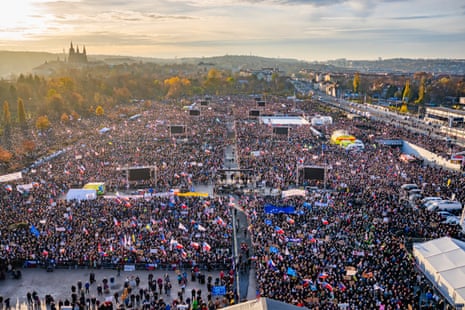
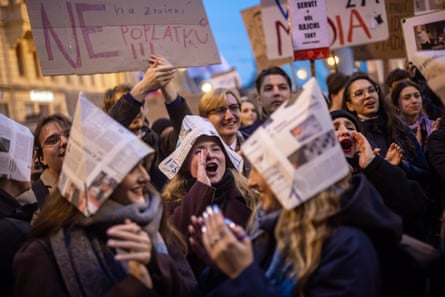
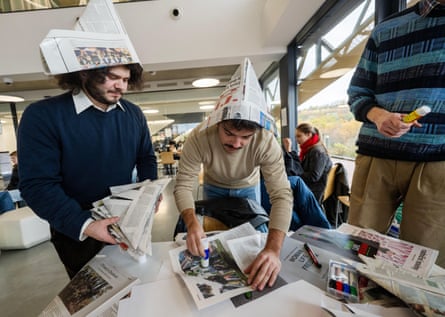
Photos of the mass rallies in support of Czech public broadcasters in recent weeks have featured one detail that has baffled outsiders: demonstrators wearing little hats made out of folded newspapers.
But to Czechs they are instantly recognisable. The hat belongs to Večerníček, a little cartoon boy who appears on Czech Television every evening at 6.45pm.
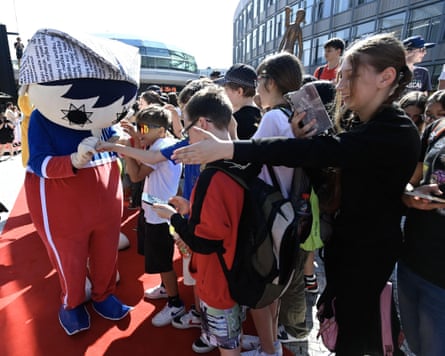
If you are a Czech child, have had a Czech child or have spent time in the vicinity of one between 6.45pm and 6.55pm, you will know Večerníček.
He doffs his hat, wishes the nation’s children dobrý večer (good evening), and mounts a little flight of stairs in the sky, tossing newspapers from under his arm – Večerníček is the diminutive of večerník, the word for the once-familiar evening newspaper.
He rides a rocking horse, drives a little car and finally pedals a unicycle to a rather trippy soundtrack of vibraphone, electric organ and flute (the programme started in 1965).
There follows a short, animated bedtime story. Stalwarts are Rumcajs the highwayman, Maxipes Fík the enormous dog and, of course, Krtek the Little Mole, fluffy versions of which now stare accusingly at you from the souvenir section of Prague airport.
It’s a nightly ritual for Czech families that marks the transition from playtime to bedtime. Parents across the land wait anxiously for the same jingle to appear, culminating in his final signoff of dobrou noc (goodnight).
That unmistakable voice belongs to Michal Citavý, 68, now a digital nomad who runs a travel business with his wife, Zuzana, and splits his time between south-east Asia, Europe and South Africa.

It’s safe to say he has not been glued to coverage of the demonstrations in his native Prague, where hundreds of thousands of people have been turning out since late October to voice opposition to the government’s plans to abolish the licence fees for public TV and radio and fund them instead from the state budget, a move critics fear will diminish media independence.
“My daughters told me what was going on, so I knew about it. But I haven’t really followed it,” said Citavý, speaking from his home near a game reserve about 50km north-east of Pretoria in South Africa. One of his daughters was at Sunday’s demonstration, which proved to be the biggest since the fall of communism in what was then Czechoslovakia in 1989.
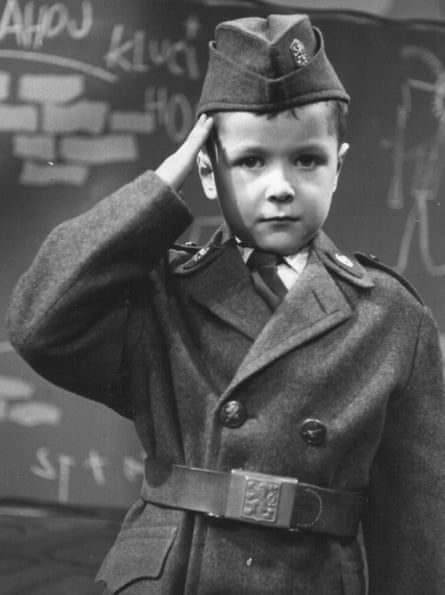
Citavý does, however, remember recording those two phrases – dobrý večer and dobrou noc – when he was six, in 1964. “It happened actually in August, basically during the school holidays. I was staying with my grandparents at their weekend house, not far from Prague. And the guys from the film company needed a child to say ‘Dobrý večer, dobrou noc’. I think I was probably the only one who was around during the holidays and relatively close to the city,” said Citavý, who did some TV acting as a child.
“So they sent a car for me and collected me, took me to the TV place where I was repeating those bloody four words and then they brought me back. And that was it. At the time, and for quite some time afterwards, I never even thought about it.”
Since then, Večerníček has survived the upheavals of the Soviet-led invasion, the Velvet Revolution and the dissolution of Czechoslovakia. Its appropriation by those who oppose the government’s plans for Czech Television (and Czech Radio) is particularly resonant: it represents a shared cultural experience rather than an explicitly political cause.
So surely Michal can’t resist telling people he is the voice of Večerníček? “I try not to tell them too much. I hated it when I was, you know, a teenager. Now I don’t really care. My wife likes telling people though,” Michal said.
“She always says that she has a husband that every single one of them knows and could recognise. And that confuses everybody,” said Michal, who has three adult daughters.
“Though when I was away on business it was always nice knowing I could still say goodnight to them every evening.”
KioskNews shows a cleaned-up reading view extracted from the publisher’s page — the original always lives on their site, not ours.