Key takeaways from speeches at Apec CEO Summit, including Xi and Putin addresses
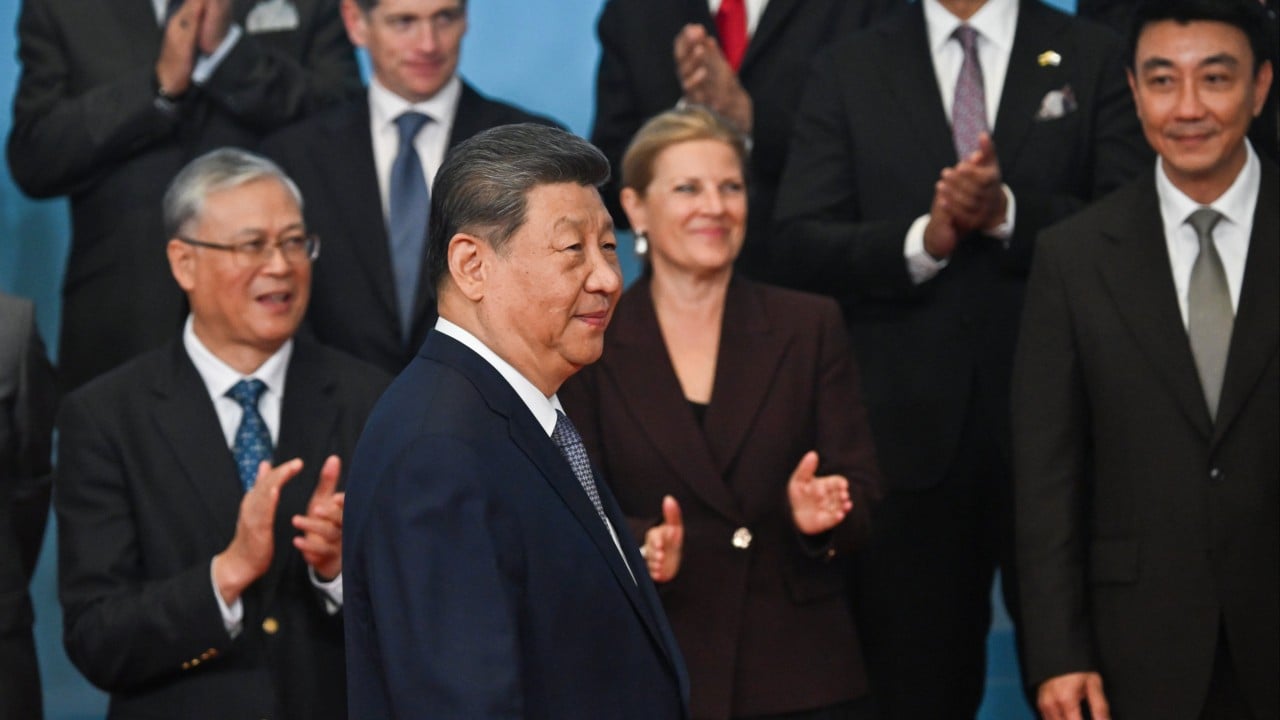
Global leaders addressed a crowd of business figures at Wednesday’s Apec CEO Summit, sharing their perspectives on the most pressing issues affecting the world economy and trade relations.
Here are our summaries of the speeches, including the major points covered by each address.
President Xi Jinping
-
Xi described the current geopolitical situation as “complex and volatile”, citing rising protectionism, weak growth momentum and new challenges from emerging technologies.
-
Xi said “innovation is crucial for progress” in the Asia-Pacific region, as unicorn companies and large language models have “emerged in large numbers”. He praised China as a vast testing ground for innovation, where cutting-edge technologies could be tested and refined through real-world application.
-
Xi said China was accelerating the development of a big domestic consumption market and more diverse sources of demand would be unleashed. He vowed that China would not only cut tariffs and expand market access, but also carry out reforms in trading rules and regulation, fostering a more stable and predictable environment for all companies to invest and do business.
-
Xi emphasised Shenzhen’s status as a part of China’s Greater Bay Area – which comprises Guangdong province, Hong Kong and Macau. He said China supported the establishment of an association for bay areas across the world to deepen exchanges.
Russian President Vladimir Putin
-
Putin said sanctions, tariffs and export limitations could hold back development, but were not capable of fully stopping growth or destroying economies. Europe and the US had “punished themselves” with such measures, he said.
-
The Russian leader said European nations, by halting the supply of Russian energy resources that fuelled the continent’s prosperity for decades, have caused their own decline, lost their industrial capacity and raised deficits and inflation.
-
He noted the share of the dollar and the euro in Russia’s exports had slumped due to sanctions from banks and other financial organisations, but Russia had established networks to continue making transactions.
-
He said Russia is moving full speed ahead – faster than expected – and was committed to cooperation with the Asia-Pacific region. He called for the build-up of logistical links within Apec.
Canadian Prime Minister Mark Carney
-
Carney noted economic ties between China and Canada were getting closer, and said China had restored market access for more than 90 per cent of the Canadian trade that had faced tariffs. Canadian businesses already enjoyed tariff-free access to 1.5 billion consumers, and the country aimed to double that soon, he said.
-
Carney said Canada had signed over 50 critical minerals agreements with more than 15 countries in the past year, diversifying its sourcing for crucial supply chains. He also urged economies to take steps to diversify away from single payment channels.
Malaysian Prime Minister Anwar Ibrahim
-
Anwar said developing economies needed a breath of “new life” by using platforms like Asean and Apec to promote trade and investment. They should engage with global superpowers like the US, the European Union and China, which play an important role in multilateral mechanisms, and be treated with respect, dignity and equality, he urged.
Thai Prime Minister Anutin Charnvirakul
-
Anutin stressed Thailand was working with global partners and extending cooperation beyond the Association of Southeast Asian Nations to tackle online scams, which he called a shared threat affecting many countries in the region. He also talked up Thailand’s economic transformation, including upgrading its automotive manufacturing and developing capabilities in semiconductors, AI and advanced medical technologies.
Australian Prime Minister Anthony Albanese
-
Albanese pledged to create conditions across the Asia-Pacific region to deploy AI safely and responsibly, bringing investments, research and businesses together to build new capabilities and create secure jobs. He said Australia was setting its own terms and developing AI standards to shape the technology’s future.
KioskNews shows a cleaned-up reading view extracted from the publisher’s page — the original always lives on their site, not ours.