Abby Choi’s ex-father-in-law tells court he contributed to purchase of Kadooria flat
He further claimed that he bought two electric saws to cut bamboo sticks and a commercial frying sieve for hotpot gatherings with friends.
Kwong is contesting a joint count of murder alongside his sons, Anthony Kwong Kong-kit, 35, and Choi’s ex-husband Alex Kwong Kong-chi, 31. In late September, before the trial began, the brothers pleaded guilty to preventing the lawful burial of the model’s body.
Prosecutors contend that the murder stemmed from a family feud over the proposed sale of a luxury home at the upmarket Kadooria residential complex in Ho Man Tin. They said that after Choi insisted on selling the property, Kwong Kau enlisted his two sons to help kill Choi and erase evidence of the crime.
Choi’s mother, Cheung Yin-fa, previously told the court that the elder Kwong relied on a monthly allowance of HK$20,000 from his former daughter-in-law and asked Choi to settle his medical expenses when he was seriously ill.
Kwong on Tuesday rejected his former in-law’s claims and said he had sufficient money to support himself and his family.
The court heard that the former Kowloon West regional crime squad officer resigned in 2005 to focus on his property agent business in the mainland city of Zhuhai.
He said he had earned over HK$10 million before he closed the agency and started a catering business in Guangzhou in 2009.
His three restaurants made a combined monthly profit of up to 280,000 yuan in their heyday, and he was involved in buying and selling antiques, the court heard.
Kwong claimed that from 2014 to 2019 he remitted part of his business earnings to Choi to support her search for a new home for her two children with Alex. He said he was responsible for paying half the purchase price of HK$60 million when Choi acquired the Kadooria flat in 2019.
The former sergeant denied ever impeding Choi’s efforts to sell the home in 2022, when she wanted her children to move closer to their school in Tuen Mun.
Alex allegedly killed his ex-wife with a hammer while Anthony was driving them to pick up the former couple’s daughter from school on February 21, 2023.
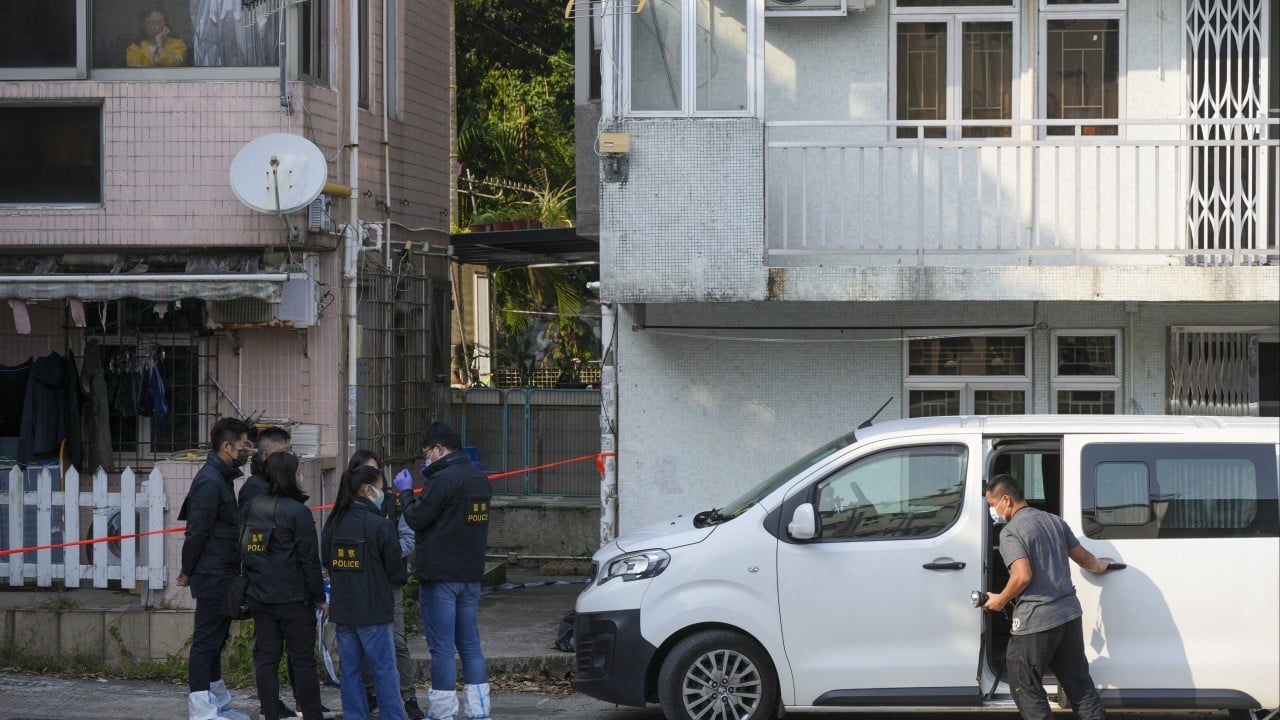
Three days later, police discovered some of Choi’s dismembered remains, including her head and legs, in a 600-square-foot flat in Tai Po’s Lung Mei village that Kwong Kau had rented earlier that month.
Prosecutors argue the defendants displayed a high degree of premeditation by purchasing in advance a wide range of items that would be useful in disposing of Choi’s body after her killing, including a meat mincer, multiple saws and knives, two soup pots and an array of deodorisers.

The elder Kwong maintained that he rented the village flat as his new home. He said he previously lived with his elder son at a subsidised one-bedroom flat in Tsuen Wan’s Sheung Man Court, which was too small and inconvenient.
He admitted lying to the Lung Mei flat’s landlady that he was searching for a new home because he would give his former residence to his son and daughter-in-law who were returning from overseas.
“I just gave her a random excuse ... That was my privacy. I did not know her and there was no need for me to tell her [the real reason],” he said.
Kwong said he intended to decorate the exterior of his supposed new home by setting up a bamboo fence and growing vines on it.
He said he had asked Anthony to buy him some ropes and cable ties for affixing the bamboo, items that he had never purchased before his arrest on February 24.
The defendant also said he acquired a large soup pot to be used to plant the vines.
“Because the pot had two handles, and I could tie the bamboo sticks onto it with some ropes to stabilise them,” the retiree explained.
Regarding the three knives and 15-inch chopping board seized from the village flat, Kwong said he preferred cutting meat at home by himself because he thought the products sold in fresh meat stores were unsanitary.
He denied using a commercial-grade meat mincer to destroy Choi’s remains, saying he bought the machine for a friend in mainland China, although he left a metal tray of the mincer at the village flat.
Prosecutors contend that Kwong cooked Choi’s dismembered remains with carrots and radishes before the boiled content was filtered using a commercial frying sieve and dumped at a refuse collection point in the village.
In his testimony, Kwong sought to justify the sieve’s presence at the premises by describing what he saw as mainland China’s hotpot culture, where people put an entire dish of beef into their hotpots.
“I have more friends on the mainland, so I have to respect their food culture. That was what I did myself on the mainland as well,” Kwong said.
“You can cook the beef on the sieve, and you can put the whole dish of beef into the pot. Do you understand?”
The trial continues before Deputy Judge Brian Keith and an eight-member jury.
KioskNews shows a cleaned-up reading view extracted from the publisher’s page — the original always lives on their site, not ours.