How a playwright transformed a sister’s loss into art for children
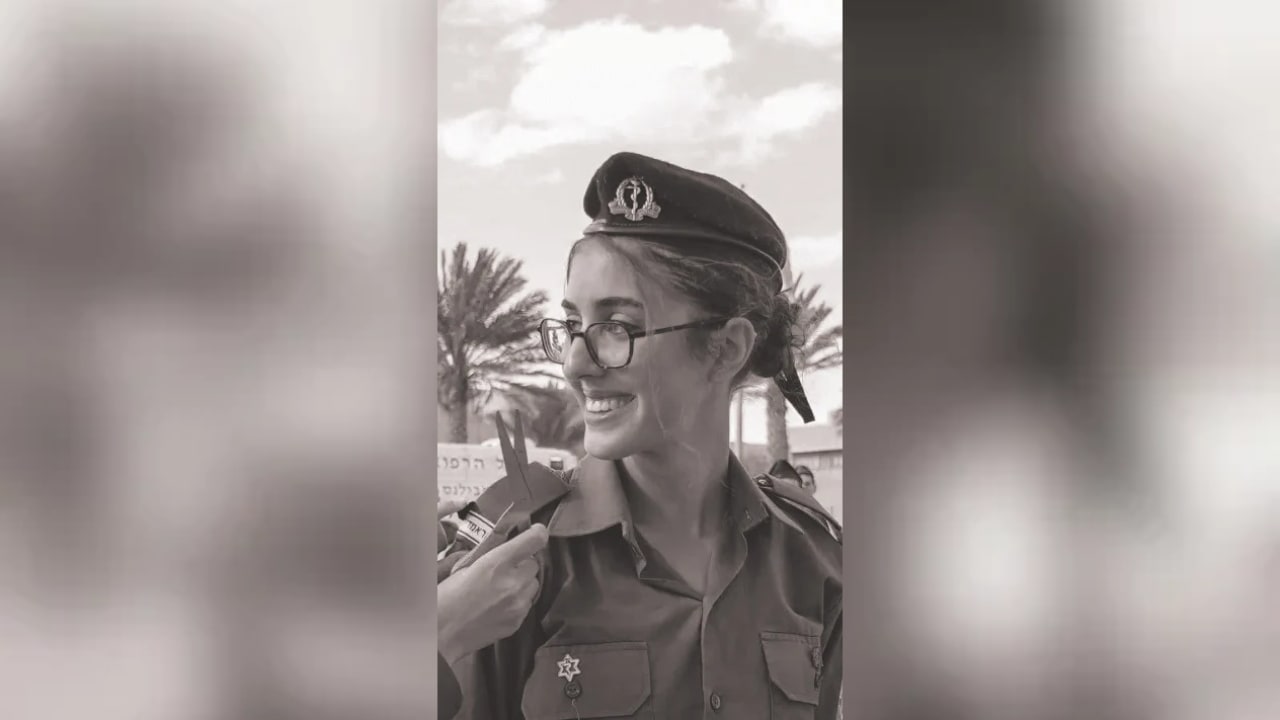
For Yuval Naim, the grief of losing her younger sister, Agam, in the Gaza conflict is not a static sorrow but a shifting landscape.
To process this new reality, the 28-year-old Jaffa resident has turned to the stage, channeling her family’s heartbreak into a children’s play titled Out of Three, One is Missing (Mishalosh Yotzet Achat), which premiered last week. Through a whimsical narrative about a hive of bees, Naim explores a heavy truth: There is no single, correct way to mourn.
“It was hard for me to cope with the grief. I told my psychologist I didn’t know what to do. She replied, ‘You’re a creator – so create,’” Naim said. “It made me realize that if I found it difficult to talk about Agam for the time being, I could express what I was going through through my art.”
Naim is the eldest of three sisters who grew up in the quiet settings of Pardes Hanna before moving to Kibbutz Mishmarot. Her sisters, Peleg and Agam, followed.
“Agam was driven to excel in everything she touched,” Naim recalled, sketching a portrait of a vibrant, deeply loved young woman. “She had so many different circles of friends – from her pre-military service year at the Edenim youth village to her intensive training as a combat paramedic. Even now, her friends still come to visit us. So many people loved her; she meant the world to so many.”

Agam Naim deployed in Gaza Strip for seven months
St.-Sgt. Agam Naim spent seven months deployed with combat forces in Gaza. She had fulfilled her frontline duties and was scheduled to transition to a safe, prestigious instructional role – commanding and training the next generation of paramedics. She was never supposed to re-enter the conflict zone. Yet, driven by fierce duty and loyalty to her peers, she insisted on going back one final time.
“Mom would tell her that the difference between a score of 90 and 95 didn’t really matter anymore,” Naim said, “but Agam would reply that she was going to be treating people, so it was important.
“She wasn’t supposed to go back into Gaza anymore, but she insisted on entering one last time just to say goodbye to her people and to be with them,” Naim said.
First female IDF soldier killed in Gaza during September 2024 operation
During this final entry, Agam fell. On September 17, 2024, at just 20 years old, Agam was killed alongside four other combat soldiers when an explosive device detonated in Rafah’s Tel Sultan neighborhood. She became the first female soldier killed in action during the ground operation in the Gaza Strip.
The tragedy in Out of Three, One is Missing is filtered through a metaphor children can understand. The story follows three busy bees. When the third bee suddenly disappears, the remaining two must navigate the hive alone.
“Each of the two remaining bees copes with the disappearance of the third bee in a completely different way,” the playwright explained, detailing the invisible friction that can fracture a grieving family.
“One desperately wants to hold a ceremony, while the other does not. One wants to speak about the missing bee, but the other isn’t ready to talk about her yet. One really wants to use laughter as a way to cope, while the other feels completely differently about it.”
Despite the underlying gravity, Naim deliberately keeps the texture of the play light and comedic. Much of the action centers on a competitive nectar-gathering tournament.
“While the play certainly deals with the different ways we cope with loss, for the most part, it is light and funny,” Naim said. “The bees are entirely caught up in a nectar-collecting competition that they are determined to win. They just aren’t used to being only two yet, and that brings its own set of challenges.”
The play ultimately serves as a lesson in empathy and radical patience. “The show demonstrates that you have to be patient with another person’s distinct way of coping,” Naim explained.
By translating her family’s private pain into a universal fable, she hopes to give children the tools to understand their own emotional worlds. “The play seeks to provide children with a safe space to see themselves, to recognize the ways they navigate different hardships, and to understand that all coping mechanisms are legitimate,” she explained.
As she moved through final rehearsals with her cast, Naim kept her eyes on the project's broader future.
“I want as many children as possible to see this play,” she said. “My aspiration is to bring it to one of the major children’s theaters and to take it on the road to regional councils and schools.”
In doing so, she ensures that while the family trio can never be whole again, Agam’s spirit continues to teach, protect, and heal. Yet away from the theater lights, the personal journey of grief remains a daily, quiet battle for the older sister left behind.
“Sometimes,” Naim reflected, “I still feel like my subconscious is just waiting for her to come back.”
KioskNews shows a cleaned-up reading view extracted from the publisher’s page — the original always lives on their site, not ours.