From English classes to painting robots: Behind an award-winning HDB BTO project
For some of this home-grown builder’s migrant workers, learning does not stop when the construction site closes for the day.
From 7pm to 9pm, meeting rooms are turned into classrooms, where a volunteer teacher gives English lessons to workers keen to communicate better in Singapore.
Hi-Tek Construction started the lessons after noticing that some workers were hesitant to speak to supervisors and managers because of the language barrier, says its corporate safety manager Raymond Lee.
“Many workers really want to learn English so that they can communicate well in Singapore. We hope this builds confidence among our workers for both work and their daily lives,” he says.
That attention extends beyond the workforce. At MacPherson Weave, which won a Construction Award at this year’s HDB Awards, Hi-Tek applied the same care to the residents who would eventually call it home.
Improving the resident experience at MacPherson Weave
Almost half the residents at MacPherson Weave submitted letters of compliments after moving in, according to Hi-Tek.
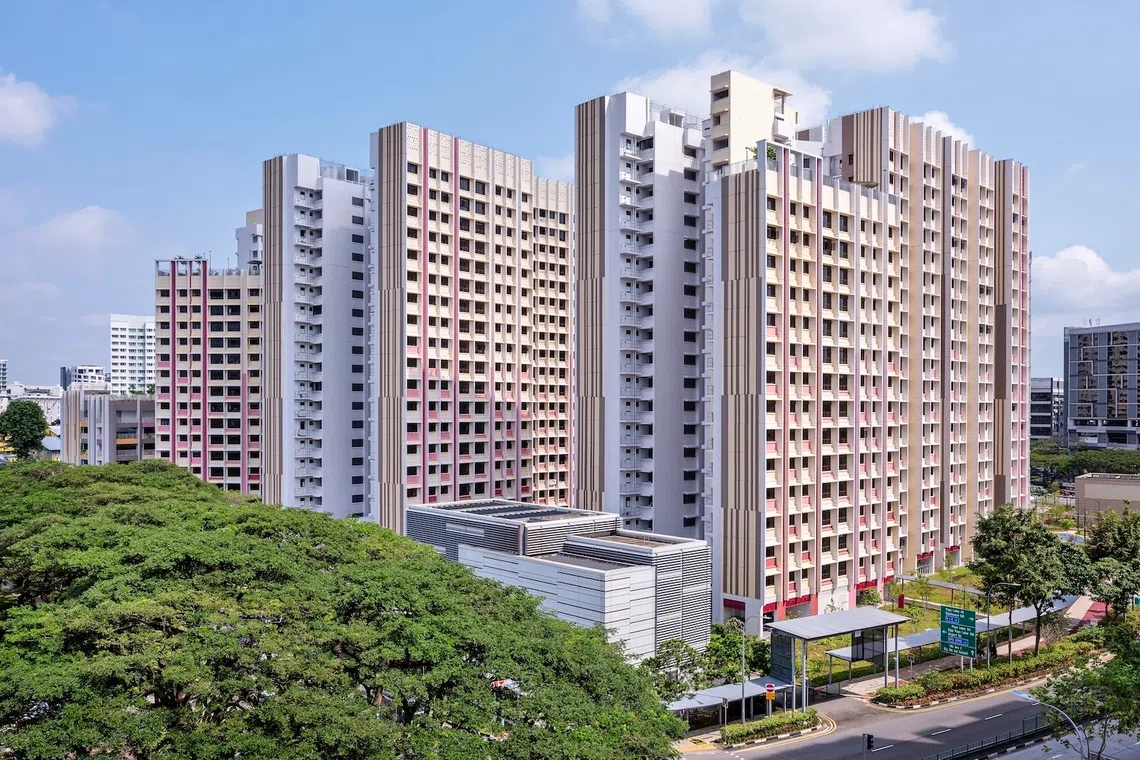
Hi-Tek had to navigate MRT tunnels and flight restrictions while building MacPherson Weave.
PHOTO: HI-TEK CONSTRUCTION
Lee attributes the response partly to the company’s customer relations officers, who helped residents with defect lists during the one-year defects liability period. They also went the extra mile, he says, by offering renovation tips and advice on caring for tiles and fittings.
Good service, however, had to be matched by workmanship. Besides HDB’s inspection checks, Hi-Tek had its own quality assurance and quality control team. Materials such as tiles and sanitary fittings were secured and stored under cover before installation to reduce the risk of damage or discolouration.
For Hi-Tek, which was founded in 1983 and has previously won HDB Construction Awards, such details are part of the job rather than a means of chasing accolades.
“When we start a project, we must do it well,” says Lee. “We are responsible and take ownership of what we are doing.”
He also credits the company’s track record to collaboration rather than hierarchy. The main contractor, consultants and subcontractors worked as “one big team”, he says, with specialist views taken seriously even when they came from subcontractors.
How painting robots help boost productivity and safety
Technology also played a role at MacPherson Weave.
Hi-Tek used painting robots that could first map a flat using laser scanning, then spray rooms automatically along a preset route.
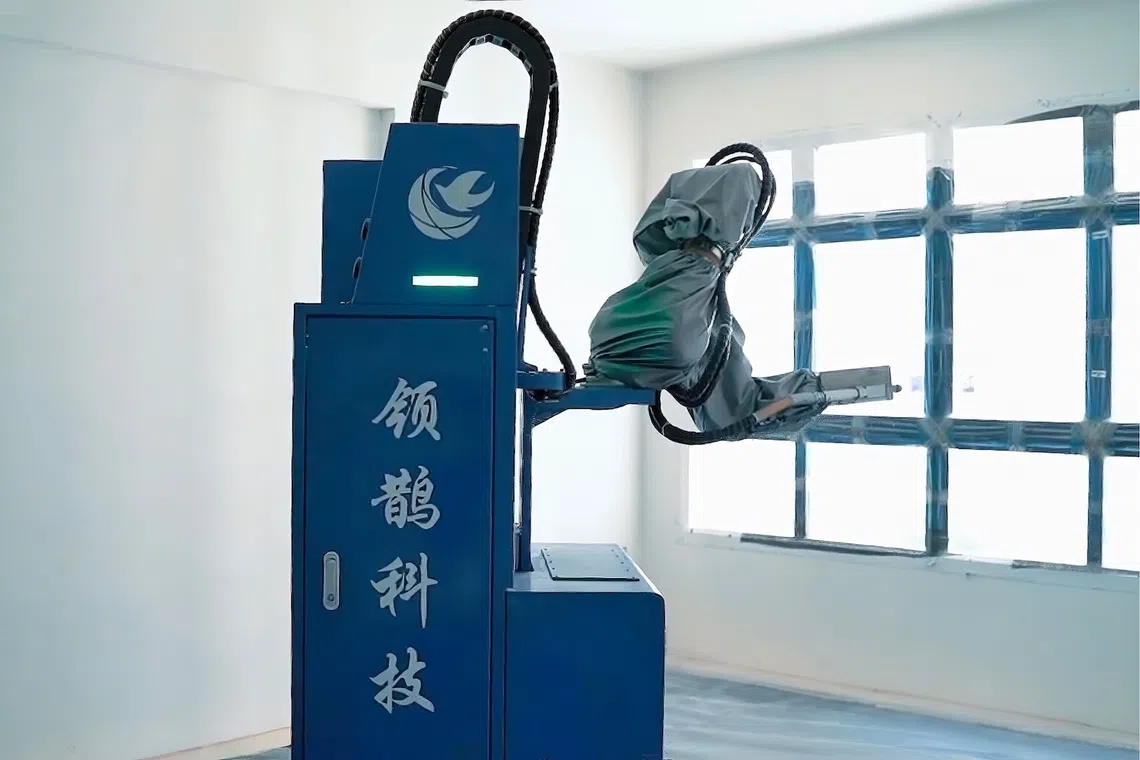
Painting robots helped reduce man-hours at MacPherson Weave, with one worker able to operate two robots at a time.
PHOTO: HI-TEK CONSTRUCTION
One worker using a tablet could operate two robots in separate rooms at the same time. Conventional spray painting typically requires at least two workers and can expose them to noise and paint fumes for long periods.
“These painting robots really help in productivity and safety of workers,” says Lee.
Hi-Tek is now exploring the use of robots for other jobs, including painting external walls and skimming work.
The company also introduced a system to tackle a decidedly everyday safety risk: workers becoming distracted by their mobile phones.
Under its safekeeping mobile phone initiative, workers who did not need their phones for work kept them in lockers or dormitories during working hours.
“If the workers keep using their handphones, they will get distracted,” says Lee, adding that this could lead to more safety incidents.
Hi-Tek was among the first to introduce such a system on an HDB project. According to the company, the initiative resulted in an estimated 20 per cent reduction in safety non-compliances.
The practice has since been made mandatory for all new HDB projects.
Building around MRT tunnels and flight zones
Some of MacPherson Weave’s biggest challenges came from its location.
The project was built next to MacPherson MRT station. Below ground, the team had to account for MRT tunnels. Above ground, it had to work within the Paya Lebar Air Base flight zone.
Construction near the MRT tunnels required monitoring equipment to track vibrations and ensure that works did not affect train operations.
Crane operations presented another challenge. Erecting and dismantling tower cranes required approvals from the Republic of Singapore Air Force and the Civil Aviation Authority of Singapore, as well as real-time clearance when the work was carried out.
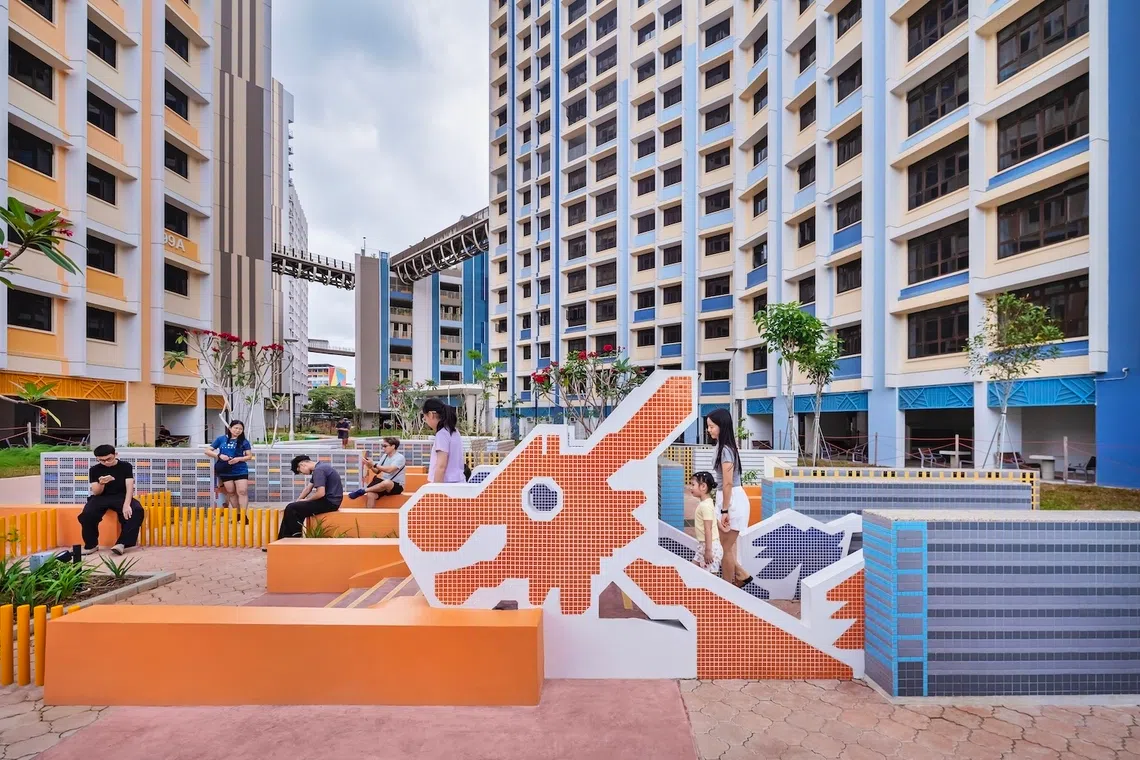
MacPherson Weave residents at a communal space within the BTO project, which won a Construction Award at this year’s HDB Awards.
PHOTO: HI-TEK CONSTRUCTION
If required to stop, the team had to lower the boom of its mobile crane within 15 minutes.
Some crane work could also be carried out only after MRT services ended close to midnight and had to stop before services resumed in the morning.
The combination meant the project team had little room for error, whether coordinating workers, machinery or construction schedules.
For Hi-Tek, the HDB Construction Award was recognition of the work that went into navigating those constraints while maintaining standards in quality and safety.
Lee says the company’s approach ultimately comes down to something simpler.
“Safety first is not a slogan,” he says. “It is something that we want everyone on site to believe in and practise every day.”
Learn more about Hi-Tek Construction and its portfolio of projects.
KioskNews shows a cleaned-up reading view extracted from the publisher’s page — the original always lives on their site, not ours.