"I Was Comfortable Keeping Quiet": Chadd Sayers On Sandpapergate Revelations
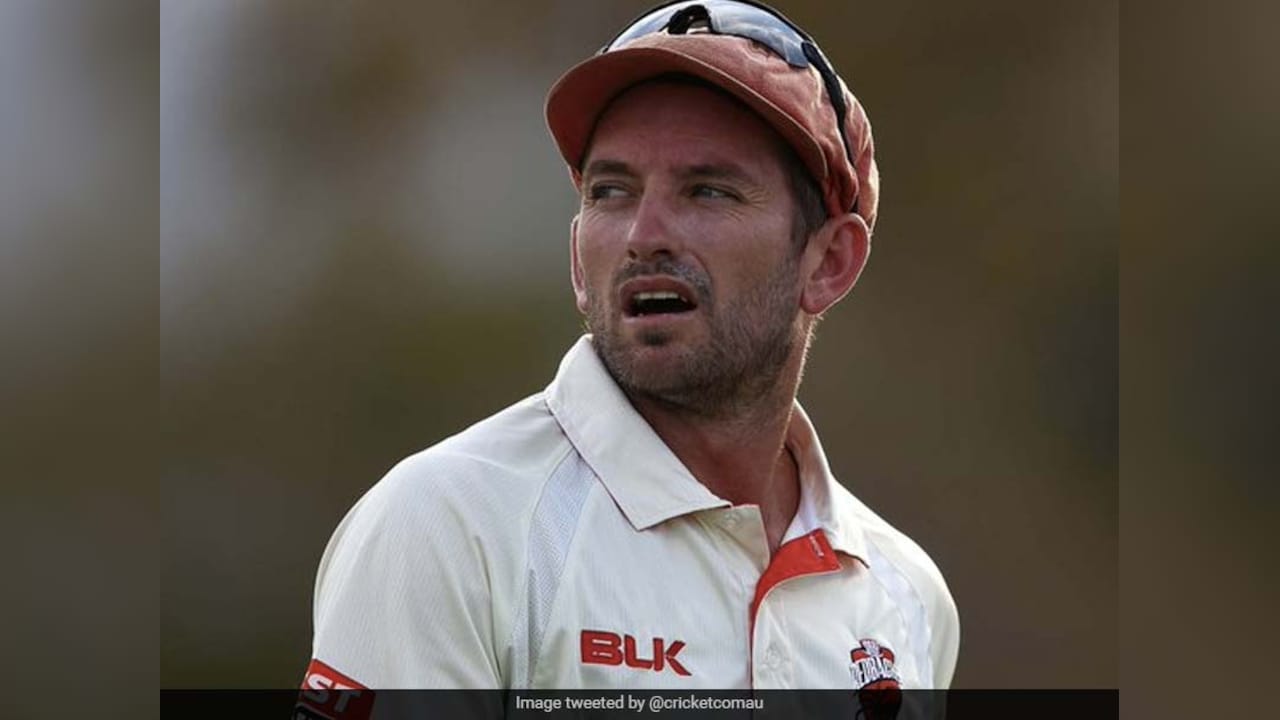
Former Australia pacer Chadd Sayers, who served as the team's 12th man during the infamous 2018 Cape Town Test against South Africa, has revealed that he was comfortable keeping his version of events surrounding the Sandpapergate scandal private until Usman Khawaja's autobiography Sabr brought the issue back into the spotlight. Sayers, whose only Test appearance came in the fourth and final match of the series, said he decided to back Khawaja's claims after the controversy resurfaced while he was working as a commentator for SEN during Australia's ODI series against England.
Speaking to SEN on Thursday, Sayers explained why he felt compelled to speak publicly about the scandal.
"I think it was probably just bad timing for me. The One-Day International was on, and I was always scheduled to commentate that," Sayers said.
"It wasn't SEN ringing me to come on and tell my side of the story. I was already commentating, so I knew it was going to come up. You also get a lot of media pressure from people asking what actually happened."
"So when Usman's book came out and a few excerpts started circulating, I was happy to say that I was confident what Usman had said was the truth," he added.
However, Sayers admitted he likely would not have spoken publicly had Khawaja's book not been released.
"I was pretty comfortable. Knowing what happened isn't great, and knowing that some people were telling the truth while others weren't wasn't ideal, but I was comfortable that it had largely moved on," he said.
The former seamer also sympathised with Cameron Bancroft, who, along with Steve Smith and David Warner, was sanctioned following the ball-tampering scandal.
"Now, knowing what Cameron Bancroft has gone through and the different situations he's had to deal with, I probably wish I had come out a bit earlier," Sayers said.
He praised Bancroft for the way he had handled the burden of the controversy over the past eight years.
"The mental side of things is that he's been able to hold himself together and continue performing at a high level in a high-performance environment."
"To carry that with you for eight years, regardless of what's happening right now, is a credit to him," he added.
Earlier this week, Sayers publicly supported Khawaja's version of events, claiming the entire Australian team was aware of the plans to alter the ball's condition.
"I'm comfortable saying, where I'm sitting now, that everyone knew what was going on in South Africa in 2018. Sandpaper was used in two Test matches, and there were discussions in the dressing room."
"I'm not taking sides; it's simply my recollection of what took place," he said.
Sayers stressed that he was not aligning himself with either Khawaja or the current Australian leadership group.
"I think I've probably been portrayed as taking Usman's side because I've spoken out and acknowledged that his version was probably the truth. But I'm neutral in all this."
"I'm just trying to tell my side of the story and what I believe happened. There are no sides. They've both been great to me throughout my time in the Test squad," he added.
The former pacer also argued that any effort to generate reverse swing requires collective involvement from the fielding unit.
"I would have thought that, as a team, when you're trying to get the ball to reverse, everyone has to buy into it because one small mistake in the field can stop it from reversing straight away."
"So, yes, I'm pretty confident in saying that everyone knew," Sayers said.
(Except for the headline, this story has not been edited by NDTV staff and is published from a syndicated feed.)
Featured Video Of The Day
Total Chess Highlight Show: Dramatic Blunders, Tight Group Races And Chess Creators
KioskNews shows a cleaned-up reading view extracted from the publisher’s page — the original always lives on their site, not ours.