Those white cameras mounted above traffic lights serve a little-known purpose
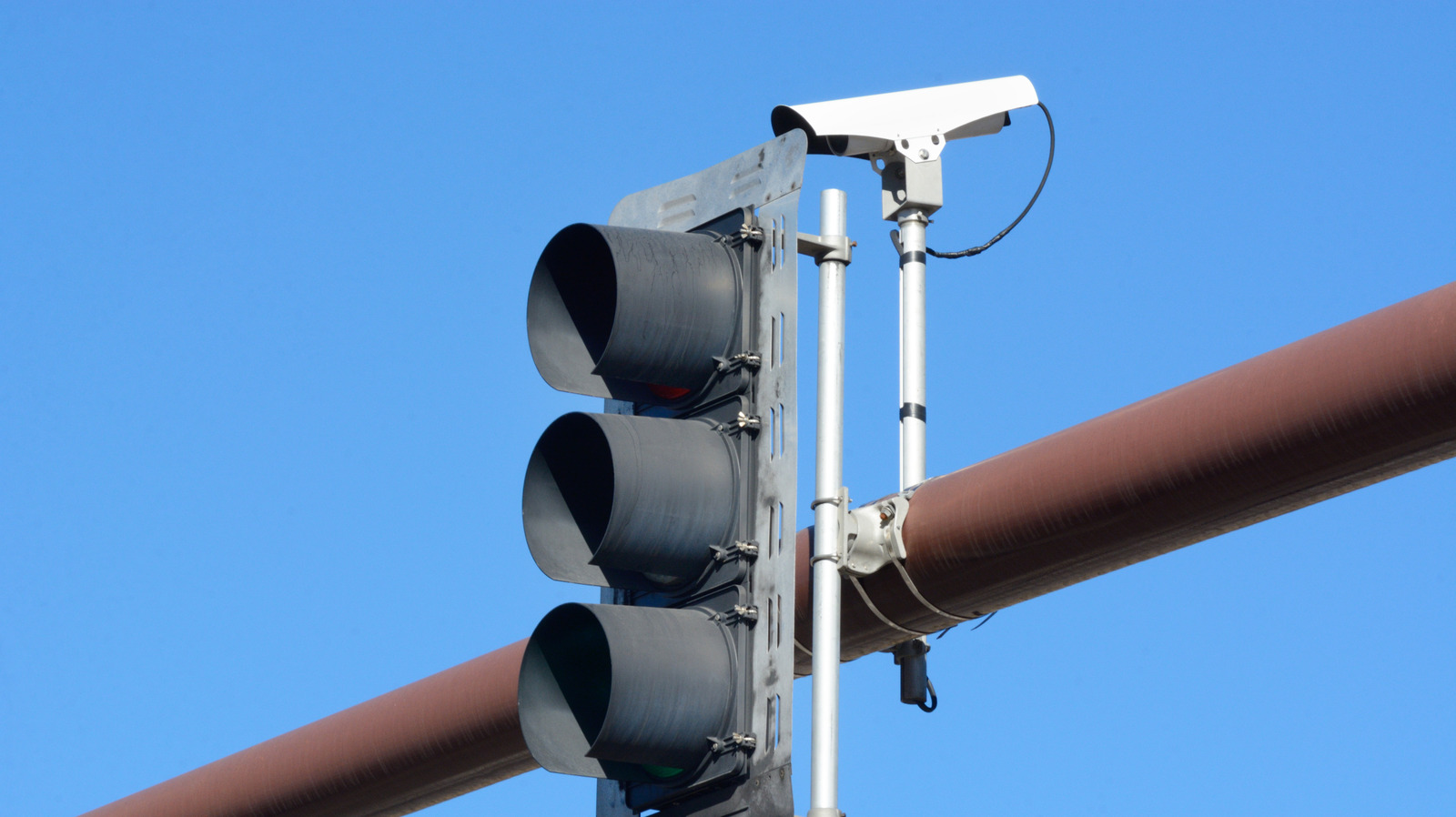
Unlike Flock cameras, they're only meant to keep traffic flowing.
Merrimon Crawford/Shutterstock
Automatic license plate readers (ALPRs) are nothing new, but reported abuses have made drivers understandably wary of the cameras made by Flock and other companies, to the point of wanting to find out where they are so they can be avoided. While that added attention has made intersection cameras seem more visible than ever, not every camera you see mounted above the road serves the same purpose. Most cameras on roadways aren't used to track individual drivers, but rather to monitor traffic conditions.
Aside from ALPRs, cameras meant to track people running red lights are also controversial. They're banned in many states, and they're rare even where they're allowed. Far more common are cameras used to monitor traffic conditions in real time or automatically control traffic lights.
Most cameras are there to control the flow of traffic
Distinct from cameras used to catch drivers speeding or running red lights, traffic cameras aren't designed to capture evidence for law enforcement. Instead, they're meant to be watched live to monitor the current state of traffic and keep an eye out for accidents. This real-time data can be used by local transportation departments to help keep traffic moving, by overriding automatic light timings in some cases, or to alert first responders when needed. These systems can also be used to track traffic patterns over time, helping traffic engineers determine when changes need to be made to roadways or signals to control congestion.
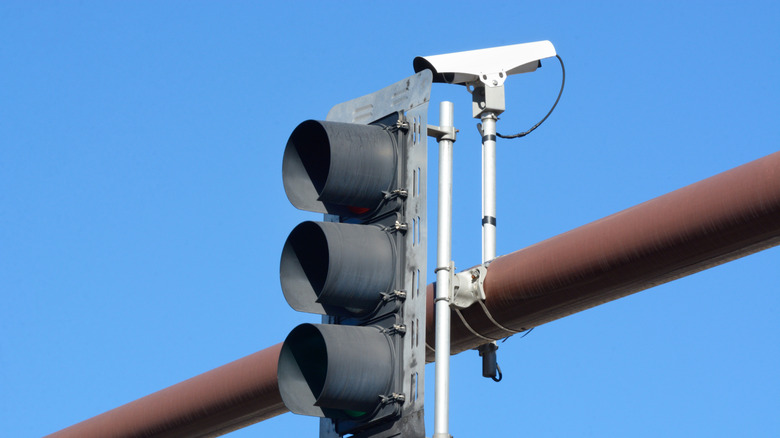
In many cases, the cameras mounted on traffic lights are tied to automatic signaling systems rather than providing a live video feed. These cameras send data to control systems that determine when lights should cycle. Engineers can designate a section of the video frame that the camera should monitor for the presence of cars. When a car enters that space, it triggers the light to change based on a timing sequence that pre-programmed for each individual roadway. In addition to video cameras, these systems often use radar, infrared cameras and electromagnetic detectors built into roads to detect the presence of vehicles.
Exactly what the cameras on roadways are used for varies widely based on where they are. Local laws determine which types of cameras are allowed to be installed in the first place, and how they're used depends on the needs of a particular intersection. While there's plenty of justified concern over the prevalence of Flock cameras and other ALPRs, chances are when you see a camera mounted above a traffic light, it's just there to keep things moving.
KioskNews shows a cleaned-up reading view extracted from the publisher’s page — the original always lives on their site, not ours.