As US relations fray, Canada gets serious about its own launch industry
“From a technical perspective and an infrastructure perspective, essentially 90 percent of everything you do on that light lift piece gets thrown out the window, and it’s almost like a net new program,” Kolias said. “And everyone said, if you’re not going to try to commercialize light lift, then why even do it in the first place? And that kind of hit us relatively hard.”
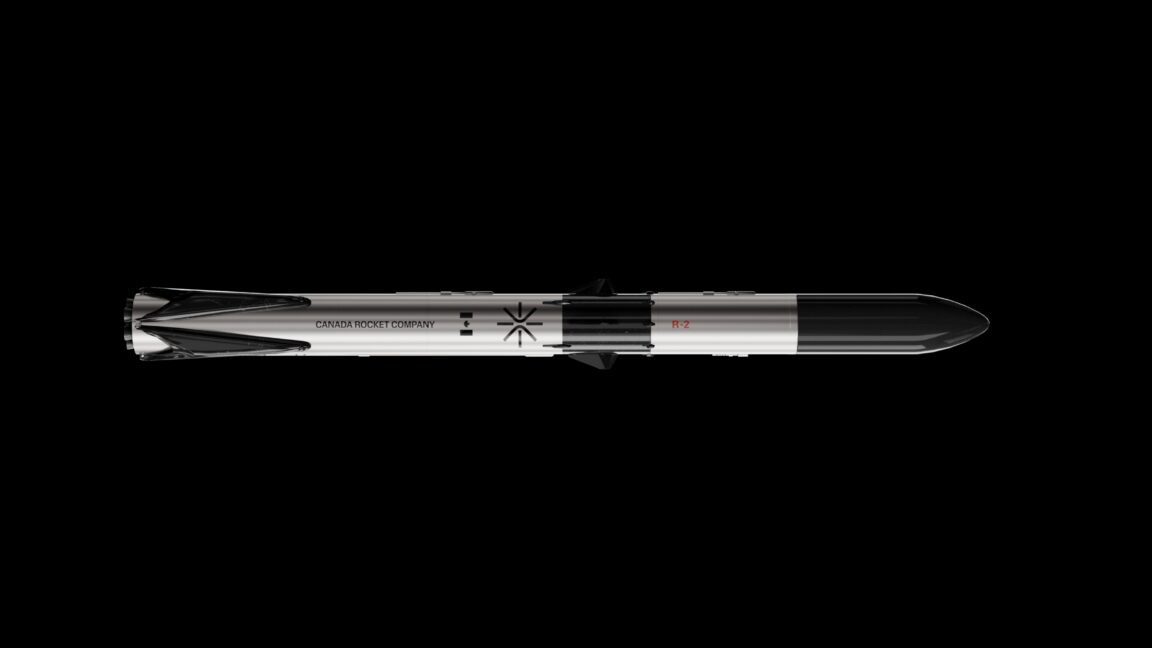
So the company set its sights higher: developing the R-2 rocket, a fairly standard medium-lift vehicle that in renderings somewhat resembles SpaceX’s Falcon 9 rocket. There are nine methane-fueled engines, a gas-generator engine cycle, and landing legs that signal a future path toward reuse of the first stage. It could carry up to 12.5 metric tons to low-Earth orbit. If all goes well, Kolias said, the company could be ready to launch by 2032.
That would be fantastic, but is any of this realistic?
Canada goes defensive
Maybe so, because the mood in Canada is angry. For decades, Canada has relied on the United States, broadly, for defense. Famously, in 1959, the Canadian Prime Minister canceled the Avro Arrow interceptor aircraft under development in the country. Since then, Canada’s aerospace industry has largely languished. The country’s satellites typically go to space on American rockets.
But sovereignty is back in vogue. Earlier this year, Canada unveiled a Defense Industrial Strategy that would ensure the country has a strong industrial and technological base to support defense readiness. Space is one of the 10 capabilities outlined in the report, which includes “space launch” as a priority.
“I think the geopolitics has actually created a fantastic opportunity, not just for us, but for other Canadian industries to finally build real ambitious industries,” Kolias said. “We’re pulling a little bit away from the globalist movement and realizing that there are some core aspects, both economically and from a sovereign or defense and military perspective, that you should own your own destiny.”
KioskNews shows a cleaned-up reading view extracted from the publisher’s page — the original always lives on their site, not ours.