Google launches first datacenter satellite and research that finds orbiting bit barns can work
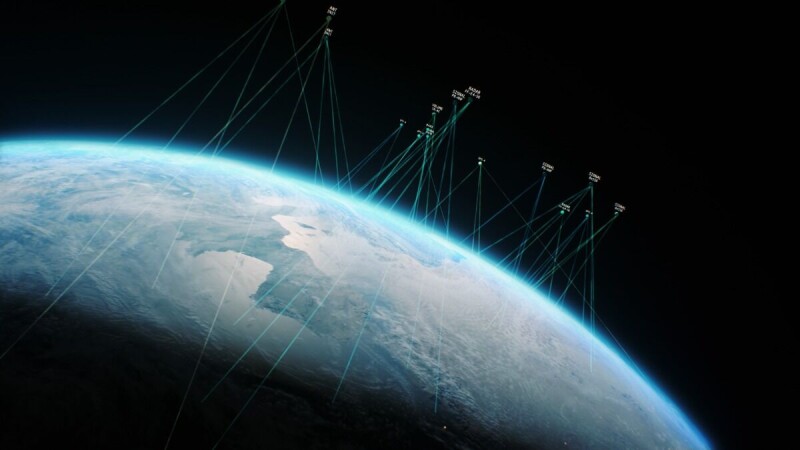
If SpaceX can launch 1,800 Starships, and researchers nail gnarly networking, design and formation flying problems,
Google’s first “Suncatcher” datacenter satellite has made it into space, but the company has cast doubt on whether its orbital ambitions can scale.
As The Register reported last week, Project Suncatcher aims to test whether Google’s tensor processing units (TPUs) can survive a launch and the harsh environment of space. The Big G hopes to validate theories that the limitless supply of solar energy available in space makes the cost of putting servers into orbit sensible.
In its announcement of a successful Suncatcher launch, Google linked to its own peer-reviewed research about the endeavor – which outlines many thorny challenges that must be met to make orbital datacenters fly.
REG AD
The paper, titled “Toward a future space-based, highly scalable AI infrastructure system design,” notes that SpaceX and others have suggested that orbital datacenters become viable when launch costs fall to $200/kg.
REG AD
Google’s researchers also note that SpaceX has managed to reduce the cost to launch a kilogram into orbit by 20 percent after every doubling of the cumulative mass it launched. If SpaceX can keep that up, which will mean launching 370,000 t additional cumulative mass, the equivalent of around 1,800 successful launches of its giant Starship rocket, and re-using components 100 times, Google thinks $200/kg is “plausible under reasonable assumptions.”
Google doesn’t know the mass of its future datacenter satellites, but points to Starlink’s second-gen sats weighing 575kg and then compares the cost of sending a satellite into space with the price to power servers on Earth.
“If launch costs reach ≲$200/kg, annualized cost per unit of power in space could be approximately comparable to terrestrial spend,” is Google’s conclusion.
The paper’s calculations on future launch costs use data from SpaceX and other rocket operators.
The other technologies needed to make datacenters in space remain largely theoretical. For example, the paper notes that existing network technologies probably aren’t suitable to link multiple satellites into functioning clusters. The need for rapid comms between satellites means Google’s plans require a design “significantly larger and entail much closer formation flight … than any previous or current satellite constellations.”
Google also thinks that satellite design will need to evolve.
“Our system design work to this point assumes a relatively conventional, discrete compute payload, satellite bus, thermal radiator, and solar panel design,” the paper states. “However, as has been seen in other industries (such as smartphones), massively scaled production motivates highly integrated designs (such as the system on chip, or SoC). Eventually, scaled space-based computing would similarly involve an integrated compute, radiator, and power design based on next-generation architectures, such as computational substrates based on neural cellular automata.”
Google’s researchers also found “robust optical satellite-ground communications will also be critical for scaled operation but will necessitate overcoming challenges including atmospheric turbulence, high-speed relative motion errors, and precision beam tracking.” NASA’s TeraByte Infrared Delivery (TBIRD) mission, which has demonstrated 200 Gbps ground-low-earth-orbit comms, is cited as a promising approach.
REG AD
Google’s researchers therefore concluded that realizing its space datacenter ambitions “will require sustained research, iterative refinement of our design, and the achievement of several critical future milestones.” ®
KioskNews shows a cleaned-up reading view extracted from the publisher’s page — the original always lives on their site, not ours.