Who is Yuki Chen, China’s ‘superstar’ hacker who just joined AI leader Z.ai?

Yuki Chen, a prolific Chinese cybersecurity researcher, has joined leading Chinese artificial intelligence model company Z.ai as the country’s AI sector grapples with the technology’s growing impact on global cyberspace.
Chen’s appointment comes amid growing concern over AI-assisted cyberattacks and autonomous agents acting beyond their instructions, including recent cases involving Chinese tech giant Tencent Holdings as well as US start-ups OpenAI and Anthropic.
“New journey, new mission!” Chen wrote last week in a social media post announcing his move to Z.ai. “Thrilled and grateful for the opportunity to help build a safer cyberspace with the power of frontier AI.”
In a statement, Z.ai said that Chen, who also goes by the moniker “Guhe”, had recently helped the company uncover 23 cyber vulnerabilities in Microsoft’s Windows operating system using Z.ai’s flagship GLM models, with the US tech giant acknowledging the discoveries.
“[Chen’s] decades of vulnerability research have helped, and will keep helping, the community build a safer cyberspace with GLM,” the company said.
The announcement did not detail how much human involvement there was in identifying the 23 vulnerabilities or the extent of the model’s contribution.
One of China’s most legendary civilian “hackers”, Chen has more than 15 years experience in discovering cyber vulnerabilities in both software and hardware systems, according to his public profiles.
He previously headed the vulnerability research institute at Qihoo 360, a major Chinese cybersecurity company known for its antivirus software, before becoming an independent researcher.
Chen is part of the global “white-hat” community, whose hackers investigate software weaknesses and report them to vendors so they can be fixed.
His work has earned him recognition from Microsoft and fellow security researchers, including a top ranking on Microsoft’s annual “Most Valuable Security Researcher” five times – in 2019 and each year from 2021 to 2024.
In 2024, the Center for Security Studies at ETH Zurich identified him as one of China’s most prominent “superstar hackers” operating in the civilian sphere. He has twice been awarded with a “Pwnie Award”, a prestigious honour in the global hacking community sometimes called the “Oscars of hacking”.
Z.ai’s recruitment of Chen comes as GLM, like other frontier AI models globally, is becoming increasingly competent at uncovering and exploiting cyber vulnerabilities.
The Beijing-based company said in August that its latest flagship model, GLM-5.3, was one of the world’s best at vulnerability discovery and significantly better than its predecessor, GLM-5.2.
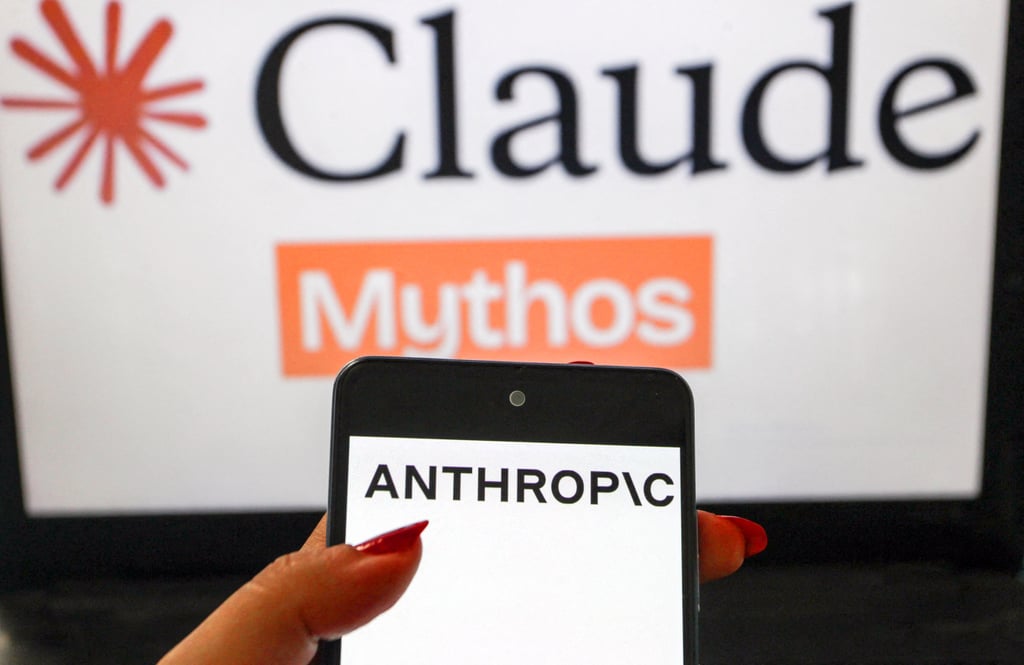
Last month, US start-up Anthropic said in a report that GLM-5.3 had similar cyber offence capabilities as its controversial Claude Mythos model, including the ability to autonomously develop end-to-end cyber exploits.
In late September, Chen wrote on X that he was switching to using GLM-5.3 to assist him in his work after reading Anthropic’s report.
In a report last month, the US government ranked GLM-5.3 as the most capable publicly released open-weight model for cybersecurity, though it said the model was still around four months behind the US frontier on cyber capabilities.
China’s AI industry is increasingly turning its attention to mitigating frontier AI risks, with TikTok owner ByteDance announcing last week that it was setting up a new department dedicated to AI safety.
China and the US also agreed to launch a bilateral AI safety dialogue at last month’s leaders’ summit in Washington, with AI expected to be a major point of discussion in President Xi Jinping and President Donald Trump’s two remaining meetings this year.
KioskNews shows a cleaned-up reading view extracted from the publisher’s page — the original always lives on their site, not ours.