Zero claims, tiny sample: PAC flags gaps in MediAsas medical insurance pilot
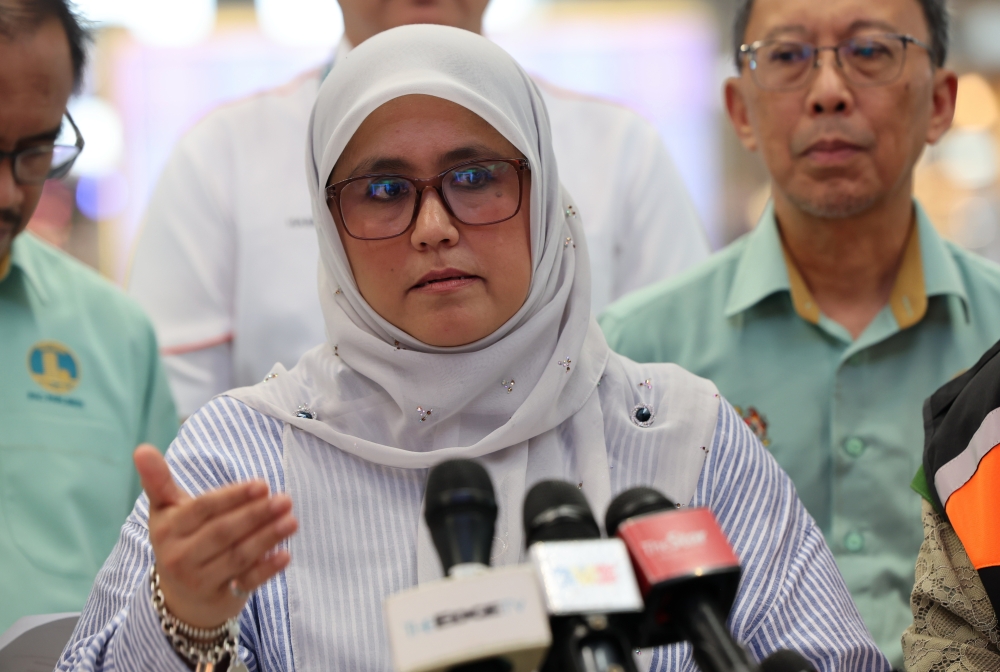

PAC chair Datuk Mas Ermieyati Samsudin said the MediAsas medical insurance pilot’s small, unrepresentative sample and lack of actual claims raised concerns about its ability to reflect Malaysians’ healthcare needs. — Bernama file pic
First Published: Tuesday, 17 Nov 2026 1:39 PM MYT
KUALA LUMPUR, Nov 17 — The Public Accounts Committee (PAC) today voiced concerns over some aspects of the “MediAsas” basic medical insurance pilot programme, warning that its small sample size and lack of real-world claims mean it has yet to adequately reflect the healthcare needs of ordinary Malaysians.
Speaking at a press conference in Parliament here, the bipartisan panel pointed out that the Klang Valley pilot involved just 1,600 participants, representing less than 0.1 per cent of the estimated 9.9 million Malaysians who rely on private healthcare.
PAC chair Datuk Mas Ermieyati Samsudin said concerns over the small sample were compounded by a lack of demographic representation.
The pilot group, the Masjid Tanah MP pointed out, was restricted to government-linked company employees and individuals who already have employer-provided medical coverage.
“More worryingly, this pilot phase has so far not recorded any actual cases of patients being admitted to wards or filing claims, that is, zero claims recorded,” she said.
“This situation means that the overall operational chain has yet to be practically tested,” the MP added.
“The PAC stressed that MediAsas should serve as a safety net for ordinary citizens to include informal sector workers, farmers, and fishermen, and not merely be targeted at the middle-income group, namely the M40.”
MediAsas, intended as Malaysia’s standardised, affordable basic medical and health insurance/takaful (MHIT) product, was jointly developed under the national RESET Strategy by Bank Negara Malaysia (BNM), the Ministry of Health and the Ministry of Finance.
The programme was designed as a voluntary, standalone, non-investment-linked medical plan to help uninsured Malaysians, as well as policyholders struggling with steep medical inflation and rising premiums, obtain and maintain basic private hospital coverage.
It is scheduled for a full rollout in January 2027 following a 2026 pilot phase.
PAC also flagged BNM’s interim measure protecting 80 per cent of policyholders from premium adjustments exceeding 10 per cent, calling it insufficient.
“Regulatory protection should cover 100 per cent of consumers so that no group of policyholders is left out and burdened by sudden spikes in contributions,” the panel said.
PAC said it would continue to monitor the implementation of initiatives under RESET, particularly MediAsas, and recall any controlling officers if there were any failure or delay in complying with its recommendations.
“This continuous monitoring is to ensure that access to public healthcare is guaranteed, unreasonable spikes in medical costs are curbed, and the financial burden on the public is reduced,” Mas Ermieyati said.
KioskNews shows a cleaned-up reading view extracted from the publisher’s page — the original always lives on their site, not ours.