Asked About AI Skills In A Job Interview? What Employers Expect From You
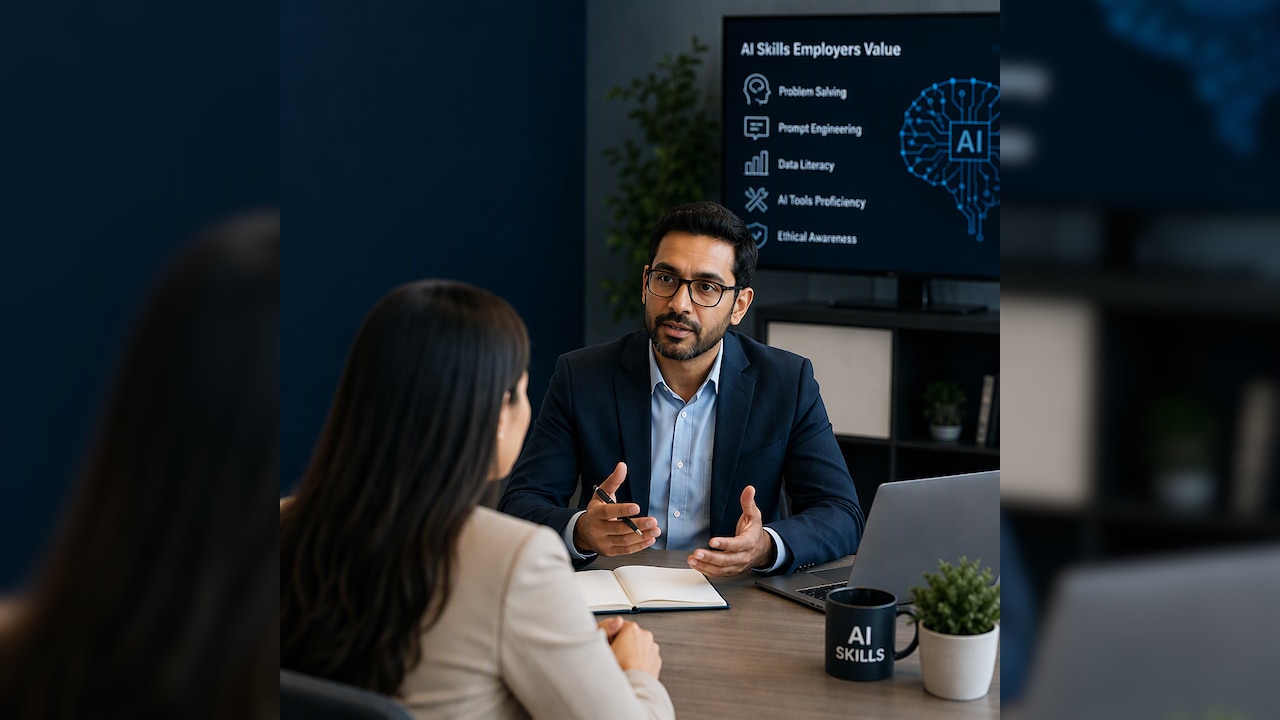
Knowing how to use ChatGPT or other artificial intelligence (AI) tools may give job seekers a head start. But it may not be enough to impress an interviewer.
As AI becomes part of everyday work, employers are looking beyond candidates who can generate text, summarise documents or create presentations using these tools. They want people who can use AI to solve problems, check information, protect sensitive data and turn machine-generated outputs into meaningful business results.
In other words, knowing which AI tool to use is only the beginning. Knowing how to use it well, and when not to trust it, is what matters.
Also Read | Layoffs Are Rising In Tech, But These Skills Are Helping People Unlock Better Pay
Jaspreet Bindra, founder and CEO of AI&Beyond and Tech Whisperer, told NDTV that employers are not necessarily looking for candidates who can build AI systems or write code. Instead, they want professionals who can use AI effectively, evaluate its outputs critically and apply it responsibly.
"In 2026, knowing how to operate an AI tool is only the starting point," Bindra said. The real differentiator, he added, is the ability to combine AI capabilities with domain expertise and sound judgement to deliver meaningful business outcomes.
What AI Skills Do Employers Look For?
According to Bindra, candidates need to demonstrate six practical capabilities to show that they can work effectively with AI.
1. The ability to give AI the right instructions: Simply typing a question into an AI tool is not enough. Candidates should know how to provide clear instructions, relevant context and specific objectives to get useful results. For instance, asking an AI tool to analyse customer feedback with a focus on recurring complaints may produce more relevant insights than a vague request to summarise the responses.
2. The ability to verify AI-generated information: AI tools can produce inaccurate information, misleading conclusions and fabricated facts. Employers want candidates who can identify these problems rather than accept every response at face value. This means checking facts, questioning assumptions and verifying claims before using AI-generated content in a report, presentation or business decision.
3. Using AI to solve real problems: Employers are interested in how candidates have applied AI in practical situations. This could include speeding up research, analysing large amounts of information, improving a workflow or developing a report. The focus is on what the candidate achieved, not how many AI tools they know.
4. Applying AI to a specific job role: AI proficiency is no longer limited to technology professionals. Marketing teams can use AI for research and campaign planning, HR professionals for routine administrative work, and finance teams for analysing information and identifying patterns. Candidates should understand which tools are relevant to their roles and how these can improve their everyday work.
5. Understanding responsible AI use: Data privacy, confidentiality, intellectual property and ethical considerations are becoming important parts of AI proficiency. Candidates should know what information can be shared with AI tools, how to protect sensitive business data and why AI-generated outputs need to be checked for potential bias.
6. Combining AI with human judgement: AI can improve speed and efficiency, but it cannot replace the need for sound decision-making and accountability. Employers value people who can combine AI-generated insights with creativity, professional knowledge and independent thinking. Knowing when to question a recommendation, make a correction or rely on human judgement is an important part of the skill set.
AI Skills: What Employers Expect Beyond Tool Knowledge
Vimal Dangri, CHRO and General Counsel at Mastek, said employers increasingly want professionals who can use AI to improve productivity, solve problems and make better-informed decisions.
He emphasised that prompting skills alone are not enough. Candidates must understand the business problem they are trying to solve and use AI to develop a meaningful solution. "Understanding the business context is as important as operating the technology," Dangri told NDTV.
He also highlighted adaptability as an important workplace skill. As AI tools and workflows evolve, employees need to keep learning, experiment thoughtfully and update their skills.
Responsible use is equally important, particularly when AI tools handle confidential information or influence decisions. Candidates must understand the risks associated with data security and bias, and know when human intervention is necessary.
At Mastek, Dangri said, the future of work will be shaped by professionals who combine technological fluency with human judgement, creativity and accountability.
How To Demonstrate AI Skills In A Job Interview
For fresh graduates and experienced professionals, the best way to demonstrate AI proficiency is to provide examples of actual work rather than simply list tools or certifications on a CV.
Candidates should be prepared to explain four things: the problem they faced, how they used AI to address it, what they independently checked or improved, and the outcome.
For example, a candidate could describe using AI to organise research, identify recurring themes in a dataset or speed up a routine task. They should then explain how they checked the output, corrected errors and assessed whether the final result was useful.
Even candidates without experience using AI in a formal workplace can demonstrate their skills through relevant academic projects, personal projects or practical exercises, provided they can clearly explain their contribution.
The ability to recognise AI's limitations is also worth highlighting. An interviewer may be more interested in how a candidate identified and corrected an inaccurate response than in how quickly the tool generated an answer.
Ultimately, employers are looking for professionals who can move beyond generating AI outputs to producing accurate, relevant and business-ready work.
KioskNews shows a cleaned-up reading view extracted from the publisher’s page — the original always lives on their site, not ours.