It looks like the Atlantic storm season may finally produce a hurricane
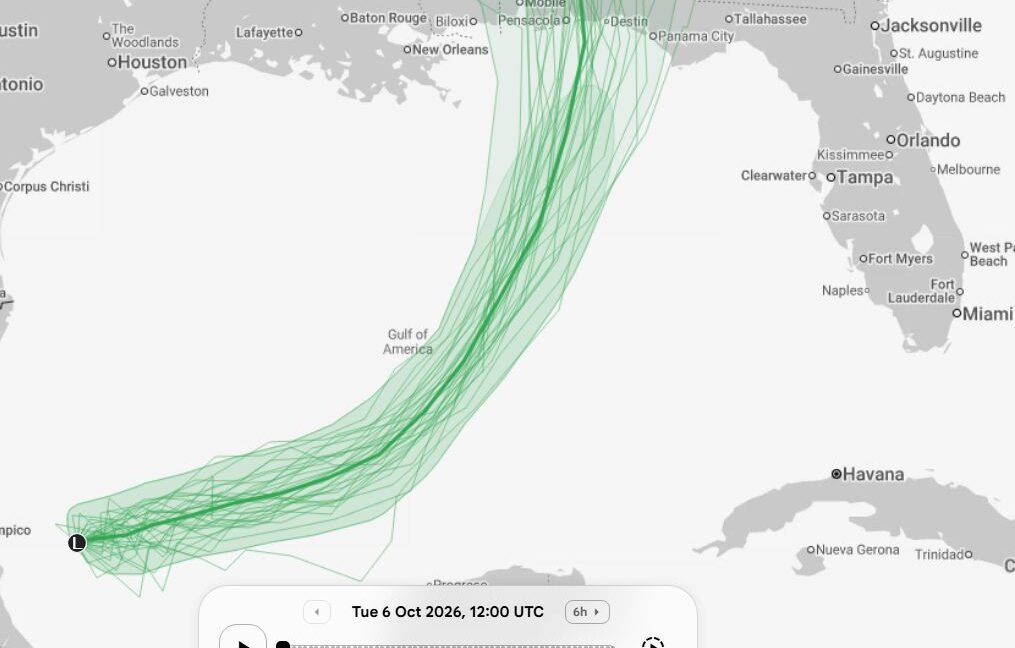
A low-pressure system in the western Gulf of Mexico should soon become a tropical storm, and based on the latest forecast modeling, it has a decent chance of becoming a hurricane.
Normally, a hurricane forming in early October would not be particularly noteworthy. However, this year the development of a hurricane would be a big deal—because it has not happened yet.
In the modern hurricane record—an era dating to about World War II when there has been aircraft reconnaissance and later continuous satellite coverage—there has never been an Atlantic season without a hurricane, and no season has gone this late without one forming.
There have been two years, 1907 and 1914, in which no hurricanes were recorded. However, that does not definitively mean there were no hurricanes. Before aircraft flew across the Atlantic, our records almost certainly missed hurricanes over the open ocean.
Atlantic window is closing
The Atlantic hurricane season, nominally, runs from June 1 through November 30. However, the vast majority of hurricanes form between mid-August and mid-October, so the window of opportunity for one this season is closing.
The Atlantic tropics have been exceptionally quiet this year, largely due to a strengthening El Niño that is expected to become historically strong. Typically, El Niño produces high levels of wind shear over the tropical Atlantic, which disrupts the organization of tropical systems. That has definitely been the case this year, as it has been the quietest season to date by most metrics.

KioskNews shows a cleaned-up reading view extracted from the publisher’s page — the original always lives on their site, not ours.