‘He’s simply astonishing’: will Andrew Scott become the first out gay man to win the best actor Oscar?
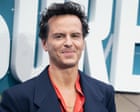
This Sunday, the curtain falls on the Toronto film festival, the last of the three big autumn showcases – alongside Venice and Telluride – that are launchpads for award campaigns. And as the dust settles on the red carpets, one name rises above the others as destined for sure-fire glory: Andrew Scott.
The Irish actor, 50 next month, is now not only considered a lock for a leading actor Oscar nomination but almost certain to take the prize next spring. Should he win, he will become the first out gay actor to do so in the Academy’s almost 100-year history.
If that’s a fact that seems astonishing today, it would have felt an inevitability in 1989, when the film for which Scott has been so praised is set. In Elsinore, he plays Ian Charleson, the dashing Scottish star of films including Chariots of Fire and Gandhi. Charleson had been given his first role three years before Chariots by Derek Jarman, but excised it from his CV (leading to a lifelong rift, depicted in Elsinore). Muting his sexuality was then considered essential in the pursuit of stardom. Yet despite such curation – and his undeniable talents – Charleson never reached the level of fame he felt he deserved.
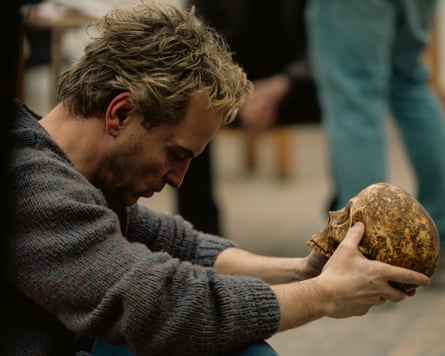
Until December 1989, that is, when he took over the role of Hamlet from Daniel Day-Lewis at the National Theatre, despite secretly having Aids. His performance was reckoned to be one of the finest ever, and he died six weeks after the final show, aged 40. His family then went public with his diagnosis and sexuality: this was the first celebrity death in the UK attributed to Aids, and did much to boost awareness and acceptance.
The film is a passion project for Scott, who also produced and rallied together funding alongside Stephen Beresford, screenwriter of Scott’s big-screen breakthrough, 2014’s Pride, another real-life story of 1980s gay history, about an unlikely alliance of LGBTQ+ activists and striking Welsh miners. Scott was galvanised to get Elsinore off the ground by the death of his mother, Nora, in 2023. “When you’re in that grief state,” he said, “you feel like you’ve got nothing to lose.”
The actor’s own path to stardom makes for a curious contrast with the man he plays. Born in Dublin in 1976, Scott shot his first film aged 17 before studying drama at Trinity College Dublin and moving to London aged 22. Despite playing gay characters, he, too, was advised to remain silent on his own sexuality, to avoid pigeonholing. Speaking after Elsinore’s Toronto premiere last week, Scott said such a climate gave him “a horrible feeling that I perhaps wasn’t going to be able to speak a language I was desperate to speak”.
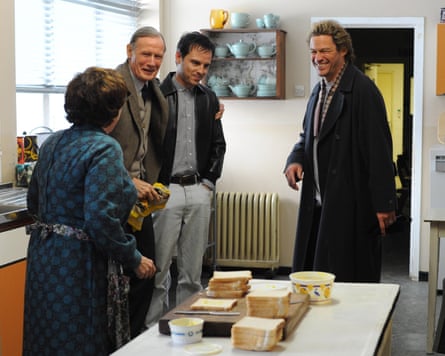
He came out publicly in 2013 aged 37, shortly after his small-screen breakthrough as Moriarty opposite Benedict Cumberbatch’s Sherlock. In the 13 years since, Scott has arguably done more than any man since Ian McKellen to refute the idea that publicly gay actors cannot plausibly play straight roles. His part in Fleabag is the most lusted after example, yet the hot priest stands alongside numerous other heterosexual characters he’s taken on: Richard Rogers in Blue Moon, Anthony Julius in Denial, 10 different people in his one-man Uncle Vanya. Still in cinemas is his sturdy and scowling Group Captain James Stagg, meteorological hero of D-day and new drama Pressure.
“The war is never over,” said Scott of the debate over LGBTQ+ casting in Toronto, “but there have been significant advances in what I believe is stopping the underestimation of audiences. They’re smart and they want to see representation and also transformation.”
And yet alongside his more conventional career choices, the actor has also consistently sought to engage with the pricklier aspects of the debate – railing against the use of the phrase “openly gay” while doing the rounds for All of Us Strangers in 2023, for instance. His next role, in Leo Reich’s forthcoming sitcom It Gets Worse, pushes the envelope further. A teaser appears to shows him as a toxic therapist who instructs his much younger client that he’s “just a hole for daddy” before spitting into his mouth.
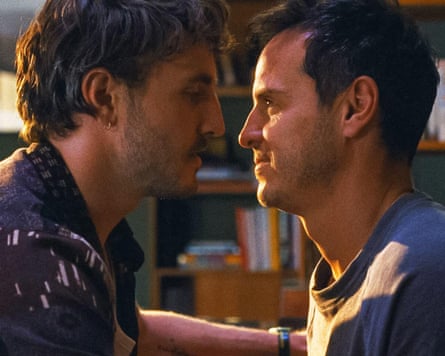
For Guy Lodge, chief critic of Variety, Scott is “essentially carving an unprecedented career path for an out gay leading man in the industry. One where he isn’t pigeonholed into queer roles, but where he doesn’t have to avoid them either, in order to prove his mainstream viability.”
While some of his highest-profile roles have been gay or queer men – Pride, All of Us Strangers, the Netflix series Ripley and now Elsinore – Lodge points to the lack of other commonalities between these parts. “In defiance of the restrictions and stereotypes that would, not all that long ago, have limited his options, Scott is showing us that there are many ways to embody queerness on screen.”
And it is this forward-thinking integrity that has come to mark the actor’s persona. His gentle, uncompromising candour – paired with an elegant discretion about his private life – has meant he is held in high regard and affection both by the public and his collaborators.
“I love him,” says Johnny Flynn, who plays the director Richard Eyre in Elsinore, and previously starred opposite Scott in Ripley. “He’s a dear friend and I think he deserves everything for Elsinore. He always puts his whole soul into whatever he does but this was something else. Watching him channel and hold Ian Charleson was such a privilege.”
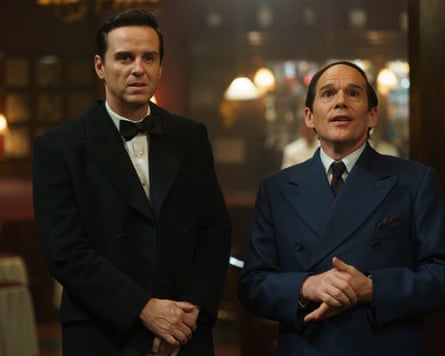
Scott, Flynn adds, is “one of our greatest actors. He’s got such a unique quality – a beauty in the deftness of his thinking; darkness and humour and power with heartbreaking fragility. He is such a gorgeous human being – so quick to laugh and wicked fun.”
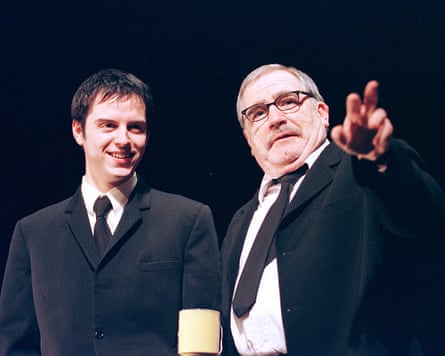
This sort of write-up is seemingly echoed by everyone who works with him. “He is an actor of incredible emotional insight,” says Simon Stephens, who scripted Scott’s one-man Vanya. “His linguistic and physical nuance are balletic. He thinks with relentless curiosity and he works with equal amounts of ferocious energy and care.” Stephens knew he had found a new favourite actor back in 2000, “since I saw him in Conor McPherson’s Dublin Carol. I’m glad I was 26 years ahead of the curve.”
In fact, given Scott’s pedigree, his awards run so far has been surprisingly patchy. He won Oliviers for A Girl in a Car With a Man and Present Laughter, and a TV Bafta for Sherlock, but nothing major for Fleabag – and, at the 2020 Sag awards, shortly after losing, he had to crawl from the auditorium in agony after passing a kidney stone mid-ceremony.
Further indignity came in 2024, when his devastating performance in All of Us Strangers was snubbed at nomination stage at the Baftas (unlike those of his castmates Claire Foy and Paul Mescal). The movie, considered by many to be one of that year’s finest, then failed to score a single Oscar nod – a slight which may end up working in Scott’s favour, as his name will now be synonymous to voters with embarrassment as well as excellence.
It may also be worth considering that actors make up the largest branch of the Academy’s votership – and they may respond especially favourably to Elsinore’s celebration of the profession’s inclusivity, courage and camaraderie.
The film positions Charleson’s achievement – not unfairly – as a vital fightback against the final curtain that is common to us all, whether or not we tread the boards. “I’d rather die of Hamlet than of Aids,” the character tells his doctor (Olivia Colman), trying to persuade her to help him build up the stamina needed to take on theatre’s most challenging role (1,500 lines, four hours, swordfight in hour three).
And in promoting the film so far, Scott has sought to highlight the universal bravery of Charleson’s actions, as well as the sports movie-style achievement of someone weeks from death exhibiting such commitment and athleticism. Those around the actor have, meanwhile, emphasised the sheer graft involved in pulling off a performance of the stature of Hamlet, or Charleson, or both.
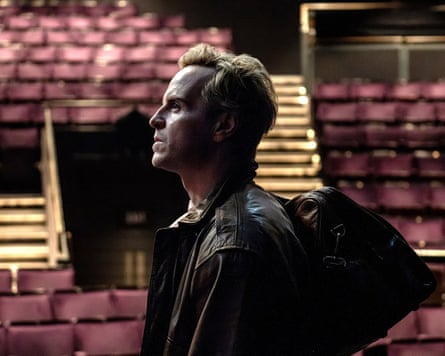
Andrew Haigh, who directed him in All of Us Strangers, calls Scott’s turn “simply astonishing. I struggle to think of a better performance. Andrew embodies the character so completely it feels as if we are watching lived experience. But make no mistake, this is a performance of incredible skill. Andrew is completely fearless in the role.”
Likewise, Elsinore director Simon Stone says that “every time I rewatch the film I can’t see Andrew – it’s just Ian. The way he surrenders to the character, to the world, the situation, is beyond compare. Sure, it’s also an effortlessly brilliant performance in terms of technique. But what is most astonishing is how he matches this technique with raw truth.
“Where other actors may perform an emotion or a state, Andrew presents us with a character surprised by what he is going through. That shock helps the audience be surprised and heartbroken with him and we can feel empathy in the truest sense.”
The Academy has spent 98 years giving out leading performance Oscars to gay actors who never or only later publicly spoke their whole truth, as well as to a parade of straight stars for playing LGBTQ+ characters. Their failure to recognise Scott’s remarkable achievements, both professional and personal, seems unlikely.
KioskNews shows a cleaned-up reading view extracted from the publisher’s page — the original always lives on their site, not ours.