Japanese forecasters find AI beats traditional models at tracking typhoons
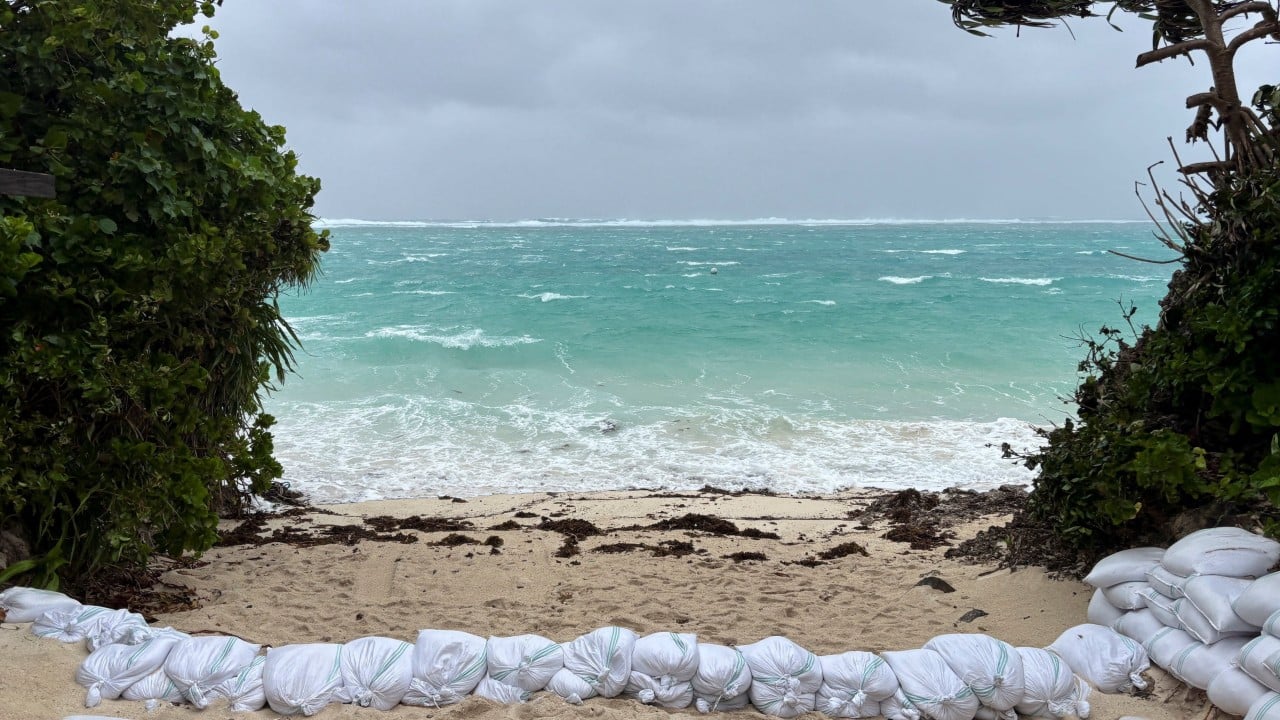
Artificial intelligence-based typhoon track forecasts in Japan are outperforming conventional physics-based models, with AI accurately projecting early on the path that last month’s Typhoon Champi would ultimately take.
Private weather service Weathernews Inc has been using AI forecasts, while Japan’s weather agency is pursuing research and development towards their use. But experts say challenges remain, including forecasting typhoon intensity.
Conventional physics-based models input data such as temperature, air pressure and water vapour levels into supercomputers to calculate outcomes based on the laws of physics.
AI forecasts, meanwhile, learn from vast amounts of past weather data to identify tendencies and regularities, then search for patterns similar to current conditions to estimate atmospheric movements.
The Japan Meteorological Agency primarily uses physics-based models while also referencing external AI models.
Typhoon Champi, the year’s 30th typhoon, formed over the Pacific Ocean on October 15 and initially moved westward. As of October 19, physics-based forecasts by the agency and overseas weather institutions mostly projected that it would approach Taiwan before heading towards China.
AI models, meanwhile, forecast that it would move northwards near Okinawa and curve over the East China Sea. The typhoon in fact curved sharply after approaching the Nansei Islands, a chain of islands that stretches southwest from the Japanese main island of Kyushu.
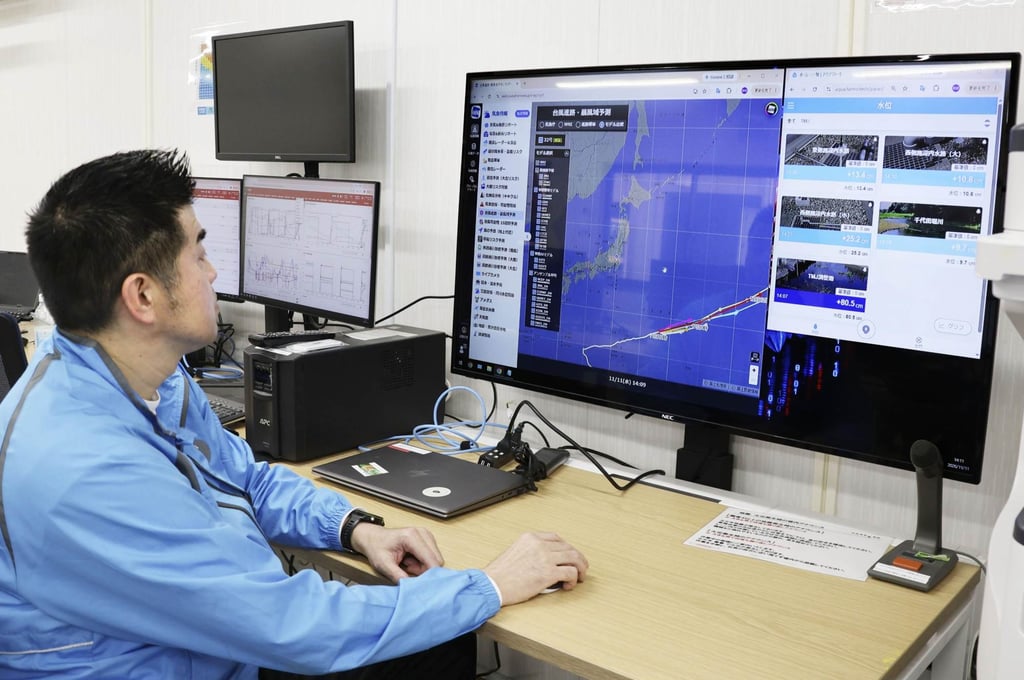
“AI excels at forecasting large-scale atmospheric flows, including the Pacific high-pressure system and westerlies that affect typhoon tracks, and accurately predicted the timing of the turn,” said Munehiko Yamaguchi of the Department of Typhoon and Severe Weather Research at the Meteorological Research Institute.
Private weather services are permitted to issue their own typhoon forecasts under certain conditions, such as limiting recipients. Since last year, Weathernews has provided its paid subscribers with track forecasts made by AI.
Deviations in tracks for last year’s first to 26th typhoons were about 30 per cent less than those of physics-based models.
“We can improve accuracy by making the most effective use of AI,” said Kohei Sakamoto, an official of the company’s forecasting centre.
Naoto Yamada, vice-president of Tanemaki Joso, an agricultural corporation that grows cherry tomatoes on a large scale in Joso, Ibaraki prefecture, said he always consulted AI forecasts as they “are highly accurate”.
When Typhoon Dujuan approached the Kanto region in September, the organisation was able to take early measures, including installing flood barriers and arranging staff shifts, about a week in advance based on Weathernews’ forecasts.
The weather agency’s initial forecast had projected a track towards western Japan or Okinawa, while AI indicated the possibility of an approach to Kanto, which is centred around Tokyo.
But AI models also have their weaknesses. Yamaguchi of the Meteorological Research Institute said they were not good at forecasting typhoon intensity, making it difficult to accurately predict rainfall and wind speeds.
This, however, could change soon with rapid technological improvements. AI models “cannot be ignored”. Yamaguchi said. “We need to consider how to use them to help provide disaster prevention information.”
KioskNews shows a cleaned-up reading view extracted from the publisher’s page — the original always lives on their site, not ours.