The Man Who Broke Reality by Philip Ball review – the inspirational genius of Niels Bohr
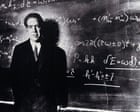
Niels Bohr shares with Albert Einstein pride of place in the pantheon of 20th-century science. The two had much in common. They were not expert mathematicians; they prized physical intuition over mere competence; and they did not shy away from the moral and political implications of their work.
But Bohr differed from Einstein in one crucial respect: his extraordinary personality. In his gripping biography Philip Ball ensures we feel the intense pull of Bohr’s genius. Today he would probably be considered neurodivergent; he possessed a passion for physics that cast a spell on all who knew him. Solving problems is the raison d’etre of any scientist, but Bohr went far beyond that: having inaugurated quantum mechanics with his model of the atom in 1913, he simply would not give up until the rest of it was understood.
This relentless passion attracted to him a large group of young researchers who later became famous in their own right: Wolfgang Pauli, Paul Dirac, Lev Landau, John Wheeler, Max Delbrück, Felix Bloch and many others. Bohr was helped in this by an unusual circumstance that would be worth imitating. His Copenhagen institute, funded by the Carlsberg foundation (the beer people) had labs on the ground floor, and floors of accommodation above it which hosted a cast of collaborators, some staying for days, others years. They all revered Bohr, whose Socratic manner, kindly disposition and seeming lack of ego created a true Republic of Numbers. Carl von Weizsäcker best described the atmosphere as one of “love without limits” for the man.
Bohr’s life story in essence parallels the first half-century of quantum mechanics. Biographies of physicists frequently either stumble on the physics itself, or veer unnecessarily technical. Ball, one of the few people alive today who is equally at home in biology, chemistry and physics, brings decades of explanatory expertise to the task. The amazing discoveries are explained so effortlessly that the reader hardly realises what just happened.
Bohr emerges as someone who greets even half-formed discoveries with enthusiasm, makes sure that credit is given where due, and keeps the momentum going, often exhausting his collaborators with discussions lasting long into the night. His famous intellectual tournament with Einstein at the Solvay Congresses of 1927 and 1930 – probably the greatest in the history of physics – is grippingly recounted (Bohr won in five sets).
Ball doesn’t shrink from the contentious aspects of Bohr’s career, and in fact illuminates them convincingly. The Copenhagen School he headed has sometimes been described as dogmatic and cult-like. Ball argues that this, insofar as it is true, is not to be laid at Bohr’s door. When the physics remained stubbornly opaque, Bohr tried to steer a prudent course between conflicting interpretations. His followers lapsed into dogma only after his death.
Even when he worked at Los Alamos in the 1940s, Bohr did not materially contribute to development of the atom bomb, though his model of the nucleus had started it all. He was in fact very concerned about the consequences of fission weapons, and the book describes his disastrous encounter with Winston Churchill, during which he suggested sharing atomic secrets with the Russians to avert nuclear war. Churchill angrily took this to be nonsense, and treasonous.
Ball also recounts Werner Heisenberg’s famous trip to see Bohr after the Nazi invasion of Denmark in September 1941. Heisenberg, scheduled to give lectures at the German Institute in Copenhagen, was, obtusely, surprised and upset to see that no Danish scientists turned up, despite his long association with and almost filial devotion to Bohr. They subsequently had a guarded conversation about nuclear weapons, each wary of revealing secrets. Ball convincingly argues that Heisenberg’s self-serving rewriting of history after the war, according to which he and other German scientists had done all they could to avoid giving Hitler the bomb, was bunk. All in all, The Man Who Broke Reality reminds us that science is a very human adventure, and that great humans make great things happen.
KioskNews shows a cleaned-up reading view extracted from the publisher’s page — the original always lives on their site, not ours.