Cop31 illustrated what’s wrong with climate finance
When Australia’s climate minister Chris Bowen spoke at Cop31, the United Nations climate change conference, in Antalya, Turkey, he said the world was asking whether multilateralism could rise to meet a “polycrisis” of climate change, energy security, conflict and the power demands of artificial intelligence. “Is international cooperation still a way forward? This fortnight we can answer those legitimate concerns and questions with a simple answer: Yes,” he said.
For developing countries across Asia and the wider Global South, the polycrisis is hardly new. As researcher Farwa Sial has argued, the West is only now discovering what much of the Global South has always lived with: “a continuum of so-called polycrisis”.
Multilateralism might be the only way forward. However, the question is not so much about international cooperation than the system on which the rules of cooperation rest. This system is riddled with structural power imbalances and political and economic inequalities.
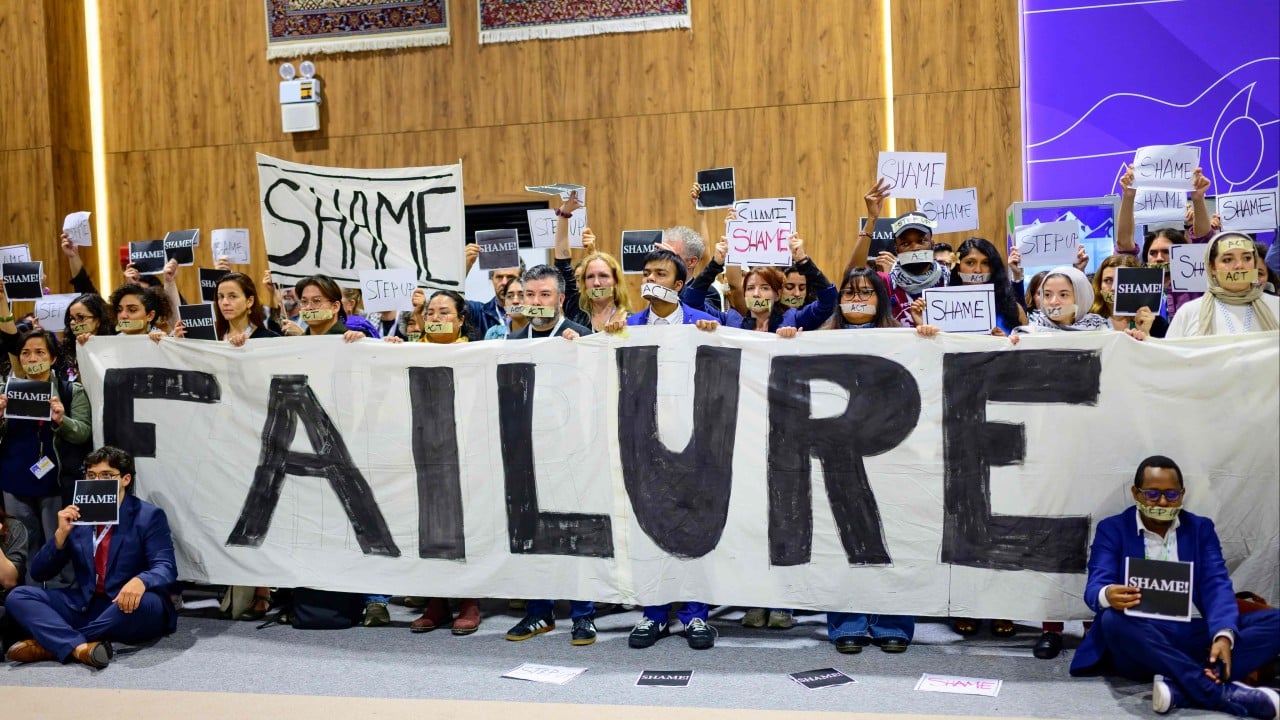
Nothing illustrates this better than climate finance, and in particular what transpired in Antalya over the last two weeks. When developing countries pushed to set out how the promise to triple adaptation finance would be met, the European Union and Japan said the discussion belonged in the finance negotiations.
At talks in Bonn, Germany, in June, proposals to turn the Just Transition Mechanism into a vehicle that mobilises capital met with insistence from developed nations that finance falls outside its mandate. In an interview in October, EU Climate Commissioner Wopke Hoekstra called new funding demands “dead in the water”. At Cop31, a proposed US$120 billion adaptation target was dropped for a promise to discuss a pathway which did not survive.
Even the multilateral development banks, which hyped a record US$103 billion in climate finance to low- and middle-income countries in 2025, delivered around 80 per cent of their climate finance as loans and just 3.7 per cent as grants. The European Union received almost three times as much of it as sub-Saharan Africa. Meanwhile, the World Bank dropped its flagship target of directing 45 per cent of its financing to climate-related projects in June after months of pressure from the United States, its largest shareholder.
15:07
Children now experiencing ‘best weather of their lifetime’, warns Asia’s top climate scientist
Then there is debt servicing and the fairness of how loans are structured and disbursed. According to Unctad, developing countries hold US$35 trillion in public debt and paid a record US$995 billion in net interest in 2025. Developing countries, excluding China, borrowed at more than twice the rates rich countries pay. Fifty-one developing economies, home to 3.7 billion people, now spend more on servicing debt than on health or education. When the next disaster strikes, what choice do they have but to borrow again?
Pakistan offers the clearest example. The 2022 floods caused US$30 billion in damage and economic losses and pushed as many as 9.1 million people into poverty. With grants falling short, Islamabad took on billions in new loans, including US$400 million from the Asian Development Bank (ADB) to rebuild homes and infrastructure. During this year’s UN climate conference in Antalya, the ADB approved another US$500 million loan for Pakistan’s disaster resilience.
Energy and artificial intelligence (AI) follow the same pattern. The Iran war sent Asian spot LNG prices towards US$30 per million British thermal units, up from about US$10 pre-war. India, Pakistan, Bangladesh, Thailand and Vietnam had spent US$7.4 billion on spot cargoes by mid-September.
01:57
Over 800 people killed in Pakistan floods caused by monsoon rains
Data centre power demand in Southeast Asia is expected to quadruple by 2035, drawing on grids the region is already struggling to bolster. Unctad describes the gains from AI as “extremely concentrated”. Most developing economies take part in the AI hardware boom only as suppliers of raw materials.
A multilateral response to the polycrisis would require changing the rules of engagement. Finance for adaptation, loss and damages must shift from market-rate loans to predictable grants as well as to local-currency lending that does not inflate US dollar debt. A just transition requires financing and technology transfer.
The developed world should recognise that developing countries cannot be held to the same standards as their richer counterparts, and that without adequate support they cannot make the transition at all. At the same time, debt relief for the most vulnerable countries hit by climate disasters must become the norm. The World Bank already offers automatic two-year debt pauses after disasters, but only to small states. They should cover every climate-vulnerable country.
Multilateralism works when the developing world is treated as an equal partner, when finance is equitably given for crises the Global South did little to create and when we halt extractive forms of development which drain countries of natural resources and wealth, leaving scars of ecological destruction.
Unless the developed world takes its fair share of responsibility and the systems which have helped create the polycrisis are re-evaluated, the mire in which the world finds itself will only worsen.
KioskNews shows a cleaned-up reading view extracted from the publisher’s page — the original always lives on their site, not ours.