How Nvidia scandal, US midterm losses could affect Trump’s hand with Xi - and what it means for Beijing
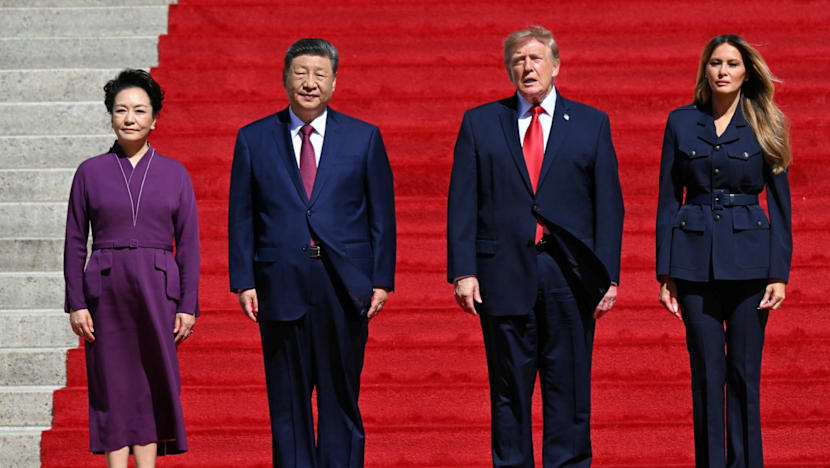
SHANGHAI: A suspected Chinese spy, a technology titan embroiled in scandal and a bruising midterm election defeat.
United States President Donald Trump faces a complicated political backdrop as he prepares to meet Chinese counterpart Xi Jinping next week, in their third encounter this year.
Trump has said he expects to meet Xi on the sidelines of the Asia-Pacific Economic Cooperation (APEC) summit in Shenzhen on Nov 18 and 19.
Much rides on the talks. A fragile trade truce between the world’s two largest economies runs only until Jan 10, while disputes over tariffs, agricultural purchases and technology remain unresolved.
But the political landscape in Washington has shifted since their last meeting in September.
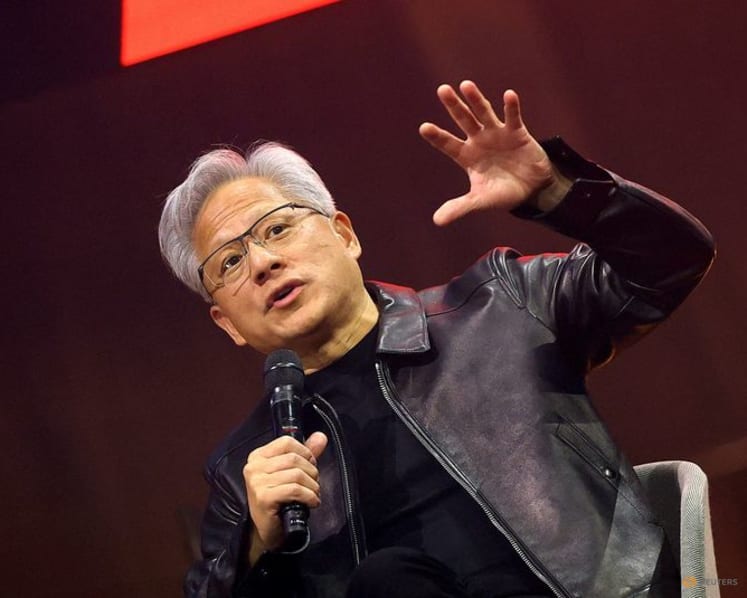
Democrats have wrested control of both chambers of Congress. Meanwhile, allegations that Nvidia CEO Jensen Huang had an affair with a suspected Chinese spy have triggered demands for congressional investigations.
China’s foreign ministry has dismissed the spying allegations as “groundless speculation” and a smear campaign.
The twin developments raise questions about whether Trump will arrive in Shenzhen with a weaker negotiating hand - and whether his political troubles will give Beijing an advantage or complicate its own calculations.
A WEAKER HAND FOR TRUMP?
Some analysts believe the Nvidia controversy has compounded Trump's midterm setbacks, weakening his negotiating position with China.
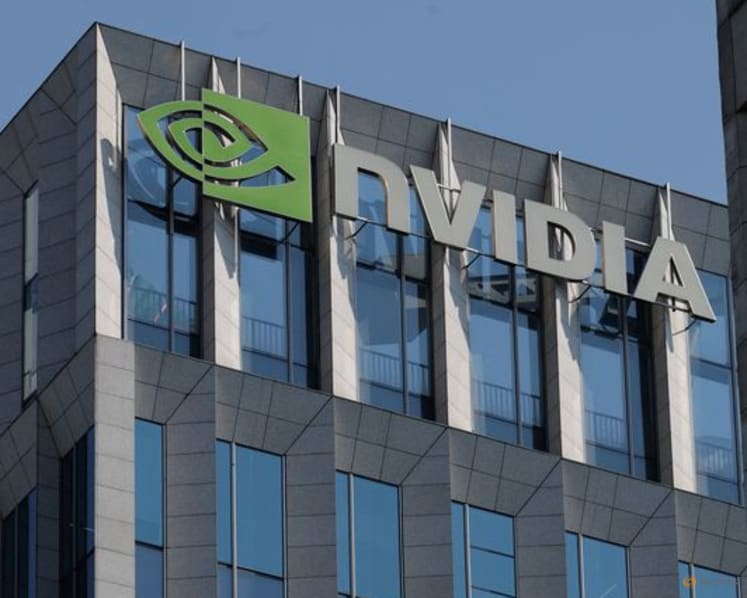
The American tech firm is the world’s leading supplier of advanced artificial intelligence chips. Huang has pushed for greater access to the Chinese market, even as Washington restricts exports of its most cutting-edge products over national security concerns.
“That’s the key question: when did (Trump) know about this?” Dexter Tiff Roberts, a non-resident senior fellow at the Global China Hub of US think-tank Atlantic Council, told CNA, referring to Huang’s extramarital affair with a suspected Chinese spy.
“Trump set up a deal where they were getting money back for Nvidia sales to China, so it becomes an even more sensitive issue if the Trump administration knew,” Roberts said.
In late last year, Trump allowed Nvidia to sell certain AI chips to approved Chinese customers in exchange for a share of the revenue going to the US government.
CNN reported on Monday (Nov 9) that US Secretary of State Marco Rubio had briefed Trump on the intelligence concerns during his trip to China in May. Trump has said he did not hear about the allegations then.
Huang has been asked to brief three House committees behind closed doors on Nov 18 - the same day APEC leaders begin meeting in Shenzhen.
The uncertainty has since deepened, with reports of a second affair threatening Huang's position at Nvidia and potentially sidelining one of the most influential corporate voices in US-China tech relations.
The troubles come on the heels of the Republicans’ defeat in the Nov 3 midterms.
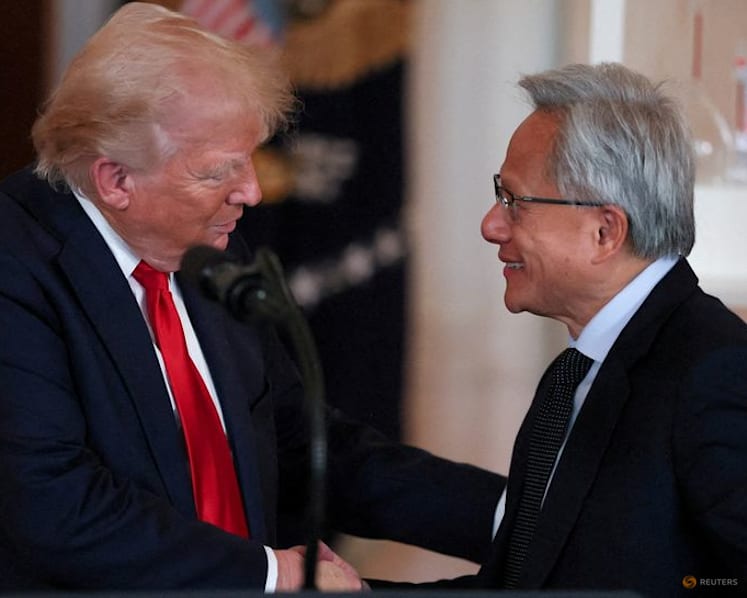
The Democratic sweep has ended Trump’s ability to run China policy as a “one-man show”, Roberts said.
“I think (Beijing views) him as a weaker partner. I think he is a weaker partner,” he said.
“I don’t think he can promise and make deals on China policy in the way that he’s been doing it for the last year.”
Analysts previously told CNA that the new balance of power on Capitol Hill could sharpen scrutiny and raise the political cost of Trump’s dealings with China.
Congress could use its investigative and oversight powers, including the ability to summon administration officials and influence government spending, to challenge White House decisions.
But troubles at home do not necessarily translate into a weaker hand abroad, other analysts said.
“I don’t think the midterm outcome changes Trump’s leverage,” said Drew Thompson, a senior fellow at the Singapore-based think-tank S Rajaratnam School of International Studies (RSIS).
While Congress can launch investigations and attempt impeachments to “distract” Trump, it has few ways to constrain how a president negotiates with another country, Thompson said.
He noted that the limits on Trump’s tariff powers have come from the courts, not lawmakers.
“The Supreme Court clipped his wings on tariffs. Congress can’t,” he told CNA.
Meanwhile, “China offsets Trump’s leverage with their own,” he added.
Lim Tai Wei, an East Asian affairs observer and professor at Japan’s Soka University, noted that the White House still has “a lot of leeway” in conducting foreign affairs with other countries.
The incoming Democratic majorities, he added, are likely to focus on “bread-and-butter issues” at home ahead of the 2028 presidential election.
HOW BEIJING SEES THINGS
Beyond the foreign ministry’s repeated rebuttals, Beijing has said little about the Nvidia controversy.
That is because China regards it as an American domestic matter, said Xu Qinduo, a senior fellow at Pangoal Institution, a Beijing-based think-tank.
“That’s US politics … yes, it’s related to China, but it has not that much to do with China in a sense,” he told CNA.
Xu also questioned the espionage claim itself. He asserted that China needs manufacturing equipment to advance its chip industry, not information.
While acknowledging a lack of evidence, Xu suggested the timing of the scandal reflects a push by China hawks in Washington, following the Republicans’ midterm defeat, to further restrict the export of any possible advanced chips to China.
Xu, also an adjunct professor at Renmin University of China, said Beijing does not see Trump as a weaker counterpart.
“I think the Chinese side respects President Trump. He’s strong,” he said.
Unlike Democratic presidents, who tend to press Beijing on issues such as human rights, Trump focuses on trade and tariffs - making him easier to deal with from China’s perspective, Xu said.
“President Trump is pragmatic and practical. He does not pretend to presume this kind of moral leadership to lecture the world about how they should run their countries,” he said.
“It’s about your interests, it’s about my interests, it’s about give and take … It’s like a business.”
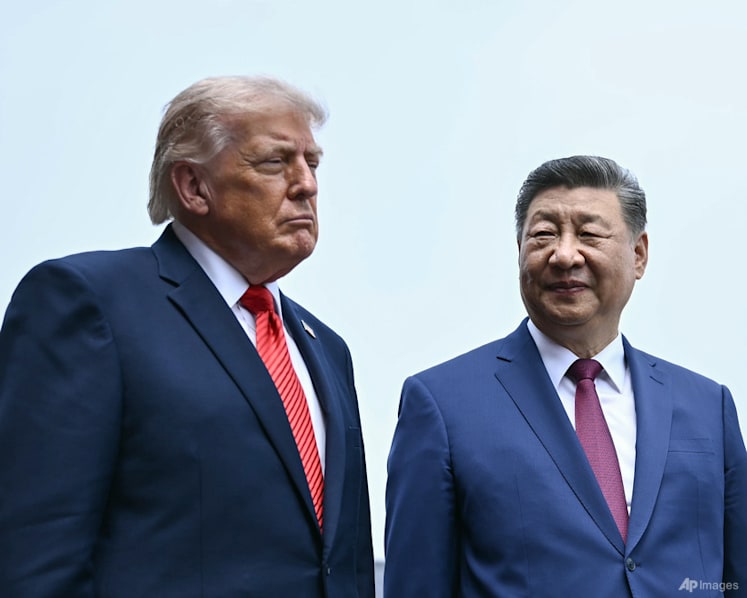
Similarly, Atlantic Council’s Roberts said that Beijing appreciates Trump’s “transactional nature” and how he “doesn’t seem to care about human rights issues”.
“But those things can no longer be taken for granted,” he added.
Trump could face greater constraints on his China policy as Congress gains a bigger say, Roberts said, with Democrats and Republican China hawks who have been sidelined under the president both favouring a tougher line on Beijing.
“The catch-22 for China is they might prefer Trump with more leverage, because for them Trump is sort of the enemy they know,” he said.
DEALS AMID THE DRAMA?
Despite the recent turmoil in Washington, analysts expect Trump and Xi to focus on the longstanding issues between their countries when they meet at the APEC summit.
“Xi certainly will not bring it up,” said RSIS’ Thompson, referring to the Nvidia scandal.
Trump himself was asked on Monday whether he would raise the matter with Xi. “I don’t think so,” the US president replied.
Beijing will want to protect the mood of the meeting, said Soka University’s Lim.
“China is a high-context political culture that places a lot of premium on symbolism, and they always want to create a positive atmosphere for the talks,” he said.
Analysts differed, however, on whether Beijing might use the controversy to press Washington over its chip export restrictions.
If Trump raises the matter, Xi is likely to respond with “something anodyne about the importance of technology trade and the need for the US to lift restrictions”, Thompson said.
Xu, however, sees little reason for Beijing to seek an easing of US curbs when China is itself restricting purchases of American chips.
“It’s the Chinese side which imposes restrictions on the purchase of US advanced chips, because of the concern of loopholes, backdoors,” he said.
Reuters reported this month that about 600,000 Nvidia H200 chips were being stored in Hong Kong awaiting shipment to the mainland, as China withheld import permission.
“If you are allowed to purchase US chips today, they can always close the door the next day,” said Xu.
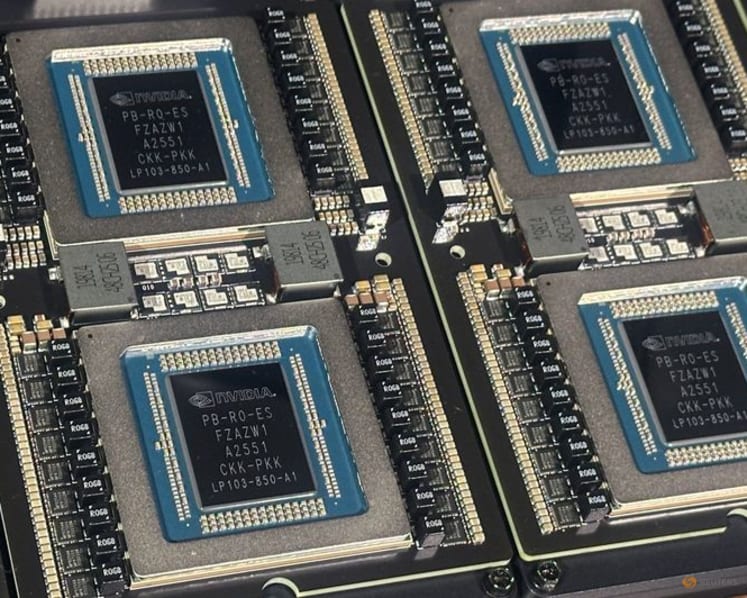
Instead, he expects the two leaders to focus on implementing earlier trade commitments while also discussing Taiwan and US arms sales to the island.
On Monday, China’s Customs Tariff Commission said it would keep an additional 24 per cent tariff on US goods suspended for another two months, while retaining a 10 per cent levy.
But disagreements persist over Chinese purchases of US farm goods, Xu said, with Beijing viewing them as conditional on tariff cuts by both sides.
Technology remains another sticking point, with Roberts warning that the Nvidia controversy “definitely complicates things” for any wider agreement on AI.
Even so, Lim expects the meeting to deliver “positive symbolism, positive optics, and positive atmospherics”.
Whether that translates into lasting agreements is another matter.
For Thompson, what matters most to Beijing is whether Trump is willing to make concessions - and then whether any deal would outlast his presidency.
“Will that deal be sustained, or will it be renegotiated?” he said.
KioskNews shows a cleaned-up reading view extracted from the publisher’s page — the original always lives on their site, not ours.