WHAT’S COOKING: Chicken coconut curry with ground almonds and curry leaves
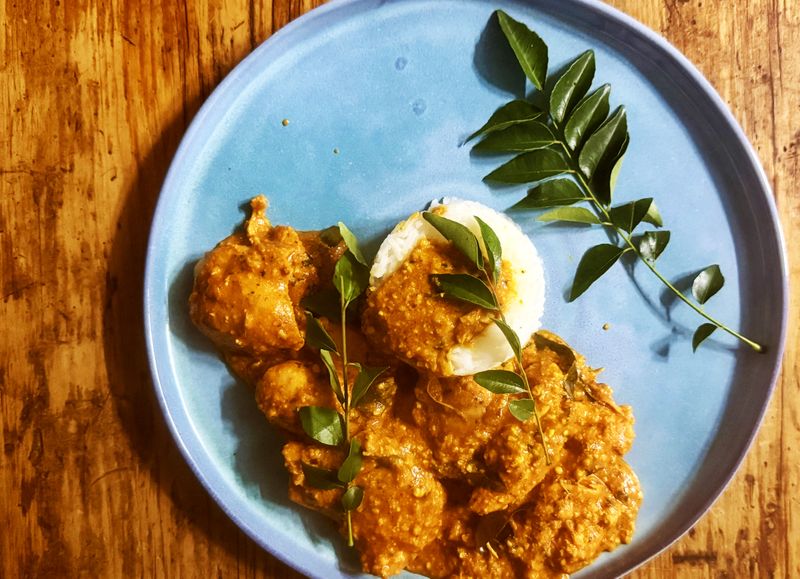
Mention of curry, curry leaves and a curry plant can be confusing. One is a style of cooking, another is the fragrant and edible leaf of a tree, and the third is an entirely different plant that is merely ornamental but has a curry-like fragrance. This week I made a curry using fresh curry leaves.
The leaves of a curry tree release exotic aromas of smoky citrus blended with a hint of bay and an intriguing nuttiness that makes them one of the most arresting of leaf spices.
Spotting fresh curry leaves in my local supermarket – and as you can see in the main picture they don’t come fresher than that – I decided to pair them with something even nuttier. Almonds, which I ground immediately before use.
Have a look at the two kinds of ‘curry’ plant referenced above…
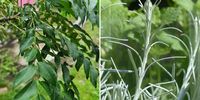
This would be, at its heart, a chicken coconut curry, and I have done many variations of those. I also included a good amount of fresh coriander leaves, picking the soft leaves from their firm stems and chopping them up to stir in just before serving. So there are two kinds of leaves in this, with very different tastes.

To start with, you essentially make your own cook-in sauce. Once the core ingredients (coconut cream, tomato paste, ginger, garlic, ground almonds and spices) have been mixed, stir in the fresh curry leaves.
It is a rather thick sauce into which you simply add the chicken portions and simmer until the flesh is tender and the sauce has enriched in both flavour and colour.
Now, there is one alteration to the above recipe that you can make if you want to, and that is to start by melting a little coconut oil and frying the curry leaves in that for a minute. Then add everything else and mix as described above.
Tony’s chicken coconut curry with ground almonds and curry leaves
(Serves 2-4)
Ingredients
2 Tbsp coconut oil (optional, see above)
1 x 400g can of coconut cream (not milk)
3 fat garlic cloves, peeled and finely chopped
A 3cm piece of plump fresh ginger, peeled and finely chopped
100g tomato paste
100g raw almonds, whole
Salt to taste
½ tsp ground cumin
½ tsp ground turmeric
1 tsp ground coriander
1 tsp ground fennel
1 or 2 Tbsp masala (I used Durban curry masala)
A handful of fresh coriander leaves, finely chopped
Extra curry leaves for garnish
Basmati rice, as much as needed
Method
Peel the garlic and ginger and chop both very finely. Grind the almonds until they’re quite fine – I did this in a food processor, which took barely a minute.
If you want to start by frying the fresh curry leaves in melted coconut oil for a minute, do so, otherwise start by adding the coconut cream, tomato paste, finely chopped garlic and ginger, and ground almonds to a pot. Stir in all the spices, and season with salt to taste.
If you haven’t started by frying curry leaves in coconut oil, add the fresh curry leaves now, then add the chicken pieces. Fold them in to be sure everything is coated in the curry sauce.
Simmer very gently, uncovered, until the chicken is tender, about 30 minutes. Stir now and then for even cooking. You’ll see that the colour of the sauce deepens gradually as it cooks, and the flavours develop accordingly.
A break to make that basmati rice, my way
While the pot simmers, cook some basmati rice. Here’s a reminder of how I always cook rice, and have been doing for more than 20 years:
Choose a pot with a tight-fitting lid;
Cut a piece of foil a bit bigger than the top of this pot;
In this pot, rinse the grains four times in cold water, and drain;
Slowly pour in cold water while holding your index finger at the top of the rice;
When the cold water reaches the first digit of your finger above the top of the rice, turn the water off. (It doesn’t matter how much rice you’re cooking, the method is the same.)
Put the pot on a high heat and bring it to a boil, uncovered;
As soon as it boils, turn off the heat, put the foil cap on top, and clamp the lid on tightly;
Leave the pot of rice (yes, with no heat under it) for 30 minutes, and your rice should be perfectly cooked. Just ignore it and it will reward you.
Now, let’s serve that curry
Uncover the rice, which should be perfect. If still a little wet (stir and check the bottom of the pot), cover it again, put the heat on under it for a few seconds, then turn it off and leave for 2 or 3 minutes more.
Stir the chopped coriander leaves into the curry.
Mould some rice by spooning it into ramekins and upturning it onto plates. (Turn the plate over on top of the ramekin, then flip over both plate and ramekin and let the rice plop out).
Spoon the chicken curry alongside and garnish with fresh curry leaf sprigs.
Tip: If you have fresh curry leaves left over, they freeze perfectly and can go directly from the freezer into your next curry. DM
KioskNews shows a cleaned-up reading view extracted from the publisher’s page — the original always lives on their site, not ours.