Big Tech claims voters’ AI backlash is “anti-Trump” not “anti-tech”
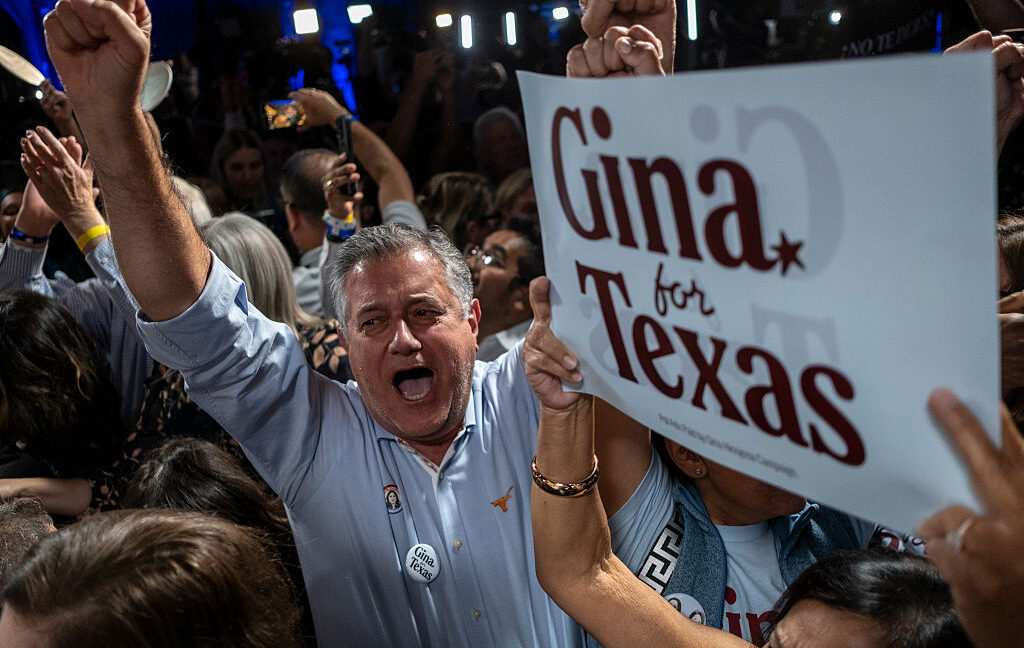
Donald Trump’s big, rapid American AI buildout now faces a major slowdown as voters in yesterday’s elections overwhelmingly supported candidates and measures that favored increasing restrictions on AI and data centers nationwide.
One resource from a polling firm, called Redbud Consulting, tracked data center initiatives on the ballot and reported that out of 44 measures across 10 states seeking to restrict data centers, 38 passed so far. Those measures included dozens of moratoriums and bans. Analysts suggested those won’t impact data centers already under construction or approved through 2027, instead largely impacting future projects planned for 2028. Only one measure passed allowing a data center to proceed. But even that small win represented pushback on the AI industry—requiring data center developers in a North Dakota city to pay for independent reviews and hold public hearings when expanding or proposing projects.
In addition to increasing regulations on data centers, voters also backed anti-AI candidates, electing officials vowing crackdowns in key states building out the most data center capacity in the US.
Most notably, Democratic challenger Gina Hinojosa won the Texas governor race that Axios reported would fundamentally scramble the math on Trump’s AI buildout. According to Bloomberg, Hinojosa’s election has developers facing down the “worst-case scenario.” Texas is the epicenter of the AI boom, Axios noted, and was expected to account for more than 41 percent of added data center capacity in 2028.
Now, Hinojosa plans to delay projects as long as it takes to pass laws “tackling impacts on water, electricity, air, and property rights.” Approximately “13 gigawatts of data center capacity” is now exposed, Bloomberg reported. Gordon Johnson of GLJ Research warned in a note that Texas projects with “power, permits and steel keep going,” but “those with power but no state environmental permits slip 12 to 18 months,” Bloomberg reported. Some projects may leave the state entirely, perhaps moving to Louisiana or Georgia—or perhaps going nowhere.
“She would impose a moratorium until legislation is passed that gives communities a voice, protects household utility bills, and ends the tax incentives for data centers,” Johnson’s note said. “The question now is how long the pause lasts.” As PIMCO head of public policy Libby Cantrill similarly warned, “even if statewide moratoria do not result, we expect to see a lot more sand in the gears of the AI buildout regardless—with more time required to secure permits and other approvals, as well as more concessions that data center developers will have to make.”
Big Tech downplays AI election results
Texas wasn’t the only big shake-up. Democrats won governor races in the next three biggest states previously wooing data center developers—Arizona, Georgia, and Ohio. Overall, Axios projected that “nearly two-thirds of 2028 data center capacity” could face similar delays as Hinojosa threatens in Texas. Bloomberg estimated that half the data centers in the US are now more vulnerable to scrutiny.
For AI firms, that’s a nightmare, since any delays will set back revenue, and IT consulting firm Gartner recently estimated “the AI boom is nearly $5 trillion short of paying for itself.”
Likely soon, developers nationwide will face tighter rules limiting tax incentives and requiring stronger protections for residents around who pays for grid infrastructure and water use. Those kinds of regulations will most likely increase developers’ costs at an inconvenient time, Bloomberg’s report said.
While many reports suggested that the first so-called “AI election” proved the power of the people to rein in Big Tech, some AI industry insiders downplayed the election results on Wednesday. In a statement, Adam Kovacevich—a former Google executive and the CEO of a tech industry trade group and policy coalition called Chamber of Progress—suggested “the results offer little evidence of a voter mandate to crack down on AI or data centers.” He emphasized that “Democratic gubernatorial candidates who opposed data center bans won at a higher rate than those who supported them,” and admonished, “Let’s not confuse an anti-Trump wave with an anti-tech mandate.”
“Voters wanted change on the economy, not a crackdown on innovation,” Kovacevich said, while sharing a resource for those in the tech industry seeking an alternative spin on the results.
Poll: 3 out of 4 voters opposed data centers
NBC News exit polls suggest it’s true that issues like cost of living or government corruption were ranked as more significant by voters than AI and data centers. However, like many analysts who point to AI opposition as a make-or-break issue for many voters, Alejandra Montoya-Boyer, vice president of The Leadership Conference’s Center for Civil Rights and Technology, disagreed with Kovacevich’s lens.
“The 2026 midterms have been the first true AI election in the US,” Montoya-Boyer said. “We saw voters turn up at the polls in record midterm numbers and vote for leaders who are willing to protect them and their rights from unchecked AI.”
Montoya-Boyer cited NBC’s polls showing that 3 in 4 voters are opposed to data centers. Additionally, more than half of voters said that “AI and data centers were a crucial or major factor in their vote for Congress.” The mass backlash is not just about utility costs or other data center fears, Montoya-Boyer suggested, but instead stemmed from a call from voters to regulate AI. Election day came “as the biggest AI companies raced to go public, AI systems broke out of the test ‘sandboxes’ meant to contain them, and biased and discriminatory AI kept making life-altering decisions about us,” Montoya-Boyer said.
“These results confirm numerous polls and what we civil rights leaders have been hearing from the communities we represent: Innovation is only real when it includes all of us and actually improves our lives,” Montoya-Boyer said.
Other analysts told Axios that voters appeared to be “more concerned about efforts to block state AI regulation than they are about data center controversies,” with one noting that across four swing districts, “voters trust Democrats over Republicans to hold AI executives accountable by a margin of 7 to 10 points.” Brad Carson, co-founder of Americans for Responsible Innovation, told Axios that “voters just sent a clear message that they want rules for AI and data centers.”
“What we just witnessed was an AI earthquake,” Carson said.
Expert: China benefits from US slowdown
Slowing down America’s AI infrastructure buildout could hamper frontier AI and set the US back in the so-called “AI race.” That’s Trump’s main rationale for refusing to regulate the AI industry.
Gary Ng Cheuk-yan, a senior economist at a global financial institute called the Natixis Corporate and Investment Bank, told the South China Morning Post that “a slowdown in the US could be a win for China.”
Like analysts who projected that Democrats won’t try to block all data center development, Ng suggested that the AI buildout won’t come to a complete halt following the “blue wave” unseating many Republicans. However, a Democrat-controlled Congress will likely “introduce new constraints on US computing capacity,” and that could give China a leg up, Ng suggested.
“This would keep [US] AI token prices high, giving China an opportunity to export cost-effective inference services, supported by abundant electricity supplies,” Ng said.
At the furthest extreme, US data center opposition could push giants like Amazon or Google to build hyperscalers outside the US, Ng suggested. That outcome represents the opposite of Trump’s vision for 100 percent US-made tech, which experts have warned is an impossible dream.
Michael Strobaek, global chief investment officer at Swiss private bank Lombard Odier, noted that Trump still has the power to veto any federal laws that Congress may advance. Democrats will likely need “substantial Republican support” to pass laws over a potential veto, Time reported. However, with a majority, Democrats could threaten to block Trump’s efforts to roll back Environmental Protection Agency protections to aid data centers, according to some analysts.
Musk among election day’s biggest losers
On Wednesday, Trump did not directly mention AI in a batch of Truth Social posts reacting to election results. Instead, he seemed to blame Fox News for hosting Democrats, while arguing that outcomes would somehow have been different if he was on the ballot.
But Trump’s silence suggests that he has no talking points to gloss over the fact that polling from Blue Rose Research showed that “Americans would rather live near a prison, methadone clinic, or a nuclear power plant than an AI data center.” And while existential fears that AI firms like Anthropic have recently warned about are a concern for many Americans, “concrete local impacts” like higher energy bills or pollution “were far more salient” for voters, Blue Rose’s director of research, Ali Mortell, told Time. And even when developers promise to cover costs, “trust in institutions is low,” to the point where even “when tech companies and politicians offer reassurance,” Mortell said, “voters are not positioned to believe that’s true.”
“There’s not a clear divide between Democratic voters and Republican voters on how they’re thinking about [data centers],” Mortell said. “Opinion has soured with everyone.”
Counting among the biggest losers on Election Day was Elon Musk, who is currently facing a lawsuit over allegations that the gas turbines at his Colossus data center in Memphis, Tennessee, are emitting pollution. Musk dumped “almost half a billion dollars” into Republican candidates as of October, “a sum no other individual donor in the 2026 midterms approaches,” Quartz reported.
The SpaceXAI founder had joined other tech CEOs and AI SuperPACs in donating “hundreds of millions in campaign contributions to guard against any meaningful federal regulation,” Montoya-Boyer said. But “voters proved unswayable,” and instead elected members to Congress who vowed to probe AI firms.
As the votes came in, SpaceX and Tesla shares dropped, as investors perhaps questioned if a potential merger between those firms may now be in doubt, with Musk’s political foes back in power and in a position to add friction.
With opposition possibly mounting, Musk appears to be immune to the pressure and determined to plow ahead with expanding his controversial data center on a much faster timeline. According to SemiAnalysis, an independent research newsletter covering the AI industry, SpaceX recently revised its estimate for the data center capacity it’s building out for 2027. Instead of aiming to reach 10 gigawatts of capacity, SpaceX notched its goal up to approximately 13GW in 2027.
“This would be the largest amount of data center capacity ever built by any one company in that timeframe, roughly equivalent to all of Google’s data center capacity from 1999-2026 in just 1.5 years,” SemiAnalysis reported. “We think it’s possible and have already identified more than 9GW of capacity.”

Ashley is a senior policy reporter for Ars Technica, dedicated to tracking social impacts of emerging policies and new technologies. She is a Chicago-based journalist with 20 years of experience.
KioskNews shows a cleaned-up reading view extracted from the publisher’s page — the original always lives on their site, not ours.