2026 Trafficking Report: PH maintains Tier 1 ranking with ban on offshore gaming operations, conviction
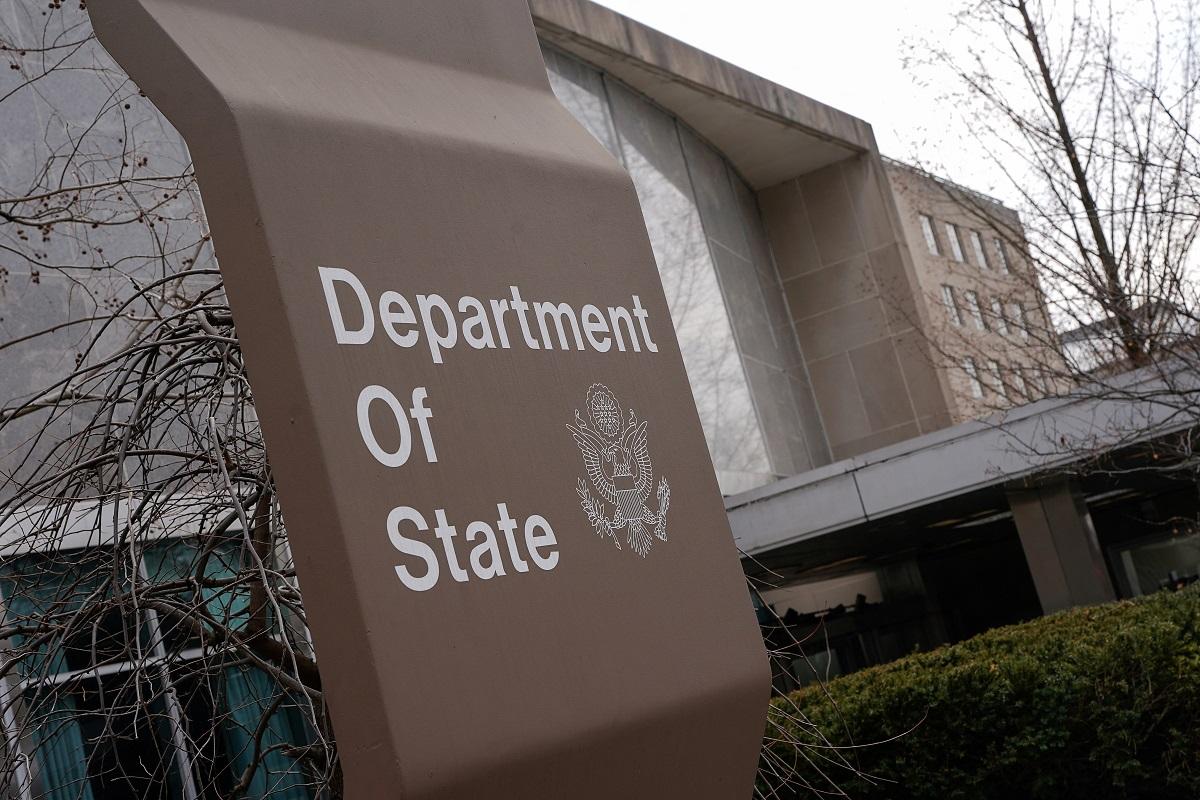
The Philippines retained its Tier 1 ranking in the US State Department’s 2026 Trafficking in Persons (TIP) Report, taking note of the government ban on offshore gaming operations and the conviction of a former mayor in connection with a scam center.
"The government continued to demonstrate serious and sustained efforts during the reporting period; therefore, the Philippines remained on Tier 1," according to the Report.
"These efforts included enacting legislation banning offshore gaming operations and prescribing criminal liability for traffickers who recruit workers for such operations and convicting a former mayor accused of trafficking in connection with a scam center," it added.
The report also took note of other government efforts including, adopting a nationwide mandatory victim identification system and an enhanced NRM; increased the number of victims assisted; launch of a centralized interagency trafficking database; and expansion of the Inter-Agency Council Against Trafficking’s (IACAT) prosecutorial task forces and prevention budget.
Trafficking in persons, human trafficking definition
According to the US Department of State website, “Trafficking in persons” and “human trafficking” are umbrella terms—often used interchangeably—to refer to a crime whereby traffickers exploit and profit at the expense of adults or children by compelling them to perform labor or engage in commercial sex. When a person younger than 18 is used to perform a commercial sex act, it is a crime regardless of whether there is any force, fraud, or coercion involved.
The United States recognizes two primary forms of trafficking in persons: sex trafficking and forced labor. The basic meaning of these forms of human trafficking, along with unique characteristics of each, are set forth below, followed by several key principles and concepts that relate to all forms of human trafficking.
Law enforcement efforts
The TIP report said that in 2025, the National Bureau of Investigation (NBI) and the Philippine National Police (PNP) investigated 447 trafficking and OSAEC cases, compared with 500 cases in the previous reporting period.
The government prosecuted 366 alleged traffickers — 302 for sex trafficking and 64 for labor trafficking — compared with prosecuting 446 alleged traffickers in the previous reporting period.
The government continued 2,693 prosecutions initiated in prior years.
Courts convicted 103 traffickers — 91 for sex trafficking and 12 for labor trafficking — compared with 143 traffickers in the previous reporting period.
Of the 103 convicted, courts convicted 86 traffickers under the anti-trafficking law and 17 under related laws.
Courts sentenced convicted traffickers to penalties ranging from four years’ to life imprisonment and fines ranging from 30,000 to 10 million pesos ($510 to $169,750); the government sentenced the majority of convicted traffickers to at least one year of imprisonment.
Courts resolved 64 of 103 convictions through plea bargaining, reinforcing a victim-centered approach to minimize re-traumatization.
Meeting minimum standards
The Philippine government has met the minimum standards for eliminating human trafficking, the report said.
However, this year, fewer traffickers were convicted compared with the previous reporting period, there is a lack adequate digital forensics tools, personnel, and training to effectively investigate trafficking networks online, including in online sexual abuse or exploitation of children (OSAEC) and scam centers.
"The government did not report identifying any foreign national trafficking victims within scam centers, despite estimates that foreign nationals comprise 30 percent of scam centers’ workforce, and did not effectively detect, investigate, or address labor trafficking in the fishing industry," the report said.
"Due to inadequate and inconsistent screening throughout much of the reporting period, the government did not take effective measures to prevent the inappropriate penalization of potential victims solely for unlawful acts committed as a direct result of being trafficked. Corruption and official complicity in trafficking crimes remained significant concerns, inhibiting law enforcement action during the year."
Tier 1 for 11 consecutive years
The Department of Migrant Workers (DMW) welcomes the release of the report, adding that the country's Tier 1 ranking has been maintained for the 11th consecutive year.
“The DMW, as an active member of the Inter-Agency Council Against Trafficking (IACAT), considers this recognition a challenge to intensify further our efforts against illegal recruiters and human traffickers who exploit the vulnerabilities of our fellow Filipinos, particularly by strengthening protection for migrant workers and their families,” said Migrant Workers Secretary Hans Leo J. Cacdac in a statement.
The DMW, in partnership with the Department of Foreign Affairs (DFA), helped repatriate at least 1,606 identified victims of illegal recruitment and trafficking, many of whom were rescued from forced labor in scam compounds in Myanmar, Cambodia, and Laos.
The agency added that returning survivors received comprehensive DMW AKSYON Fund assistance, including medical care, psychosocial support, legal aid, financial assistance, and emergency shelter.
The department identified critical areas that require stronger action, such as reversing the decline in trafficking convictions, building digital-forensics capacity to combat online syndicates, screening foreign victims in scam compounds, and bolstering protections for Filipino seafarers and commercial fishers vulnerable to labor trafficking.
“The DMW will translate these findings into intensified monitoring of deceptive online recruitment, strengthened evidence gathering for criminal prosecutions, and strict adherence to the non-punishment principle for victims. It will also expand nationwide information drives, including across social media, to help overseas Filipino workers recognize recruitment scams and report suspected traffickers,” Cacdac noted. — BAP, GMA News
KioskNews shows a cleaned-up reading view extracted from the publisher’s page — the original always lives on their site, not ours.