Philippines could be key player in US-China AI competition

“We’ve just consummated a trade deal, the biggest trade deal we’ve ever made by far and it’s a fair deal for both countries. … It’s a magnificent deal for both,” US President Donald Trump declared as he visited Manila this month. “I’m proud to say that we’re making the alliance between the United States and the Philippines much stronger than it’s ever been before, especially with the consummation of this deal.”
Days after Trump’s characteristically superlative pronouncement, however, there are still few details about the exact nature of the ostensibly new trade agreement. For instance, it’s not clear if it would lead to a significant reduction of US tariffs on Philippine exports and include a new energy deal. Confronting the prospect of stagflation, the Philippines is desperate for new trade and energy deals to revive its struggling economy.
What is clear is that the two allies didn’t sign the much-anticipated framework agreement under Pax Silica, the US-led geoeconomic plan aimed at creating a China-free supply chain for critical minerals, chips and other cutting-edge technologies.
“There is no signing. Not on this trip. We are not covering that on this trip,” Philippine President Ferdinand Marcos Jnr clarified to reporters. He has also insisted that there are no plans to set up resource-consuming AI data centres, which have provoked widespread protests in places including the United States. Nevertheless, the Philippine government remains committed to joining Pax Silica.
In competing with China, the US is desperate to gain access to critical minerals and strategic locations in places such as the Philippines. If anything, the latest US restrictions targeting Chinese companies’ access to cutting-edge semiconductors reveal Washington’s commitment to maintain the country’s dominance in artificial intelligence (AI).
In fairness, the US-China-Russia trilateral summit in Shenzhen, which took place right after Trump’s visit to Manila, was no empty gesture. The peace declaration issued by Trump, President Xi Jinping and Russian President Vladimir Putin emphasised their shared commitment to institutionalising an “open and candid” channel for discussing matters of global relevance, including energy security. Crucially, they reaffirmed their shared commitment to shunning any nuclear war, which “cannot be won and must never be fought”.
02:48
Xi, Trump and Putin meet for historic trilateral summit at Shenzhen Apec meeting
Given the complexity and structural nature of tensions between the US, China and Russia, however, any major diplomatic breakthrough would require a level of strategic patience and dedication that a lame-duck Trump simply might not possess.
Great power competition in critical sectors is likely to intensify given that a new global governance architecture is unlikely to be created any time soon. This is especially true in the realm of AI, which has become a largely bipolar rivalry between the US and China. And for several reasons, no region is more central to this intensified rivalry than Southeast Asia.
One reason is geography. Southeast Asia is not only close to China’s industrial hub in the Pearl River Delta but also a critical node in the Japanese, South Korean, Taiwanese and Western supply chains. This places many regional states in a prize position to attract hi-tech investments, particularly with regard to semiconductor supply chains.
Another factor is natural resources, especially critical minerals. Indonesia and the Philippines, for instance, are among the world’s largest producers of nickel, which is vital to the production of semiconductor devices. Moreover, energy-rich Malaysia, which is positioning itself as Asia’s Silicon Valley, has the industrial and power-generating infrastructure to support massive AI data centres.
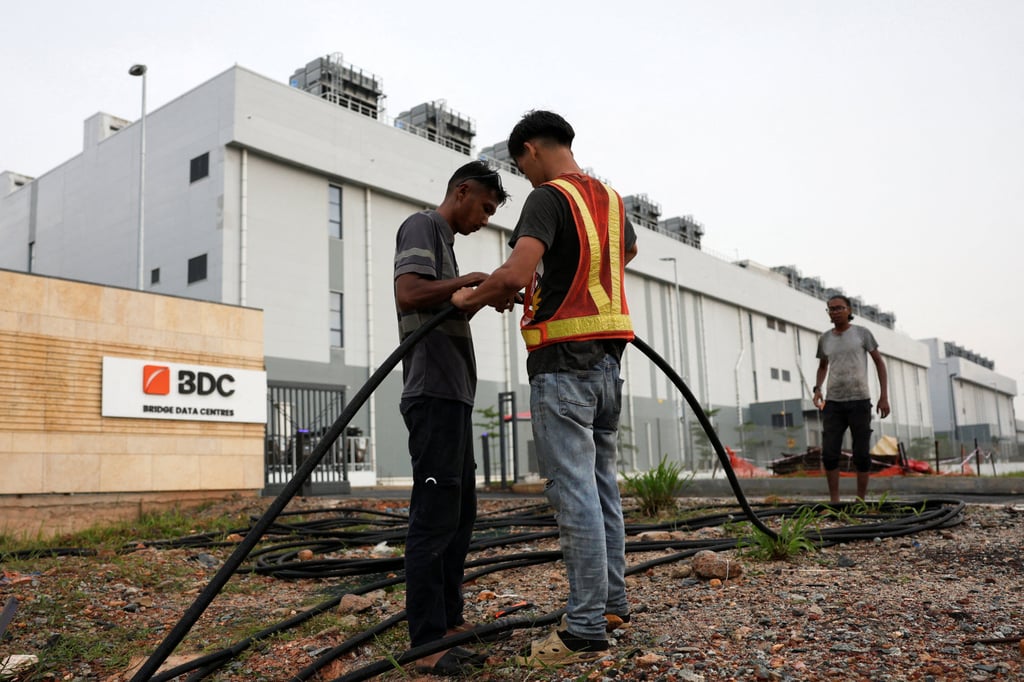
Southeast Asian nations from Vietnam to Thailand are also home to global industrial hubs. Meanwhile, Singapore has emerged as a global start-up and fintech hub, becoming a crucial pool of venture capital across the region. The recent scandal over Nvidia and Megaspeed is proof of the city state’s central role in the flow and regulation of semiconductors and other critical technologies.
Meanwhile, the Philippines is pursuing hi-tech investment from Western and traditional partners under the Pax Silica initiative. In spite of widespread criticism, especially from progressive groups bemoaning ecological risks and potential displacement of vulnerable groups, the Marcos administration is pressing ahead with joining Pax Silica as part of the country’s broader effort to boost growth and industrialise the economy.
Marcos allies in the legislature have filed the Advanced Industries Development Act. The bill aims to create a new ecosystem for the implementation of Pax Silica and other related initiatives, most notably the Luzon Economic Corridor, in tandem with Western partners.
Rich in resources and strategically located between major industrial powers, Manila is creating a new tech-industrial corridor from Clark to Cagayan, with a growing focus on critical minerals processing, semiconductor production and satellite launch sites. A key US ally, the Philippines is positioning itself as a trusted partner in the hope that it can catch up with its more industrialised peers.
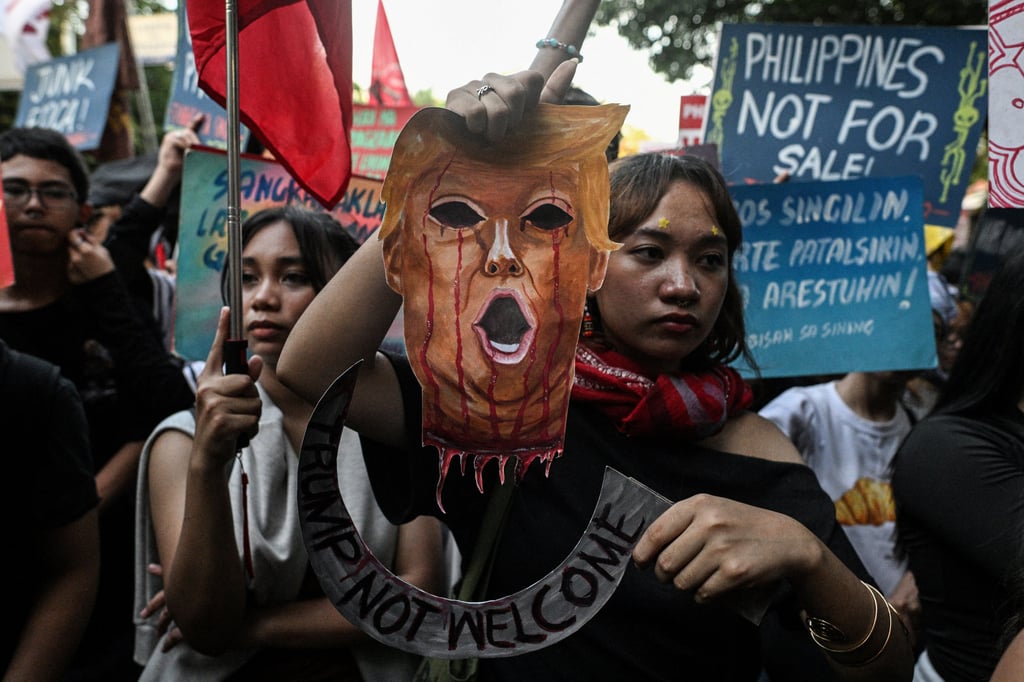
Though still ahead of China in terms of compute power and AI frontier labs, the US needs the fabrication capacity, critical minerals and the combined industrial base of its allies to effectively compete with Beijing. For its part, China hopes to rope more Southeast Asian nations into its own techno-industrial ecosystem through initiatives such as the World Artificial Intelligence Cooperation Organisation.
But the Trump administration’s recent blacklisting of key Southeast Asian nations for chip exports on the one hand and aggressive pursuit of AI-centred initiatives with others like the Philippines on the other hand will put the region in an increasingly difficult position.
As they compete for hi-tech investment, regional states are likely to come under growing pressure to choose between rival AI regimes with serious consequences for their strategic autonomy. Welcome to the new “great game” in Asia.
KioskNews shows a cleaned-up reading view extracted from the publisher’s page — the original always lives on their site, not ours.