Jharkhand DGP appointment rules appear to be in conflict with earlier decision: Supreme Court
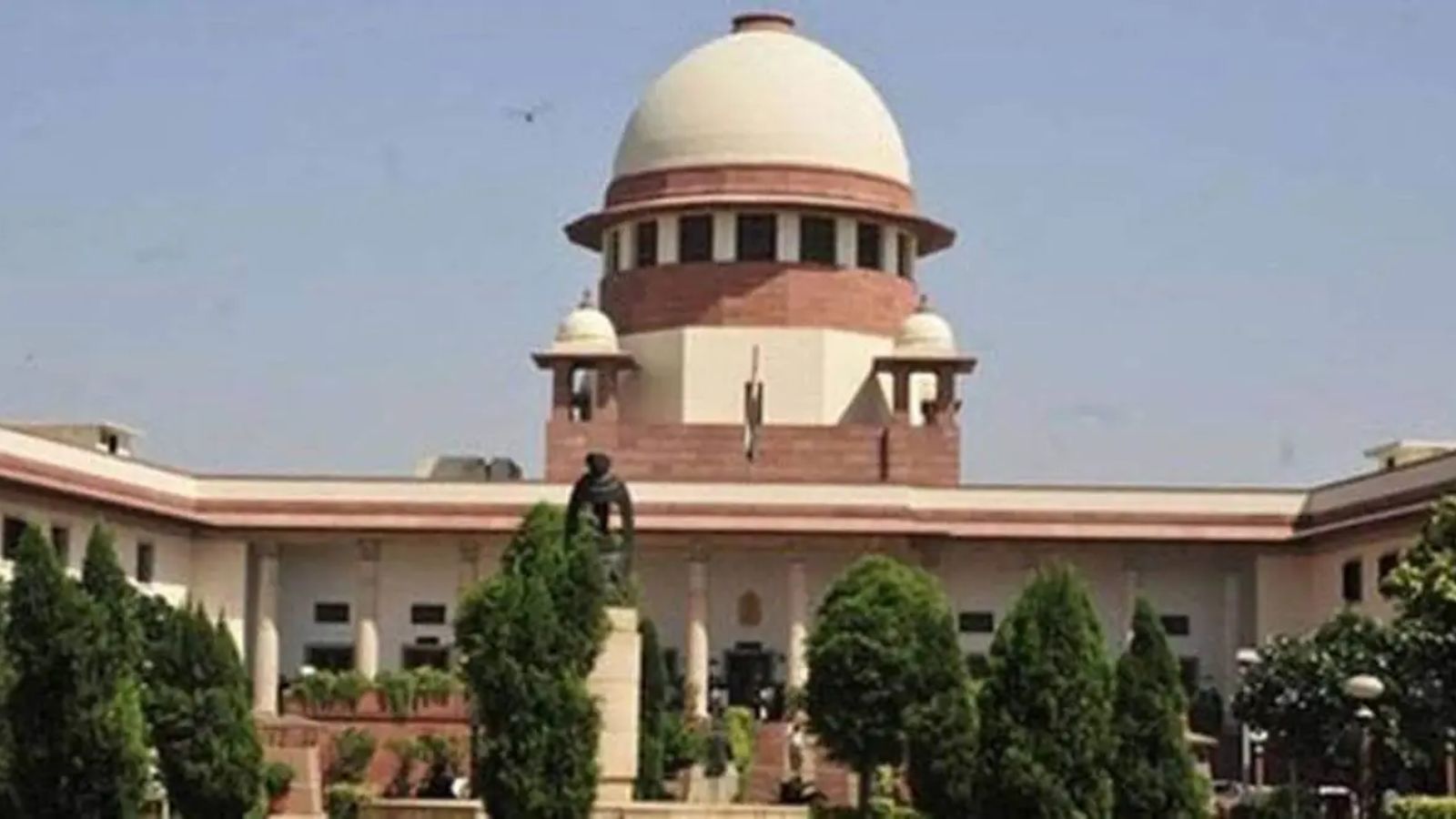
The court said the state would be at liberty to revisit the rule in question. It allowed the Jharkhand government to file its counter in case it wanted to defend the rule. (File Photo)
THE SUPREME Court on Thursday said a 2025 Jharkhand government rule doing away with the requirement for 6-month residual service for appointment as Director General of Police in the state “prima facie” appeared to be in conflict with the law laid down by it in the Prakash Singh case.
“Such a provision prima facie seems to be directly in the teeth of the law laid down by this court in Prakash Singh case,” said a three-judge bench presided by Chief Justice of India Surya Kant.
The bench, also comprising Justices Joymalya Bagchi and V Mohana, issued notice to the current state DGP Tadasha Mishra, noting that in case it annuls the relevant provision, “the consequential appointment of… Mishra…may require to be set aside”.
The court said the state would be at liberty to revisit the rule in question. It allowed the Jharkhand government to file its counter in case it wanted to defend the rule.
The court also asked Senior Advocate Raju Ramachandran, who is amicus curiae in the case, to look into whether similar rules/regualtions have been formulated by other states.
The bench was hearing a plea by the Centre seeking a direction to quash Mishra’s appointment on the ground that the 2025 law is in violation of the Prakash Singh judgment, which lays down guidelines on DGP appointment as well as rules framed by UPSC pursuant thereto.
Solicitor General Tushar Mehta, appearing for the Centre, pointed out that the Prakash Singh judgment made it clear that “if any State Government/Union Territory has a grievance with regard to these directions, liberty is granted to them to approach this Court for modification of the instant order”. However, the rules were framed without the consent of the SC.
Story continues below this ad
He said thereafter, the state made two successive appointments of Anurag Gupta, IPS, and Tadasha Mishra, IPS, to the post of Director General of Police, Head of Police Force (DGP-HoPF) “in clear violation of the directions of” the court.
When Gupta sought voluntary retirement, Mishra was appointed DGP-HoPF on December 30, 2025, for two years after the state government amended its rules by removing the requirement of six-month residual service, the SG said.
Appearing for the state government, Senior Advocate Kapil Sibal questioned the Centre’s decision to challenge the Rules and said similar laws existed in other states as well.
“Why should the Solicitor General challenge it? Why should the Solicitor General be enthusiastic to challenge it? There is statute in Bihar, statutes in other parts which are worse and which are pending before this Court. He has not filed an application in any of those. It’s only Jharkhand,” Sibal said.
Story continues below this ad
Mehta said he is of the view that all laws which were as bad as or worse than the Jharkhand rules should go.
“I can make a statement. If there are any other states, irrespective of the party in power, if they are as bad or worse, they must go. I can’t be choosy. I only wanted to convey that the Union of India does not choose states. This has come to our notice and I am challenging it. But if other laws are equally bad or worse, they also must go,” he submitted.
The court said regardless of who is the political executive in a state, it had the duty to make sure that the Prakash Singh guidelines were not “diluted”.
KioskNews shows a cleaned-up reading view extracted from the publisher’s page — the original always lives on their site, not ours.