‘China working to suppress India’s rise, backed Pakistan after Operation Sindoor’: US panel’s report
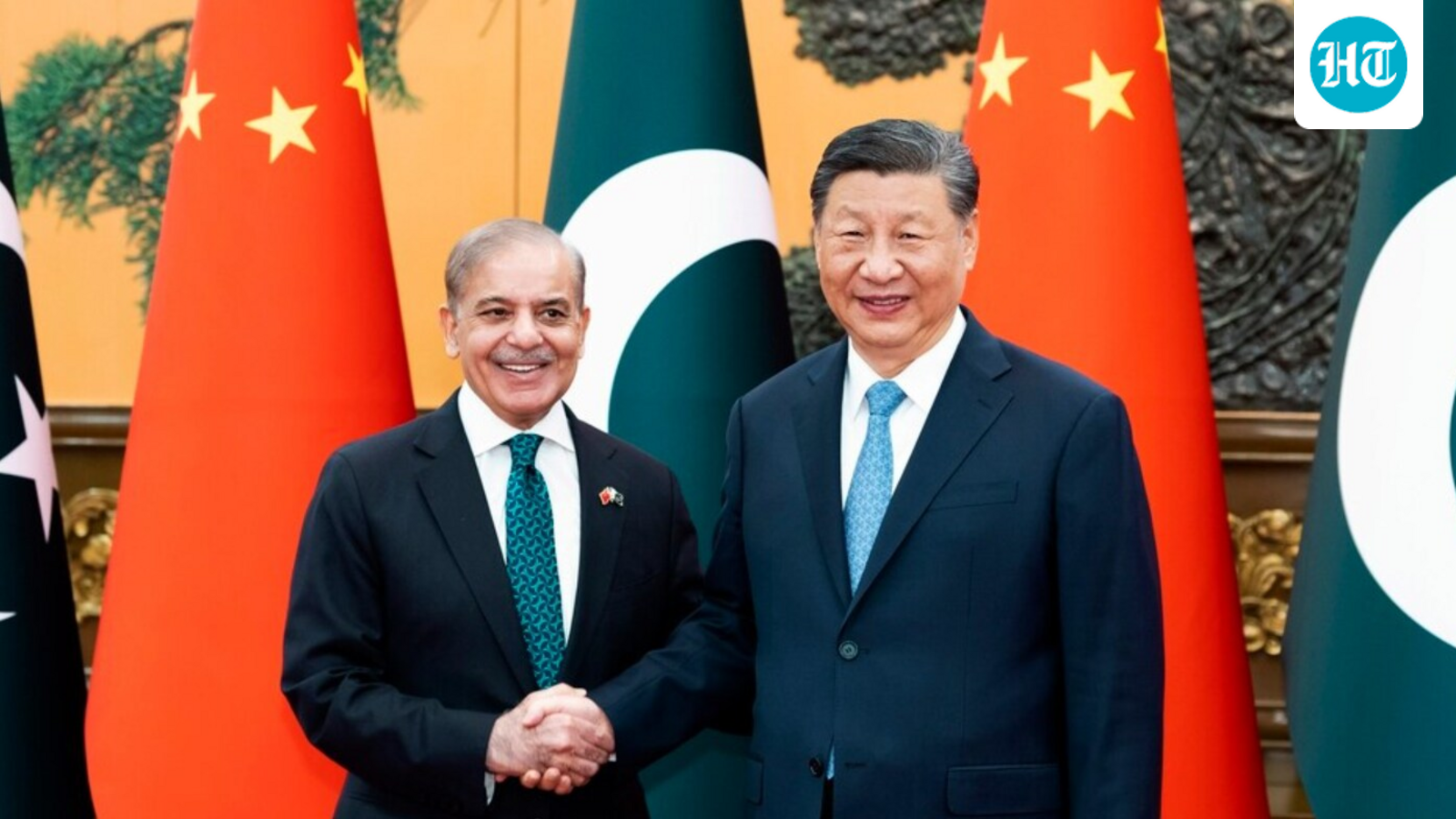
The report said that the episode showed how China could bolster Pakistan during a crisis without entering hostilities directly.

China is actively working to suppress India’s rise across multiple domains as it understands New Delhi's growing strategic significance in the global power struggle, a report by the US-China Economic and Security Review Commission (USCC) released on November 18 has noted. It also added that Pakistan had China's backing during the military escalation with India following Operation Sindoor in May 2025.
The US panel report identified India as one of the few powers outside the US alliances with the scale to compete with China. “China understands this, and it is actively working and it is actively working to suppress India’s rise across multiple domains,” the report warned.
‘Beijing views India’s rise as a strategic challenge’
The commission highlighted India’s standing as the world’s most populous nation, largest democracy, a nuclear-armed state, and a country with one of the world’s largest militaries and said that New Delhi shares a 2,100-mile contested border with Beijing and sits astride key Indian Ocean sea lanes that carry much of China’s energy and trade.
While the Western Pacific remains the primary geographic arena of U.S.-China rivalry, the USCC noted that India presents Beijing with another strategic challenge on land and at sea.
At the same time, the commission noted that Beijing views India’s rise as a strategic challenge and applies military, economic, and maritime pressure to constrain it, while emphasising that India’s rivalry with China stems from its own strategic interests and commitment to "strategic autonomy", not from alignment with Washington.
Panel points at China's close ties with Pakistan
The report highlighted China’s deepening military partnership with Pakistan describing it as a heightened risk of a two-front security challenge for India, while urging Washington to expand operational defence ties with New Delhi in the Indian Ocean.
In a chapter titled "China’s Other Front: India and the Future of US Strategy in the Indo-Pacific," the panel said Beijing’s growing security backing for Islamabad has made a two-front scenario an increasingly pressing concern for India.
The report pointed to the military conflict between India and Pakistan in May 2025 after India launched Operation Sindoor against terror bases to avenge the killing of 26 civilians, mostly tourists, in Jammu and Kashmir's Pahalgam on April 21, 2025. It assessed that the episode showed how China could bolster Pakistan during a crisis without entering hostilities directly, complicating Indian planning for any future clash with Pakistan.
Pakistan reportedly used ‘weaponry procured from China, the report added. “During the fighting, which followed India’s launch of Operation Sindoor in response to a deadly April terrorist attack that New Delhi attributed to Pakistan-backed terrorists, Pakistan reportedly used advanced weaponry procured from China,” the report said.
Additionally, hackers targeted India’s critical infrastructure, attempting large-scale distributed denial-of-service (DDoS) cyberattacks with the goal of disrupting critical networks during the conflict, including government, the report added.
The report noted that India’s rivalry with China is driven by its own strategic interests and not by alignment with Washington.
ABOUT THE AUTHOR
Sana started her career in 2018 with News18 and later moved to BoomLive. In the meantime, she thought it was a good idea to share what she learnt, hence took up part-time teaching of journalism course at Jamia Millia Islamia, which she says, she thoroughly enjoyed-not sure if the feeling was mutual. For a year, she also tried her hands at communication roles, only to realise she was more comfortable with news. So, joined HT in September 2025. Not much of a talker, always up for chai and sarcasm. And pun always intended. Her tag line is 'I will figure out, but I need to panic first'
KioskNews shows a cleaned-up reading view extracted from the publisher’s page — the original always lives on their site, not ours.