‘He’s united Arab Israelis’: Ben Gvir’s harsh policies drive high turnout in Arab towns
By noon on Tuesday, it seemed clear that that the upheaval of the past few years in Israeli society — from the October 7, 2023, Hamas massacre, to the inclusion of far-right parties in the government — was driving changes in voting behavior in southern Israeli communities.
One of the key outcomes of the national elections was an apparent sharp rise in the Arab Israeli vote. Central Elections Committee figures were showing high turnout across non-Jewish communities.
By early afternoon, according to the Central Elections Committee, the unrecognized Bedouin village of Atuana was registering the highest turnout in the country, at 64 percent, with two other similar villages in second and fourth place, at 47.9% and 47.8% respectively.
0:00 / 0:00
Promoted: Z3 2026

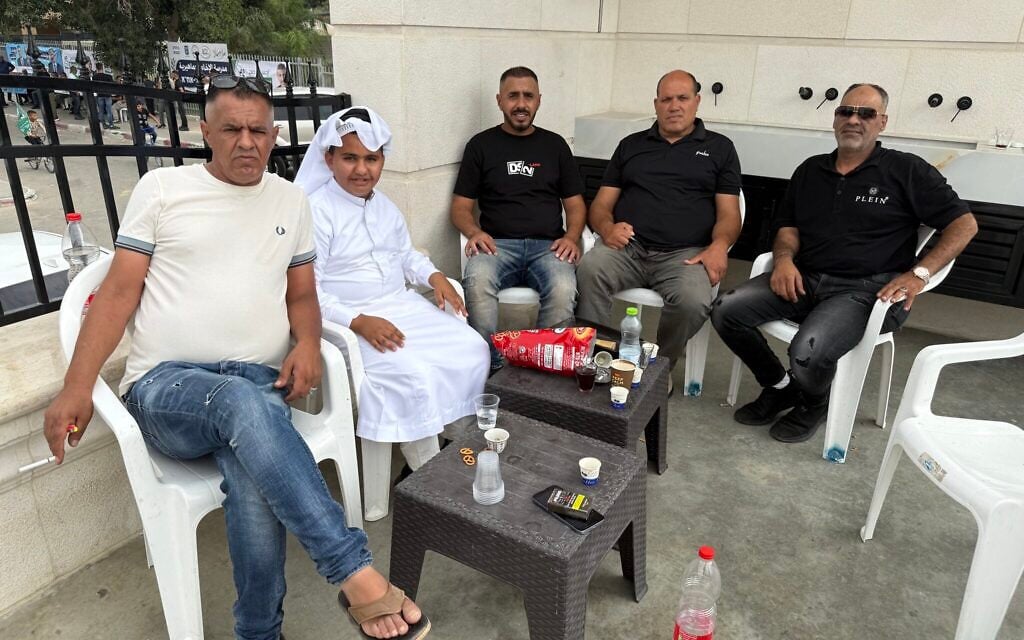
In the Bedouin city of Rahat, a stronghold of Mansour Abbas’s party Ra’am, men from the al-Qassassi clan sat around after voting, accompanied by 13-year-old Zen al-Qassassi, presented as the sheikh’s grandson and a possible contender to succeed him. One after the other, the men lambasted the uptick in home demolitions of Bedouin homes under far-right National Security Minister Itamar Ben Gvir, the failure to curb gun violence in Arab society, and the reversal of budget agreements to boost the community secured by Abbas when Ra’am joined the Bennett-Lapid government.
“We hate Ben Gvir but are also grateful to him,” said Einad al-Qassassi. “He’s united Arab Israelis.”
Get The Times of Israel's Daily Edition by email and never miss our top stories
By signing up, you agree to the terms
Ahmed al-Qassassi added, “I’ve voted dozens of times and never seen a crowd like this at the polling station.” Citing Prime Minister Benjamin Netanyahu’s famous 2015 warning that Arabs were voting in droves, he said, “This time, we are going to the polls in droves.”
He was certain politicians from the coalition and opposition would try to woo Abbas once the vote count was in, despite having vowed during the during campaign not to sit with Arab parties. “We want to be part of the government,” he said.
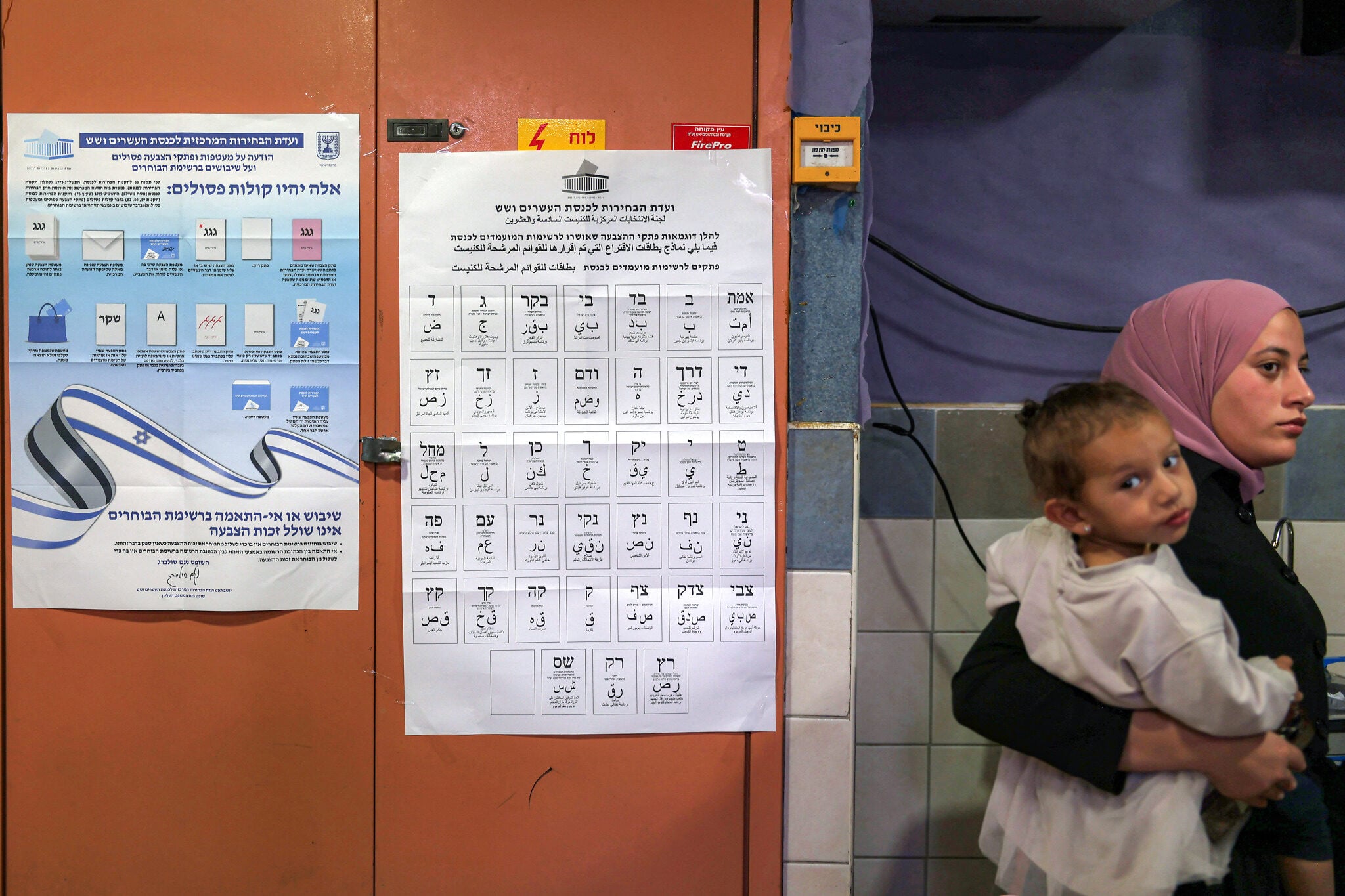
Unusually, Bedouin women were also turning out to vote. Nimr Abu Shiban said, “In the past, my wife and daughters wouldn’t have voted. But the country is in such bad hands that everyone is voting today.”
A 56-year-old woman dressed in black, with only her eyes visible, said the current government’s behavior had “hurt our souls.”
Voting for the first time and declining to be named or photographed, she said her children, living in an unrecognized village without electricity or running water, could not even build a hut today because Ben Gvir wanted to demolish everything.
A right-wing bastion
In nearby Jewish towns, right-wing parties sought to use the high Arab vote to mobilize their own supporters.
In the Ramat Shaked neighborhood of Ofakim, a Jewish southern town where more than half the population voted for Likud or Shas in 2022, coalition party posters dominated the street. A woman running a stall for Avi Maoz’s far-right Noam party saw a report on her cellphone that said 50 percent of Rahat’s residents had already voted and said to nobody in particular, “We’re crazy that we gave them the vote.”
She told The Times of Israel, “They have their lands, Dubai, Iran. They’re desperate to emigrate. The British brought them in, and suddenly the Arabs had been here for 2,000 years. This is Jewish land.”
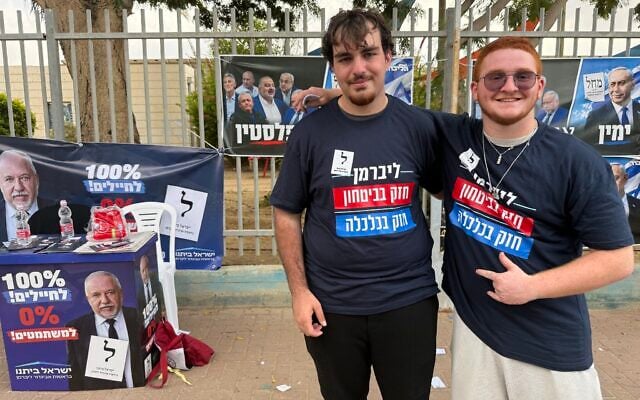
Nearby, two young men stood next to a small stall representing Avigdor Liberman’s secularist Israel Beytenu. “Support for us is weak,” Daniel Saranes and Gregory Rozenfeld admitted.
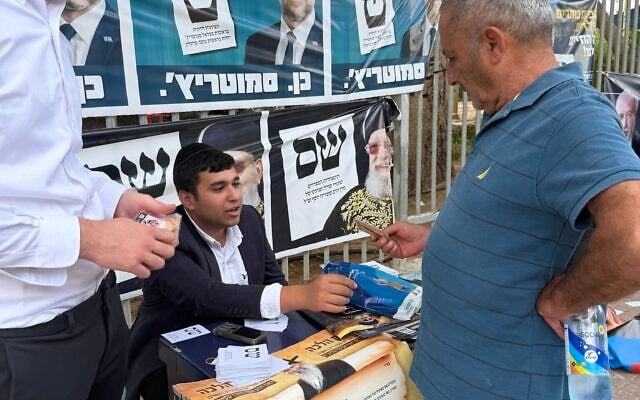
At the Shas stall, Yosef Levi was handing out plastic-encased charms featuring the late rabbi Ovadia Yosef, shouting to passersby that if they had that they wouldn’t need car insurance.
Inside the polling station, Shirel Elhazov, 20, looked at the list of parties and told her sister, “Vote either Likud or Ben Gvir.” Shirel was visiting her grandmother in Ofakim’s western Mishor Hagefen neighborhood on October 7, 2023, when Hamas terrorists knocked on the door. During the rampage through the town, 52 people were cut down, 39 of them in Mishor Hagefen.
The family survived, but the scars remain. “I can’t support Gadi Eisenkot because he’s with Yair Golan,” Shirel said, criticizing Golan for saying there were innocent people in Gaza. “What, and there were no innocents in Kibbutz Be’eri [where around a tenth of the residents were murdered]? We weren’t innocents?” Her father, Vadim, said he had heard people say they regretted voting for Liberman in 2022 and were planning to vote for Ben Gvir instead.
Still committed to peace
At Kibbutz Magen, five kilometers (three miles) from the southern Gaza border, the atmosphere was different again. Three men manned a desk outside the polling station, serving 560 residents from Magen and surrounding communities, where only Yair Golan’s Democrats were represented.
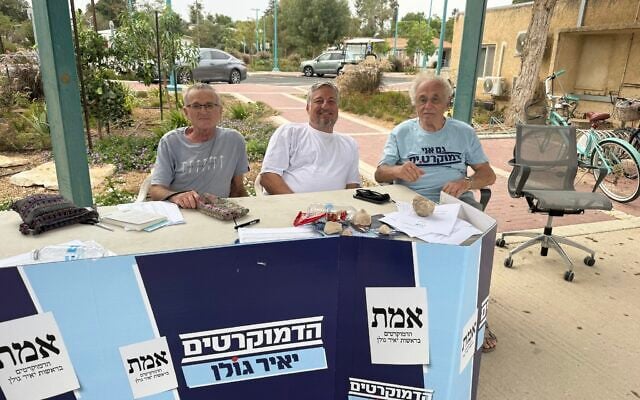
Meir Tokayer, 81, who has lived in Magen for 60 years, said he thought some of his neighbors had moved rightward since October 7, asking, “Who talks peace today?”
“Me,” chirped in Yitzhak Vax, 72. “My views haven’t changed. Two states for two people won’t happen tomorrow, but what’s the alternative? Will we kill or expel five million Arabs? Or have a single state with apartheid? I don’t want to lose the only Jewish democratic state we have.”
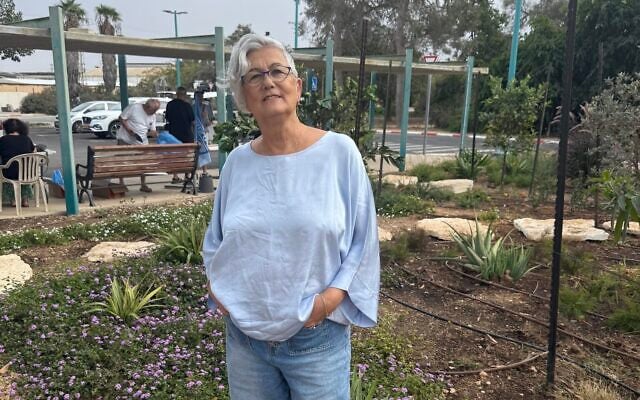
On October 7, courageous action by security coordinator Baruch Cohen and his team prevented kidnappings at Magen. Two residents were killed and Cohen lost part of his leg. His wife Mina Cohen said she voted Eisenkot to bring in fresh leadership, even though she has become right wing since October 7. While her husband Baruch still believed in helping Gaza, she took a harsher stance: “From my point of view, taxis should take all of them far away.”
KioskNews shows a cleaned-up reading view extracted from the publisher’s page — the original always lives on their site, not ours.