7 Sci-Fi Books That Are Better Than 'Neuromancer'

Dyah (pronounced Dee-yah) is a Senior Author at Collider, responsible for both writing and transcription duties. She joined the website in 2022 as a Resource Writer before stepping into her current role in April 2023. As a Senior Author, she writes Features and Lists covering TV, music, and movies, making her a true Jill of all trades. In addition to her writing, Dyah also serves as an interview transcriber, primarily for events such as San Diego Comic-Con, the Toronto International Film Festival, and the Sundance Film Festival.
Dyah graduated from Satya Wacana Christian University in October 2019 with a Bachelor's degree in English Literature, concentrating on Creative Writing. On March 2026, Dyah graduated with Master's degree in English Literature Studies, with a thesis on intersectionality in postcolonial-feminist studies in Asian literary works.
Born and raised between Indonesia and Singapore, Dyah is no stranger to different cultures. She now resides in the small town of Kendal with her husband and four cats, where she spends her free time cooking or cycling.
Cyberpunk wouldn't be what it is today without Neuromancer. Long before computers and the Internet became part of everyday life, sci-fi writers were already imagining what the world might look like with such technology, but more importantly, how it would affect humanity. Neuromancer is one of those books, imagining a dystopian society controlled by global computer networks and introducing hackers like Case, who push the boundaries of artificial intelligence.
However, Neuromancer can be a difficult and disorienting read for some. While it's an essential part of the genre, other books explore similar ideas in ways that some readers might find more engaging. From a cyberpunk reimagining of an American classic to stories about mind-controlling viruses, here are sci-fi books that are better than Neuromancer.
'Snow Crash' (1992)
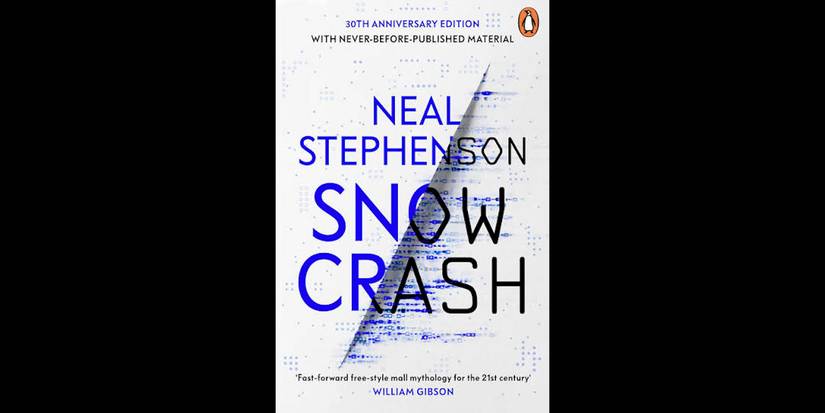
Set in a dystopian 21st century, Snow Crash depicts a Los Angeles that is vividly different, one where corporations rule and governments falter. By day, Hiro Protagonist is a Mafia pizza delivery driver. By night, he's a freelance hacker. When a mysterious digital drug called Snow Crash causes a fellow hacker to suffer brain damage, Hiro gets to the bottom of it—only to discover a sinister conspiracy that could endanger not only the lives of Angelians, but the entire world.
Casual sci-fi fans who find Neuromancer a tough read may prefer Snow Crash. Neal Stephenson's novel is more accessible and entertaining than Gibson's noir-inspired classic, but still offers plenty of investigative intrigue. Its cyberspace is also easier to picture, with virtual worlds, customizable avatars, and interconnected networks that feel familiar today. Published over three decades ago, Snow Crash remains relevant, especially in its depiction of a world where corporations control entire territories.
'Local Heavens' (2025)

Forget F. Scott Fitzgerald's The Great Gatsby—K.M. Fajardo gives the American classic a cyberspace twist in Local Heavens. The year is 2075, and Filipino-American Nick Carraway has moved to New York City, now dubbed the Fractured New Americas. Towering skyscrapers loom over the city, while the slums of the working middle class lie beneath them. But despite cynicism over capitalism, Nick can't help but be charmed by the charismatic new-money Jay Gatsby.
Bringing hacking into a familiar tale of admiration, love, and jealousy might seem like an odd choice, but Local Heavens makes it work by giving Nick's mission a personal angle. Unlike Neuromancer, where hacking serves a larger heist, it becomes a source of emotional conflict here. Nick is a corporate-sanctioned hacker assigned to investigate Jay, but the deeper he gets into Jay's world of wealthy people using technology to cheat death, the more he finds himself drawn to Jay, putting his mission at risk.
'The Shockwave Rider' (1975)

In The Shockwave Rider, America has become a dystopia where government agencies and corporations have near-total control over computer networks. Not everyone is willing to play along, especially Nick Haflinger, a gifted programmer on the run from Tarnover, a secret program that trained him to serve the state. Armed with a stolen access code, he manipulates the network to stay one step ahead of his pursuers. But one wrong move could expose him and put him right back in their hands.
For a novel published more than half a century ago, it's mind-blowing how prophetic The Shockwave Rider is, especially since the internet was still in its infancy. While Neuromancer imagines cyberspace as a high-concept medium accessible only through neural interfaces, The Shockwave Rider shows how cyberspace is much closer to our personal lives, with computer networks connecting homes, offices, and public terminals. It also offers a sharper look at surveillance culture, showing how easily institutions can access and exploit our personal data.
'Do Androids Dream of Electric Sheep?' (1968)

If you've watched the Blade Runner movies, it's imperative that you read the original novel it's based on. Philip K. Dick's Do Androids Dream of Electric Sheep? is set on a post-apocalyptic Earth where radioactive fallout has driven most animals to extinction. Rick Deckard, a San Francisco bounty hunter, hopes to earn enough money to replace his electric sheep by hunting six rogue androids that have escaped from Mars.
People often talk about artificial intelligence as if artificial beings are nothing more than machines. While that may be true in a technical sense, Dick challenges this assumption by exploring the philosophical implications of AI rather than just its mechanics. He questions whether artificial beings deserve the same empathy, freedom, and dignity as humans, especially when supposedly empathetic people demonstrate cruelty and indifference toward other living beings. As AI becomes increasingly humanlike, Dick's questions about what separates humans from machines feel more relevant than ever.
COLLIDERInteractive
Long-range scan active
Movies/Science Fiction/Survival Assessment
Collider Survival Assessment
Which Sci-Fi World
Would You Survive?
8 questions · 5 worlds · one honest verdict
Five of the great screen futures, and not one of them is built for comfort. Answer eight questions about instinct, loyalty and the line you would cross, and the scan will tell you which one you would still be standing in. Worlds in range
▦︎The Matrix
◈︎Mad Max
◑︎Blade Runner
▲︎Dune
✦︎Star Wars
Signal lock01 / 08
Question 01 of 08INSTINCT
The world as you know it ends overnight. What is your first move? No wrong answer. There is a wrong hesitation.
Keys 1 to 5 or A to E · Enter to advance
Signal lock02 / 08
Question 02 of 08RESOURCE
You can stockpile exactly one thing. What is it? Choose carefully. You are not getting a second run.
Signal lock03 / 08
Question 03 of 08THREAT
Which kind of enemy scares you the most? Be honest about what keeps you up.
Signal lock04 / 08
Question 04 of 08AUTHORITY
How do you handle the people in charge? Every world has them. Even the ones that pretend otherwise.
Signal lock05 / 08
Question 05 of 08ENVIRONMENT
Pick the place you would rather wake up in: You will be there a while.
Signal lock06 / 08
Question 06 of 08ALLIANCE
Who do you want standing next to you? Pick one. You only get one.
Signal lock07 / 08
Question 07 of 08MORALITY
Which line would you cross to survive? Everybody crosses one.
Signal lock08 / 08
Question 08 of 08PURPOSE
What are you really fighting for? Last question. Make it count.
Scan completeYou would survive
▦︎ The Matrix The Resistance, Zion You take the red pill, you stay in Wonderland, and I show you how deep the rabbit hole goes.
You would survive The Matrix because you were never fully sold on the version of reality you were handed. You notice the seams. You ask the second question. In a world built to keep people comfortable and incurious, that instinct is the whole fight, and it is why Morpheus would have found you long before you found him. From the Collider file
- The Wachowskis' 1999 film won four Academy Awards, including Visual Effects and Film Editing.
- Bullet time was shot with a rig of roughly 120 still cameras firing in sequence around the actors.
- Keanu Reeves trained in martial arts for about four months before a frame was shot, recovering from neck surgery the whole time.
- It opened the same year as Fight Club and eXistenZ, in a run of films about not trusting the world in front of you.
Red pill energy Pattern spotter Built to question
◈︎ Mad Max The Wasteland Oh, what a day. What a lovely day.
You would survive the Wasteland because you do not waste energy mourning the world that ended. You move, you improvise, and you are very good with whatever is bolted to the thing in front of you. Furiosa would let you drive. That is not a compliment anybody earns easily. From the Collider file
- Mad Max: Fury Road won six Academy Awards in 2016, more than any other film that year.
- George Miller storyboarded the entire film as roughly 3,500 panels before there was a script.
- The chase was shot almost entirely practical in the Namib Desert, with real vehicles and real stunt performers.
- Anya Taylor-Joy and Chris Hemsworth carried the prequel, Furiosa: A Mad Max Saga, in 2024.
Keeps moving Improviser Good with engines
◑︎ Blade Runner Los Angeles, 2049 All those moments will be lost in time, like tears in rain.
You would survive 2049 because you know how to be small in a very loud city. You keep your head down, you do the job, and you hold onto one private thing that belongs only to you. That quiet stubbornness is exactly what both Deckard and K run on, and it is what keeps either of them going when the case stops making sense. From the Collider file
- Blade Runner 2049 won Roger Deakins his first Oscar for cinematography, on his fourteenth nomination.
- The film also took Best Visual Effects, 35 years after Ridley Scott's 1982 original.
- Villeneuve shot it on large-format film and kept the fog and rain practical on set wherever he could.
- Three short films by Luke Scott and Shinichiro Watanabe bridge the 30-year gap between the two movies.
Keeps her head down Private Noir soul
▲︎ Dune Arrakis Fear is the mind-killer. Fear is the little-death that brings total obliteration.
You would survive Arrakis because you think in decades while everyone around you thinks in weeks. You read the room, you learn the customs, you wait. The desert does not reward speed. It rewards people who understand that patience is a weapon, which is the one lesson the Fremen never had to be taught. From the Collider file
- Denis Villeneuve's Dune won six Academy Awards in 2022, including Cinematography and Original Score.
- Hans Zimmer turned down Christopher Nolan's Tenet so he could score Dune instead.
- Dune: Part Two arrived in 2024 and brought in Austin Butler, Florence Pugh and Christopher Walken.
- David Lynch's 1984 version and Alejandro Jodorowsky's unmade one are both their own legends by now.
Plays the long game Reads the room Patient
✦︎ Star Wars A Galaxy Far, Far Away Rebellions are built on hope.
You would survive the galaxy because you never try to survive it alone. You collect people. You end up in the middle of other folks' problems and you stay anyway. Every version of this story, from the Falcon's crew to the Ghost's, runs on somebody exactly like that holding the group together. From the Collider file
- The 1977 original won six Academy Awards plus a special achievement award for sound effects.
- John Williams' score was recorded by the London Symphony Orchestra and became the best-selling symphonic film soundtrack ever.
- Andor took the galaxy somewhere colder and earned Emmy nominations for drama series in both seasons.
- The saga now runs across eleven feature films and a growing shelf of series on Disney+.
Collects people Shows up Hope merchant
Compatibility readout · top three
Copied to your clipboard
Scan filed byCOLLIDERCollider.com · The Sci-Fi Desk
'Gnomon' (2017)

Nobody is safe in Gnomon. In an alternate, futuristic Britain, an all-seeing AI keeps the population under constant surveillance. Government investigator Mielikki Neith is assigned to investigate the death of Diana Hunter, who died during a forced extraction of her memories. But as Neith examines Hunter's recorded thoughts, she uncovers something far more disturbing than a suspicious death: a hidden danger that could expose the surveillance system's nature and threaten the society built around it.
Gnomon may not share Neuromancer's cyberspace premise, but it offers a different, equally unsettling vision of technological control. When technology becomes the infrastructure of an entire society, surveillance extends beyond tracking people's physical movements to probing their thoughts and memories. Nick Harkaway's novel raises urgent questions about privacy and consent for ordinary people, concerns that feel especially timely in an internet age when personal data is constantly collected, stored, and exposed without people's knowledge or permission.
'Void Star' (2017)

In a technologically advanced future, artificial intelligence has evolved beyond human comprehension in Void Star. Only a select few can interpret its thoughts, making them valuable assets. Told from three perspectives, the novel follows Irina, a corporate consultant who translates AI-generated thoughts; Thales, the son of a Brazilian politician; and Kern, a streetwise thief raised in the favelas. Their lives collide when Irina and Thales discover that someone can remotely extract memories stored in their cranial implants.
Zachary Mason's Void Star is essentially Neuromancer for readers who want cyberpunk that feels closer to the world we live in today. Building on the ideas established by Gibson, the novel brings them into a future shaped by climate change, mass displacement, autonomous weapons, and extreme wealth inequality. Although the story follows three main characters, the shifting perspectives are easy to follow and add nuance by showing how each experiences the same technological and social problems.
'Altered Carbon' (2002)

Death is no longer an issue in Altered Carbon. Set 350 years in the future, Richard K. Morgan's novel imagines a world where cortical stacks implanted in people's spines store their consciousness, allowing them to transfer into new bodies called sleeves. But immortality doesn’t come cheap. The wealthy can afford replacement bodies and backups, while poorer people still risk dying for good. In this world, staying alive even depends on how much money you have.
While Neuromancer explores cyberspace, corporate AI, and crime through an investigative plot, Altered Carbon brings those technological anxieties into the human body. Its technology can preserve consciousness, but it can't resolve the moral questions that come with it, from bodily ownership to the privilege of living forever. Morgan takes Neuromancer's criticism of capitalism and makes it more personal, turning it into a dilemma about bodily autonomy and how far people are willing to go to preserve their lives.

Altered Carbon
- Release Date
- 2018 - 2020-00-00
- Network
- Netflix
- Showrunner
- Anthony Mackie
- Directors
- Alex Graves, Ciaran Donnelly, M.J. Bassett, Nick Hurran, Peter Hoar, Salli Richardson-Whitfield, Uta Briesewitz, Jeremy Webb, Andy Goddard, Miguel Sapochnik
-

Takeshi Kovacs
-

Takeshi Kovacs 2
- Writers
- Brian Nelson, Garrett Lerner, Russel Friend, Steve Blackman, Adam Lash, Laeta Kalogridis, Nevin Densham, Alison Schapker
- Main Genre
- Sci-Fi
- Seasons
- 2
- Producers
- Johanna Lee, Lori Waters, Nevin Densham
- Creator(s)
- Laeta Kalogridis
- Story By
- laeta kalogridis
- Streaming Service(s)
- Amazon Prime Video, Netflix
- Executive Producer(s)
- Alison Schapker, Arnold Messer, Bradley J. Fischer, Dana Goldberg, David Ellison, James Middleton, James Vanderbilt, Laeta Kalogridis, Marcy Ross, Mike Medavoy, Rose Lam, Steve Blackman
KioskNews shows a cleaned-up reading view extracted from the publisher’s page — the original always lives on their site, not ours.