The 10 Best Christmas War Films, Ranked

Michael Block is a 14 time GLAM Award nominated writer, producer, and host of the podcast Block Talk. Throughout his time in the entertainment industry, he has worked on and off Broadway as a stage manager, written several produced plays, critiqued hundreds of theatrical performances, drag and cabaret shows, and has produced events randing from drag competitoons to variety concerts!
On Block Talk, he interviews nightlife personalities, covers the wide world of entertainment through features, ranking episodes, and recaps ALL of Drag Race, as well as Dragula and Survivor. He has interviewed hundreds of RuGirls that span the globe at DragCon NYC, DragCon LA, and DragCon UK.
In his free time, he makes one-of-a-kind jewelry and gift baskets with his mom. He is a proud member of the LGBTQ+ community.
‘Tis the season to be jolly! But while we all celebrate the holidays with our loved ones, we often forget that the world revolves around them. So, at certain moments in world history, wars broke out during Christmas. What did it mean for the men and women on the battlefield? Well, these ten Christmas war movies may offer some insight!
The ten films use Christmas as a backdrop in a variety of ways, yet they all center around the hardships of battle. From classic films of Hollywood’s Golden Age to newer dramas, these Christmas films may be perfect additions to your holiday rotation. Whether you typically seek out war films or not, the Christmas element may entice you.
10 'Battle of the Bulge' (1965)

The epic World War II film Battle of the Bulge dramatizes Nazi Germany’s final major Western Front counteroffensive in the Ardennes forest during the winter of 1944. As German panzer forces led by Colonel Martin Hessler (Robert Shaw) launch a surprise attack to capture Antwerp, an American intelligence officer named Lieutenant Colonel Daniel Kiley (Henry Fonda) deduces that the advancing enemy tanks will soon run out of fuel and races to stop them from seizing a massive Allied supply depot. Directed by Ken Annakin, Battle of the Bulge works as a holiday film because it presents a Christmas-season WWII setting with a large-scale 1960s roadshow war spectacle known for its tank action sequences, widescreen photography, and strong ensemble cast.
Shot in Ultra Panavision 70 and shown in Cinerama, Battle of the Bulge delivers sweeping armored clashes and memorable set pieces like the tank crews singing "Panzerlied.” Taking historical liberties, the film compresses the campaign and alters terrain and weather, yet presents combat as a heavy, imposing presence. That said, the Christmas backdrop comes in as the Ardennes offensive ran across the Christmas and New Year's holidays in 1944, giving the story a grim seasonal contrast. Benjamin Frankel's score weaves carol motifs, such as "Good King Wenceslas" and "The First Noel,” alongside dramatic battle themes. With stellar star power and poignant human moments trickling in between the battle scenes, the film is an easy marriage of holiday setting and epic war story.
9 'The Victors' (1963)

Written and directed by Carl Foreman in a piece he deemed a “personal statement,” The Victors is a gritty, episodic anti-war drama that follows an American infantry squad across Europe during World War II, from Britain and Sicily to France and occupied Berlin. Intercutting fictional vignettes with real wartime newsreels, the film explores the dehumanizing psychological toll of combat and the harsh encounters soldiers share with European civilians, illustrating that war leaves no true winners. While its reception upon release was sharply divided, many contemporary viewers and rediscoveries value its bleak realism, ambitious structure, and early shift toward gritty 1960s filmmaking. Its holiday highlight comes in through a haunting holiday sequence that contrasts festive cheer against the brutal reality of combat.
Adapted from Alexander Baron's The Human Kind, the film was ahead of its time in its darker tone compared with many wartime spectacles of the era. It rejects conventional battle-glorification in favor of moral disillusionment and historical irony. Foreman stages a harrowing firing-squad execution in a snow-covered setting during the holiday season, modeled on the real-life execution of Private Eddie Slovik. It features an ironic holiday soundtrack as Frank Sinatra’s recording of "Have Yourself a Merry Little Christmas" plays against the grim imagery, sharpening the emotional shock rather than offering warm holiday comfort. Rather than cozy sentimentality, the film highlights the harsh conditions endured by soldiers and civilians, giving viewers a sobering reminder of peacetime comforts during the holidays. With a brilliant ensemble featuring George Peppard, George Hamilton, Eli Wallach, Albert Finney, Peter Fonda, Jeanne Moreau, Melina Mercouri, and Romy Schneider, the anthology-style storytelling is worth experiencing the reality of war.
8 'Silent Night' (2002)

In the Canadian TV film Silent Night, it loosely tells the true story of German mother named Elisabeth Vincken (Linda Hamilton) and her young son Fritz (Matthew Harbour) as they take refuge in a remote Ardennes forest cabin on Christmas Eve 1944. When three lost American soldiers—one severely wounded—and three German soldiers arrive seeking shelter from the winter storm, Elisabeth convinces both sides to leave their weapons outside and share a peaceful holiday meal. Directed by Rodney Gibbons, Silent Night is a heartfelt retelling of a World War II truce that is grounded in humanity. It turns an intimate Christmas Eve moment and turns it into a character-driven story of hope.
Silent Night is a special film. Rather than relying on large-scale battle spectacle, the intimate cabin setting highlights the contrast between Christmas warmth and war's harshness. Choosing humanity over stereotypes, the soldiers share rations and a holiday meal; initial hostility gives way to shared vulnerability and common ground across enemy lines. Having armed enemies share tight quarters, after agreeing to leave weapons outside, creates genuine suspense and forced empathy. Familiar Christmas traditions like sharing food, trimming a tree, and singing carols collide with grief, fear, and wartime loyalties. Moments of camaraderie stay fragile rather than turning into easy sentimentality. Hamilton stands out, playing Elisabeth with quiet authority and moral clarity, refusing to let hatred or war dictate what happens under her roof. Silent Night takes a true story and does it justice.
7 'Where Eagles Dare' (1969)

While it may not have a direct holiday plotline, Where Eagles Dare gets lumped into the holiday war viewing for its Boxing Day debut and its snow-covered alpine setting. Directed by Brian G. Hutton, the epic action-adventure film set during World War II follows British Major John Smith (Richard Burton) and American Lieutenant Morris Schaffer (Clint Eastwood) as they lead an elite commando unit disguised as German soldiers into the Bavarian Alps to rescue a captured U.S. general holding D-Day invasion plans from an impregnable mountain fortress. As the team infiltrates the castle, they uncover a web of double-crosses and traitors within their own ranks, turning a straightforward rescue into a deadly espionage trap. Where Eagles Dare emerged as a classic, blending high-stakes World War II espionage with relentless, practical action and memorable star power.
Written by Alistair MacLean, the story blends a castle-infiltration rescue mission with constant double-crosses and shifting loyalties that keep viewers guessing. Filming on location in Austria and Bavaria, including sequences atop moving cable cars in harsh winter weather, gives the action a visceral weight. With a winter wonderland backdrop, the film receives a fairytale-fortress feel amid blizzards and freezing cold. Burton brings theatrical intensity as Major John Smith while Eastwood plays Lieutenant Morris Schaffer with sharp efficiency. Their pairing creates sharp dramatic friction as the mission escalates. Where Eagles Dare is a sweeping, larger-than-life classic that deserves a watch when a chill fills the air.
6 'Merry Christmas, Mr. Lawrence' (1983)

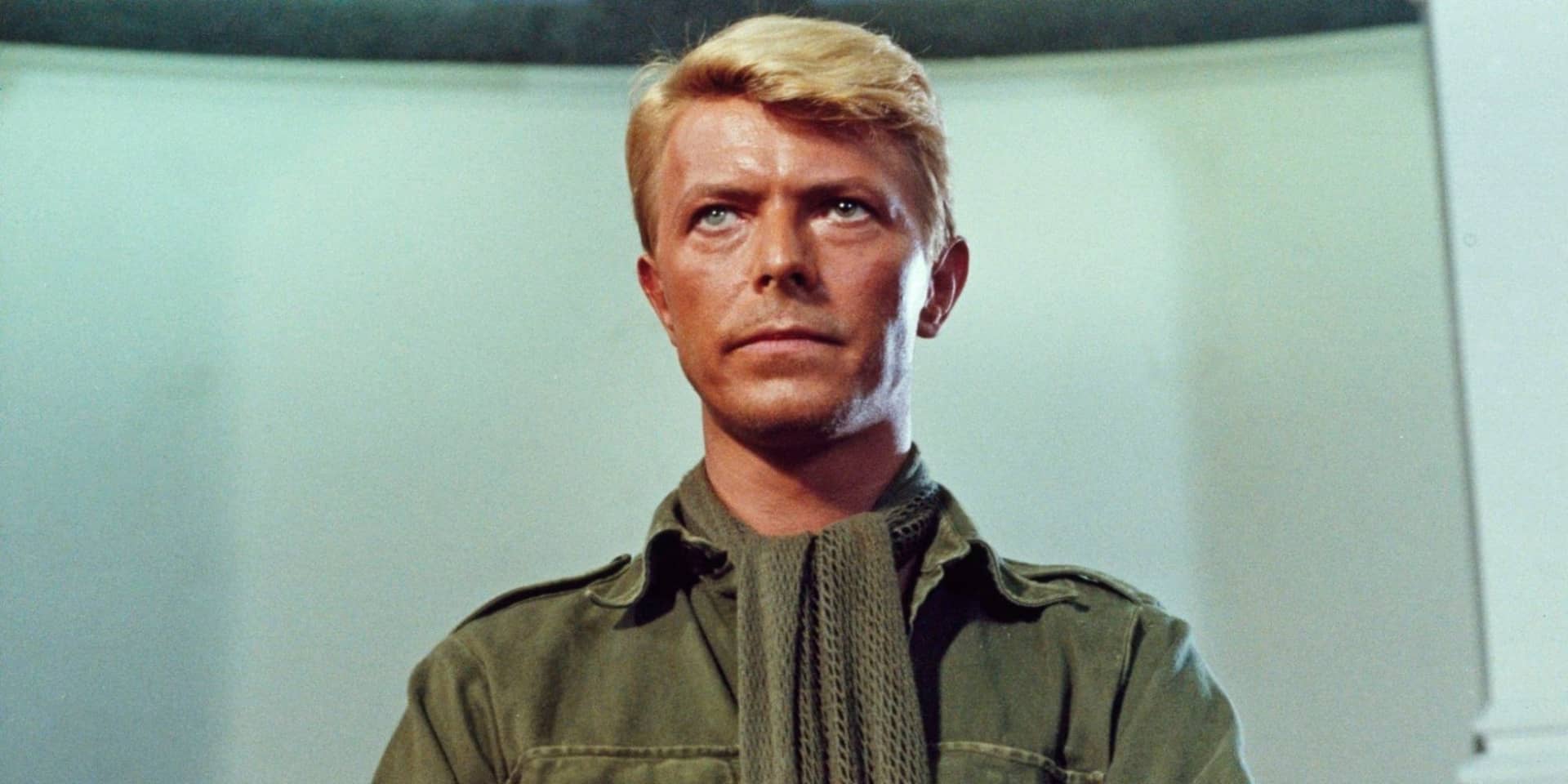
Directed by Nagisa Ōshima from a screenplay by Ōshima and Paul Mayersberg, the holiday-tinged war film Merry Christmas, Mr. Lawrence is set in a 1942 Japanese prisoner-of-war camp on Java. The film explores the intense cultural and psychological clash between British captives and their strict Japanese captors during World War II. As rebellious British Major Jack Celliers (David Bowie) sparks a tense battle of wills and mutual fascination with camp commander Captain Yonoi (Ryuichi Sakamoto), fluent Japanese-speaking officer Lt. Col. John Lawrence (Tom Conti) works to bridge their divide and prevent bloodshed. Merry Christmas, Mr. Lawrence turns a World War II prisoner-of-war story into an intimate psychological study of clashing cultures, honor, and unspoken desire. The film subverts both holiday sentimentality and traditional combat tropes, choosing character over battle.
Merry Christmas, Mr. Lawrence explores how rigid military codes and personal guilt shape human connection. Strict Bushido ideals and camp commandant Captain Yonoi's rigid discipline collide with Major Jack Celliers's defiant spirit and Lieutenant Colonel John Lawrence's role as a cultural bridge. Rather than treating captors and prisoners as simple caricatures, the film explores obsession, guilt, and shifting loyalties. Instead of cozy holiday cheer, Christmas arrives amid harsh POW camp conditions, heightening the contrast between seasonal goodwill and wartime cruelty. Its wintry, melancholic mood pairs well with late-year reflection, anchored by themes of forgiveness, memory, and survival. Bowie is absolutely magnetic, bringing distinct intensity and vulnerability. With an emotionally fueled score and its lush, sometimes surreal visuals paired with tense quietness, Merry Christmas, Mr. Lawrence may not excuse holiday tidings, but it hammers home the power of connection.
5 'Joyeux Noël' (2006)

One of the greatest war stories ever told is the subject of the Christian Carion film Joyeux Noël. Inspired by the real-life Christmas Truce of 1914, the World War I film follows French, Scottish, and German soldiers on the Western Front who spontaneously lay down their weapons on Christmas Eve to sing carols, share gifts, and play soccer in No Man's Land. As opposing troops bond over their shared humanity, they must eventually confront the harsh disapproval of their military superiors once the fleeting ceasefire ends. Joyeux Noël is a remarkable piece for its emotional impact, international ensemble cast, and poignant depiction of Christmas on the Western Front.
Earning an Academy Award nomination for Best Foreign Language Film, Joyeux Noël is a joyous production. Told through multi-language realism, the film reinforces the cross-border camaraderie and cultural friction of the front lines. Joyeux Noël pairs the brutality of World War I trench warfare with the genuine warmth, music, and shared humanity. Music plays a central role, as a Scottish bagpiper and a German opera tenor help spark the ceasefire with familiar holiday songs like "Silent Night" and "Adeste Fideles," turning the battlefield into common ground. Paired with Philippe Rombi's score and snowy winter cinematography, the film sparks the holiday spirit with goodwill front and center. It’s a greeting card-quality film. Rather than ending on a purely fairy-tale note, the story shows the harsh military repercussions soldiers face afterward for fraternizing with the enemy.
4 'Battleground' (1949)

In this depiction of the Battle of the Bulge, Battleground director William A. Wellman tells the story of a squad of U.S. Army soldiers from the 101st Airborne Division trapped by German forces in Bastogne, Belgium, during the December 1944 Battle of the Bulge. Cut off from supplies and air support by thick winter fog, the exhausted men battle freezing temperatures, dwindling rations, and disguised enemy infiltrators as they fight to survive until Allied reinforcements can break the siege. The Academy Award-winning war film strips away wartime heroics and grand speeches to show the gritty, everyday reality of American soldiers trapped in Bastogne during the Battle of the Bulge. The film pairs a snowy winter atmosphere and a Christmas Eve service with a grounded portrait of endurance and camaraderie.
Instead of turning the men of the 101st Airborne into larger-than-life icons, screenwriter Robert Pirosh, a veteran of the battle, focuses on fear, fatigue, griping, and moments of doubt. Characters complain, slack off, or briefly consider running away, making their eventual endurance and camaraderie feel earned rather than inevitable. The film relies on an ensemble cast, including Van Johnson, John Hodiak, Ricardo Montalbán, George Murphy, and Oscar-nominated James Whitmore, working as a unit rather than centering on a single star. Christmas Eve in the line serves as a monumental moment in the film. A chaplain holds a Christmas service for the men, framing why the fight against fascism is necessary while soldiers face overwhelming odds and German surrender demands. Once the weather clears enough for planes to reach the trapped troops, supply drops of food, fuel, and ammunition act like hard-won holiday gifts. Battleground is an unvarnished story with dark humor, stark black-and-white winter visuals, and genuine realism.
3 'A Midnight Clear' (1992)

Set in snowy Ardennes Forest in December 1944, A Midnight Clear, written and directed by Keith Gordon, follows a depleted six-man American intelligence squad stationed at an isolated French chateau as they encounter a weary German platoon that wants to surrender rather than fight in Germany's final offensive. After sharing an unexpected Christmas truce with their enemies, the young soldiers arrange a staged skirmish, so the Germans can safely surrender without being branded traitors, only for a tragic misunderstanding to turn their peaceful plan deadly. A Midnight Clear trades typical combat action for a quiet, character-driven study of isolation, morality, and absurdity during World War II. Adapted from William Wharton's novel, the film stands out as a great Christmas film, using the holiday's quiet, reflective spirit to capture the grim emotional toll of World War II.
Christmas carols, a makeshift tree, and a snowball fight contrast sharply with winter cold, psychological weight, and the grim realities of conflict. Snow-covered woods, isolated estates, and eerie quiet give the film a fairy-tale, almost surreal tone. Despite the war backdrop, the winter setting underscores isolation and fragility. The film refuses easy sentimentality. Its tragic turn reminds viewers how fragile peace is when war's machinery is still running. The film features strong, grounded performances from Ethan Hawke, Gary Sinise, Kevin Dillon, Arye Gross, Peter Berg, Frank Whaley, and John C. McGinley. Rather than relying on grand heroics, the cast captures young men dealing with fear, fatigue, and unspoken strain. A Midnight Clear has the DNA of a war saga, but its haunting winter atmosphere turns it into something grander.
COLLIDERInteractive
Ballot sealed
Movies/Academy Awards/Best Picture
Collider · Best Picture
Which Oscar Best Picture
Is Your Perfect Movie?
Five winners · ten questions · one envelope
Five Oscar Best Picture winners. Five completely different visions of what cinema can be and what it can do to you. One of them is the film made for the way your mind works, and ten questions will work out which. The nominees
2020Parasite
2023Everything Everywhere All at Once
2024Oppenheimer
2015Birdman
2008No Country for Old Men
Reel01 / 10
Question 01 of 10TONE
01 What kind of film experience are you really after? The best movies do not just entertain. They leave something behind.
Keys 1 to 5 or A to E · Enter to advance
Reel02 / 10
Question 02 of 10THEME
02 Which idea grabs you most in a film? Great films are driven by a central obsession. What is yours?
Reel03 / 10
Question 03 of 10STRUCTURE
03 How do you like your story told? Form is content. The way a story is shaped changes what it means.
Reel04 / 10
Question 04 of 10VILLAIN
04 What makes a truly great antagonist? The opposition defines the protagonist. What kind of opposition fascinates you?
Reel05 / 10
Question 05 of 10ENDING
05 What do you want from a film's ending? The final note is the one that lingers. What do you want it to sound like?
Reel06 / 10
Question 06 of 10WORLD
06 Which setting pulls you in most? Where a film takes place shapes everything: mood, stakes, what is even possible.
Reel07 / 10
Question 07 of 10CRAFT
07 What cinematic craft impresses you most? Every great film has a signature, the element that makes it unmistakable.
Reel08 / 10
Question 08 of 10PROTAGONIST
08 What kind of main character do you root for? The protagonist is the lens. Who you follow says something about you.
Reel09 / 10
Question 09 of 10PACE
09 How do you feel about a film that takes its time? Pace is a choice. Some films sprint. Others let tension accumulate slowly, deliberately.
Reel10 / 10
Question 10 of 10AFTERMATH
10 What do you want to feel walking out of the cinema? The best films leave a mark. What kind of mark do you want?
The envelope, pleaseAnd the Oscar goes to
★ Best Picture, 2020 Parasite Bong Joon-ho, 2019 A film that hides its true intentions until the moment it is ready to reveal them.
You are drawn to films that operate on several levels at once, that begin in one genre and quietly, brilliantly migrate into another. Bong Joon-ho's Parasite is a film about class, desire and the architecture of inequality that manages to be darkly funny, deeply suspenseful and genuinely shocking across a single extraordinary running time. Your instinct is for cinema that rewards close attention and punishes assumptions, right up to its devastating final image. From the Collider file
- The first film not in the English language to win Best Picture, in the Academy's 92-year history to that point.
- It took four Oscars in one night: Picture, Director, Original Screenplay and International Feature.
- It won the Palme d'Or at Cannes in 2019 by a unanimous jury vote, the first Korean film to do so.
- The Park family's modernist house was not a location. It was built from scratch on an outdoor lot.
Reads between the lines Loves a reveal Attention to detail
★ Best Picture, 2023 Everything Everywhere All at Once Daniel Kwan and Daniel Scheinert, 2022 A film that refuses to choose between being entertaining and being meaningful.
You want it all, and this one gives you all of it. The Daniels' Everything Everywhere All at Once is among the most maximalist films ever made: action comedy, multiverse science fiction, family drama, existential crisis, and an emotional core that sneaks up on you in the middle of the chaos. You respond to ambition. Being overwhelmed is the design, not the side effect, because the feeling of being crushed by infinite possibility is exactly what the film is about. From the Collider file
- Seven Oscars, including three acting wins for Michelle Yeoh, Ke Huy Quan and Jamie Lee Curtis.
- Michelle Yeoh became the first Asian woman to win Best Actress.
- The visual effects were handled by a team of fewer than ten people, most of them self-taught.
- Ke Huy Quan had all but left acting for two decades before this role brought him back.
Wants everything Big swings Soft center
★ Best Picture, 2024 Oppenheimer Christopher Nolan, 2023 A film about the gap between what we can do and what we should do.
You are drawn to cinema on a grand scale, films that treat history not as a backdrop but as a force, then place their characters inside that force and watch what happens. Christopher Nolan's Oppenheimer sits inside one of the most consequential moments in human history and refuses to look away from it. You want your films to feel important without being self-important, earning their ambition through craft and the gravity of the subject. This one is enormous, complicated, and offers no easy comfort. From the Collider file
- Seven Oscars, including Nolan's first wins for directing and for Best Picture.
- Cillian Murphy and Robert Downey Jr. both took their first Academy Awards for it.
- Kodak engineered a black-and-white 65mm stock that did not previously exist so Nolan could shoot those sequences on IMAX.
- A three-hour, R-rated drama about theoretical physics that passed 950 million dollars worldwide.
Thinks in decades Scale and weight No easy comfort
★ Best Picture, 2015 Birdman Alejandro G. Iñárritu, 2014 A film doing something that probably should not be possible.
You are drawn to films that foreground their own construction, where the how of the filmmaking becomes part of the what it is about. Alejandro G. Iñárritu's Birdman, stitched to appear as one continuous take, is cinema examining itself through the cracked mirror of a fading actor's ego. You respond to formal daring. Michael Keaton's performance and Emmanuel Lubezki's restless camera make something unlike anything else: a film about creativity, relevance, self-destruction and never quite knowing whether your work means anything at all. From the Collider file
- Four Oscars, among them Best Picture and Best Director for Iñárritu.
- Emmanuel Lubezki's win here was the middle of three consecutive cinematography Oscars, after Gravity and before The Revenant.
- Antonio Sánchez's improvised drum score was ruled ineligible for the score category, which caused a minor uproar.
- The long-take illusion was built from a handful of extended shots joined by hidden cuts.
Formally daring Camera as character Ego and art
★ Best Picture, 2008 No Country for Old Men Joel and Ethan Coen, 2007 A film that treats dread as a form of meaning.
You are drawn to cinema that trusts silence, refuses to explain itself, and lets unease do the talking. The Coen Brothers' No Country for Old Men is about the arrival of a new kind of evil: implacable, arbitrary, and indifferent to the moral frameworks we use to make sense of things. It is one of the most tightly controlled films ever made, and that control is the source of the terror. You want your films to haunt you rather than comfort you, and you have no interest in a resolution that would be a lie. From the Collider file
- Four Oscars: Picture, Director, Adapted Screenplay, and Supporting Actor for Javier Bardem.
- Adapted from Cormac McCarthy's 2005 novel, with much of his dialogue carried over intact.
- Carter Burwell's score runs about sixteen minutes and is nearly inaudible by design.
- Roger Deakins was nominated twice that year, for this and The Assassination of Jesse James, and won for neither.
Trusts silence Dread over answers No tidy endings
Ballot tally · your top three
Copied to your clipboard
Ballot counted byCOLLIDERCollider.com · The Awards Desk
2 'Since You Went Away' (1944)

Directed by John Cromwell, the 1944 war epic Since You Went Away follows Anne Hilton (Claudette Colbert) and her two daughters, Jane and Bridget (Jennifer Jones and Shirley Temple), as they navigate rationing, romance, and personal sacrifices on the American home front after her husband leaves for World War II. Joined by a retired colonel and loyal household staff, the family endures wartime heartbreak and uncertainty before receiving hopeful news on Christmas Eve. Since You Went Away is a moving portrayal of World War II home-front life. With a deeply emotional Christmas Eve payoff, Since You Went Away is a perfect Yuletide classic to share with the family.
Unlike war films centered on combat, this home-front classic focuses on individuals as they navigate rationing, separation, and everyday worries at home. It captures the longing, resilience, and hope of families waiting for loved ones to return that resonates with a timeless sentiment for any wartime family. Rather than focusing on the battlefield, the emotional power stems from daily life in America, where ration books, victory gardens, housing shortages, scrap drives, and civilian sacrifice were a reality. The story balances lighthearted moments, like a hangar dance and teenage romance, with gut-wrenching goodbyes, including Jane and Bill Smollett’s (Robert Walker) famous midnight train station parting. Since You Went Away may be the most sentimental Christmas-based war film of all time.
1 'Stalag 17' (1953)

Blending dark comedy and suspenseful mystery inside a World War II prisoner-of-war camp, Stalag 17 is a brilliant feature. Directed by Billy Wilder, the story follows barracks of American airmen who suspect a cynical, black-marketeering sergeant named J.J. Sefton (William Holden) of being a Nazi informant after two escaping prisoners are killed. Determined to clear his name, Sefton investigates the barracks to expose the real German spy and orchestrate a daring escape. Stalag 17 balances broad barracks humor and gallows comedy with genuine paranoia and suspense as American airmen hunt for a German spy among them. Set during Christmas week in 1944, the holiday becomes a source of brilliant irony.
Between Wilder's direction and Holden's Oscar-winning lead performance, Stalag 17 is simply wonderful. The tension comes from paranoia inside Barracks 4 as American airmen try to figure out who is leaking escape plans. The film builds suspense to an epic reveal set to "When Johnny Comes Marching Home,” earning it an iconic moment in the genre and a blueprint for directing tension. As for the Christmas backdrop, makeshift decorations, dog-tag trees, and a camp Christmas party clash with the harsh reality of captivity and fatal escape attempts. Camp commandant Colonel von Scherbach (Otto Preminger) even plays a cruel parody of holiday generosity around an inspection. The film celebrates bittersweet camaraderie in moments like when the men dance together during the holiday celebration and Stanislas "Animal" Kuzawa’s (Robert Strauss) poignant mix of slapstick and loneliness. They highlight brotherhood and longing for home without turning overtly sentimental. Adapted from the Broadway play by former POWs Donald Bevan and Edmund Trzcinski, the film treats captivity with a realistic edge rather than pure escapism. It even shaped later television comedies like Hogan's Heroes.

Stalag 17
- Release Date
- May 29, 1953
- Runtime
- 120 minutes
- Director
- Billy Wilder
- Writers
- Edwin Blum
-

Robert Strauss
Sgt. Stanislaus 'Animal' Kuzawa
-
William Holden
Sgt. J.J. Sefton
-
Don Taylor
Lt. James Dunbar
-
Otto Preminger
Oberst von Scherbach
KioskNews shows a cleaned-up reading view extracted from the publisher’s page — the original always lives on their site, not ours.