CHILD GAUGE 2026: Austerity and falling grant uptake threaten 30 years of progress for SA’s children
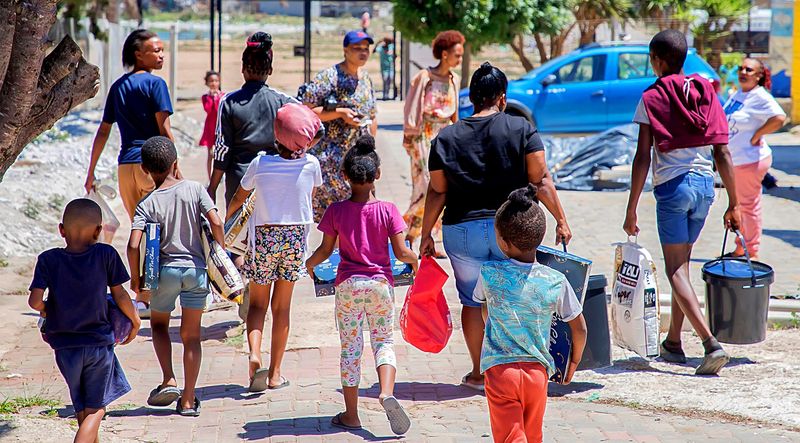
The most recent iteration of the South African Child Gauge issues a stern warning: while the country has improved children’s living conditions and access to services over the past three decades, fiscal austerity and a lack of support for frontline workers in recent years have started to erode progress, with “worrying signs of regression across a range of services”.
The SA Child Gauge 2026, launched on Tuesday, 24 November by the University of Cape Town’s (UCT’s) Children’s Institute, is a nod to the 30th anniversary of South Africa’s Constitution, and uses the constitutional commitments to frame its evaluation of the progressive realisation of children’s rights over the decades.
It also coincides with the 25th anniversary of the UCT Children’s Institute.
Speaking at the launch of this year’s Child Gauge, editor Paula Proudlock said: “We face a choice now that will have long-term impacts for the growth trajectory and life chances of children and the nation as a whole.
“If we reduce the coverage, quality or adequacy of our big platforms and services for children, it’s going to have long-term negative consequences for the country as a whole. If we continue to invest in them and build them, we will see growth and national development.”
So, what are the key takeaways from the SA Child Gauge 2026?
We have come a long way in 30 years
Across its 11 chapters, the gauge acknowledges the significant gains made for children in SA over the past 30 years. The share of children living below the food poverty line fell from 53% in 2003 to 33% in 2013, while the under-five mortality rate dropped from 81 deaths per 1,000 births in 2004 to 35 in 2024.
These improvements can be linked to government investments that increased children’s access to essential services, including birth registration, healthcare, social assistance and basic education.
Since its introduction in 1998, the Child Support Grant has expanded to reach 13 million children as of 2025. Proudlock noted that the grant has been a key factor in reducing child food poverty.
“We have learned from the science of child development that investing early in childhood, in the first 1,000 days and in adolescence, yields the best returns,” she said.
New systems and programmes were designed and built, and coverage of these programmes was expanded considerably over the three decades, particularly in the first 20 years, said Proudlock.
“For example, millions of houses were built, and water and electricity supply expanded across the country. Between 1996 and 2025, children’s access to formal housing more than doubled, from 8.7 million to 18.2 million children. Access to piped water rose from 49% to 73%; electricity from 48% to 93%; and adequate sanitation from 36% to 80%.”
Proudlock described the progress as “considerable and remarkable”, given the complex, embedded system of inequality that the democratic system inherited post-apartheid.
Structural inequalities remain
However, the Child Gauge also found that structural inequalities inherited from apartheid persist, with service access for children in former homelands still lagging far behind those in urban areas. For example, in 2026, only 44% of children in former homelands lived in households with piped water on-site or in the dwelling, compared to 93% in urban areas.
Children continue to be exposed to “multiple forms of adversity”, according to the Child Gauge, with early exposure to challenges such as poverty, violence, neglect and malnutrition tending to coincide in the same households. Intervening as early as possible is essential to improve outcomes for children and eradicate inequality.
Stagnation follows early gains
Data from the Child Gauge 2026 indicated that early gains were followed by a period of stagnation, with service access and outcomes for children stalling in the third decade after the Constitution’s introduction. According to the report, there were even signs of regression linked to fiscal austerity and “a culture of compliance and control rather than support for frontline workers”.
The services in which experts have observed a decline in progress in recent years include immunisation, birth registration, social assistance and basic education.
“Of particular concern are the signs of regression in services required for young children,” said Proudlock. “We can see that for many years, 10% to 20% of babies – approximately 160,000 babies every year – are not registered in the first year of life, and this gap appears to be getting wider in recent years. Late registration has been neglected, leading to many of these infants who are not registered having to wait many years to get their [birth] certificates, and being excluded from ECD [early childhood development], social assistance, schools while they wait.”
The third chapter of the Child Gauge 2026 traces the growth, stagnation and decline of the Child Support Grant, emphasising that the gap between the food poverty line and the grant has continued to widen due to annual grant adjustments that have fallen below food inflation. The food poverty threshold sits at R868 per person per month in 2026, while the Child Support Grant is R580 per month.
There has been a sustained reduction in the number of infants under one year receiving the Child Support Grant. Between March 2020 (pre-lockdown) and March 2026, the number of infants receiving the grant dropped from 658,000 to 366,108, a 44% reduction that takes uptake levels for this age group back to 2008 levels.
According to the Child Gauge, such large reductions in uptake rates for infants have serious implications for child outcomes, since the grant’s protective effect largely depends on early and continuous receipt, preferably from birth.
“We are seeing that the percentage of children living in food poverty has increased from 33% in 2019 to 37% in 2024. The dip post-Covid was expected, but I think what is worrying in these numbers is that one is not seeing the recovery after that dip,” said Proudlock.
Actions we take now determine SA’s future
The policy brief accompanying the Child Gauge 2026 referenced the 2025 National Strategy to Accelerate Action for Children and the 2026 presidential commitment to end childhood stunting by 2030, stating that these developments captured a renewed sense of urgency and purpose that should influence the efforts of the National Planning Commission when working on the National Development Plan in 2027.
The five key recommendations in the Child Gauge 2026 were:
Strengthening existing platforms to reach the children left behind, with an approach of building on what worked, strengthening community-based and outreach services, and improving efficiencies to alleviate the burden on mothers and children;
Strengthening collaboration at the local level, as many of the challenges facing children and families are multifaceted and require support from a range of government departments and NGOs;
Transforming institutional culture from one of control and compliance to one that provides support to frontline workers and enables them to better meet the needs of children and families;
Protecting children’s services in times of crisis (such as the Covid-19 pandemic), by including child experts and impact assessments in any intersectoral team established to advise on emergency responses; and
Investing early to multiply returns, by continuing to invest in and improve services and programmes that were foundational for children and adolescents.
Government needs to look to the evidence
At the launch of the Child Gauge, Maropene Ramokgopa, minister in the Presidency for planning, monitoring and evaluation, said the government was attempting to approach development “in a different way”, using evidence-based interventions. She noted that the UCT Children’s Institute’s report was not only a source of analysis, but also a tool to respond to challenges.

“We have decided that in terms of some of the challenges that we see ... including the crisis of gender-based violence and femicide, and some of the challenges that are chronic, institutional and systematic, we will have to find a way of utilising the research institutions and councils to actually assist us to be able to come up with interventions ... to move the needle,” said Ramokgopa.
The Child Gauge 2026 came at a critical moment, she continued, as the government began to look beyond 2030 in formulating the next National Development Plan. She also referenced the global shift that had taken place in recent years, with development investments decreasing in favour of security concerns.
“Of course, the wellbeing of children remains one of the most reliable indicators of national health and socioeconomic progress,” she said.
“By examining the conditions in which children are born, grow, learn and develop, we gain valuable insights into the effectiveness of our policies, institutions, and the investment that is necessary. The evidence presented in this edition of the Child Gauge should therefore play an important role in informing future planning and decision-making in our country.” DM
KioskNews shows a cleaned-up reading view extracted from the publisher’s page — the original always lives on their site, not ours.