“A Downtown That Feels Like Cairo”: Reimagining La Viennoise
Historic buildings in Cairo were often seen primarily as a window through which to observe Cairo; yet today, they become a doorway into it.
At La Viennoise, a 130-year-old heritage building nestled in the heart of Downtown Cairo, a place once experienced largely through foreign eyes, is now becoming shared ground for visitors and the people who call this city home.
A meeting point where the curious traveller encounters the local maker, where international perspectives meet Egyptian creativity, and where the past finds its place within the present.
Cairo often seems frozen in time. Yet, even when seemingly frozen, it never truly stands still. And neither should La Viennoise. Through its renovation and transformation, the building begins a new chapter, one that honours its historic soul while embracing the contemporary pulse of the city.
New stores, independent local businesses, and creative spaces breathe life into its heritage architecture, inviting a different kind of encounter with Cairo. The restored courtyard will accommodate nine local businesses, including Italian restaurant Andiamo, specialty coffee shop Floating Cups, homeware brand ANŪT, and art and design gallery Le LAB.
La Viennoise was built in the late 19th century, commonly cited around 1892 to 1896, during the Khedivial era under the Khedive Ismail’s grand vision to transform Cairo into the “Paris of the East.” Designed by an English architect, the free-standing, three-story building features a distinctive Italian Renaissance architectural style characterized by load-bearing walls, intricate stonework, and grand proportions.
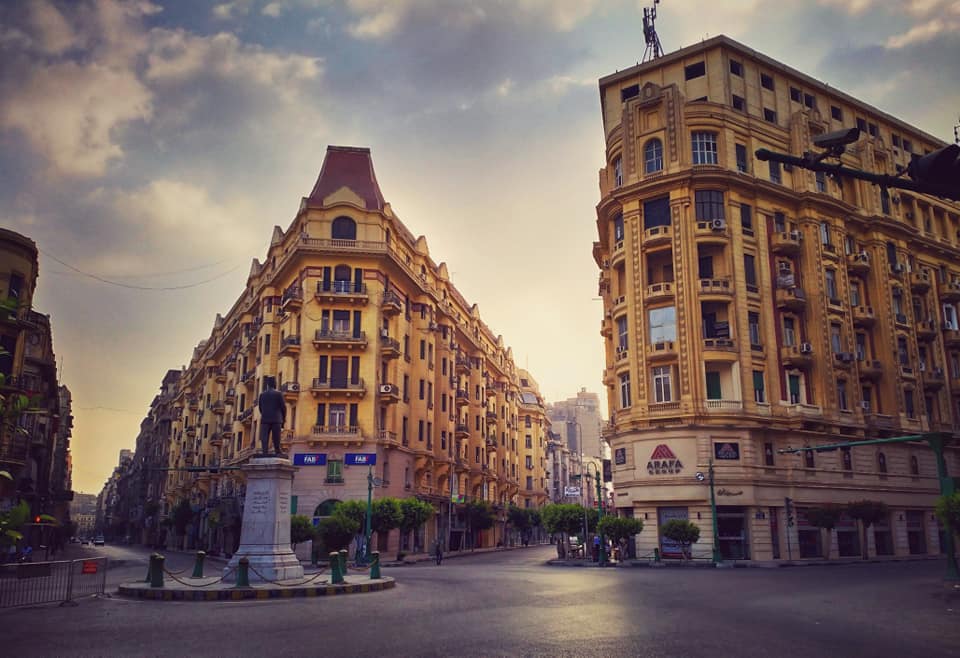
Originally erected as an upscale apartment complex for Cairo’s growing cosmopolitan elite, it was later converted into a hotel in 1928. For decades, it mirrored the vibrant, multi-ethnic, and culturally diverse pulse of Downtown Cairo, hosting intellectuals, artists, and travelers. However, like many of Khedivial Cairo’s gems, the turn of the late 20th century brought decades of neglect, bureaucratic red tape, and urban decay, leaving the property severely underused and worn down.
Amid rapid urban development and administrative shifts, such as government offices moving to the New Administrative Capital, Downtown Cairo risks losing its soul. Protecting façades, restoring original spatial alignments, and repurposing central courtyards for local artisans and cafes ensure that Cairo’s rich narrative remains tangible for future generations, bridging the gap between past heritage and modern urban life.
In an interview, Karim El Shafei, CEO and Chairman of Al Ismaelia for Real Estate Investment, provides further insight into the renovation project. The initiative forms part of wider efforts to preserve Downtown Cairo’s architectural heritage.
What makes La Viennoise particularly significant within Downtown Cairo’s architectural heritage?
La Viennoise is significant because it represents a very particular moment in Cairo’s history, when the city was establishing itself as a modern, cosmopolitan capital, open to different cultures, influences, and ways of life.
Built in 1896, the building is an example of Italian Renaissance-inspired architecture, with a distinctive architectural character that reflects the eclectic identity of Khedivial Cairo. Its proportions, façade, balconies, and architectural detailing are a reminder of the craftsmanship and ambition that shaped Downtown at the turn of the century.
But, I think its significance goes beyond its architecture. Buildings like La Viennoise tell the story of a city that has always been evolving, absorbing influences and creating its own identity in the process.
For us, preserving La Viennoise was never simply about protecting an old façade. It was about safeguarding a piece of Cairo’s collective memory and ensuring that it continues to have a purpose in the life of the city today.
How has the building’s identity and purpose evolved over the past 130 years?
La Viennoise has always reflected the changing character of Downtown Cairo.
It was originally built as Pension Viennoise, a hotel-pension serving visitors to Cairo at a time when Downtown was an important international social and commercial centre. Over the decades, as the city and its needs changed, the building’s role evolved as well.
When Al Ismaelia acquired the property in 2009, we saw an opportunity to give it another chapter. Following an extensive restoration, which began in 2016, the building reopened in 2018 with a new mixed-use identity.
Today, it brings together hospitality, business, and culture. It is home to Mazeej Balad, our boutique hotel, as well as established businesses and offices. With the latest development of its courtyard, we are introducing a new layer of retail, dining, design, and lifestyle experiences through nine Egyptian concepts.
I find this evolution particularly meaningful because we are not trying to return the building to a particular moment in its history. We are allowing it to continue evolving, just as Downtown itself has always done. Its identity is not frozen in time; it is built upon by every generation that inhabits it.
Were any original architectural details or historical features uncovered during the restoration process?
One of the most important aspects of working with a heritage building is learning to appreciate what is already there. The restoration was approached with the understanding that the building’s original character should remain central to its future identity.
Throughout the process, particular attention was given to retaining and respecting its architectural features, including its original iron railings, stone flooring, high ceilings, and the proportions and detailing that give the building its distinctive character.
What is particularly beautiful about La Viennoise is the way these historical elements continue to interact with contemporary interventions. We wanted the restoration to be respectful without making the building feel like a museum.
I believe successful restoration is not necessarily about making everything look old again. It is about understanding what gives a building its character, preserving those elements with care, and introducing modern uses and infrastructure in a way that allows the original architecture to continue speaking for itself.
Why was it important to bring together Egyptian brands, designers, and businesses within the building?
This was very intentional. We have always believed that Downtown Cairo’s revival should be about more than restoring buildings. It should also be about creating opportunities for Egyptian creativity, entrepreneurship, and independent businesses to flourish.
There is an extraordinary amount of talent in Egypt across fashion, food, design, art and lifestyle. Yet many of these concepts need the right environment to grow, connect with new audiences, and become part of people’s everyday lives.
La Viennoise gives these businesses a shared setting, but more importantly, it creates an ecosystem where different creative disciplines can exist alongside one another. Each concept brings its own identity and audience, and together they create an experience that is much richer than any individual business could offer on its own.
We were also very conscious of ensuring that the selection felt authentic to Downtown. We wanted Egyptian concepts with their own stories, perspectives, and personalities, rather than simply bringing in established international names.
For me, this is an important part of what makes the project meaningful. We are not just providing retail spaces; we are creating a platform for local talent and demonstrating that Egyptian concepts can become destinations in their own right.
Ultimately, discovering Egyptian creativity should be part of an everyday experience, not something people have to seek out on a special occasion.
What role do you hope La Viennoise will play in shaping the next chapter of Downtown Cairo?
I hope La Viennoise becomes one of those places that people naturally gravitate towards, not necessarily because they have a particular reason to visit, but because they enjoy being there.
We want it to become a meeting point for different generations, communities, and interests; a place where someone might come for coffee, discover a new Egyptian designer, meet friends for dinner, spend time appreciating the architecture, or simply wander through the courtyard.
More broadly, I hope it demonstrates that heritage preservation and contemporary development do not have to exist in opposition to one another. A historic building can be commercially viable, culturally relevant, and accessible to a new generation without losing the qualities that made it special in the first place.
I also believe that the future of Downtown cannot be shaped by individual buildings in isolation. It depends on creating a connected neighbourhood, where businesses, cultural spaces, residents, visitors, and long-established communities all contribute to its vitality.
We are not interested in creating isolated destinations that feel disconnected from their surroundings. We want to contribute to a Downtown that feels alive, inclusive, and unmistakably Cairo.
If La Viennoise can encourage more people to rediscover Downtown, support Egyptian businesses, and become part of the neighbourhood’s everyday rhythm, then I believe we will have achieved something far more valuable than simply restoring a building.
Our ambition is not to recreate the Downtown of 130 years ago. It is to ensure that, 130 years from now, La Viennoise is still part of Downtown’s story.
KioskNews shows a cleaned-up reading view extracted from the publisher’s page — the original always lives on their site, not ours.