Centre develops framework to train Census enumerators on ‘sensitive’ questions
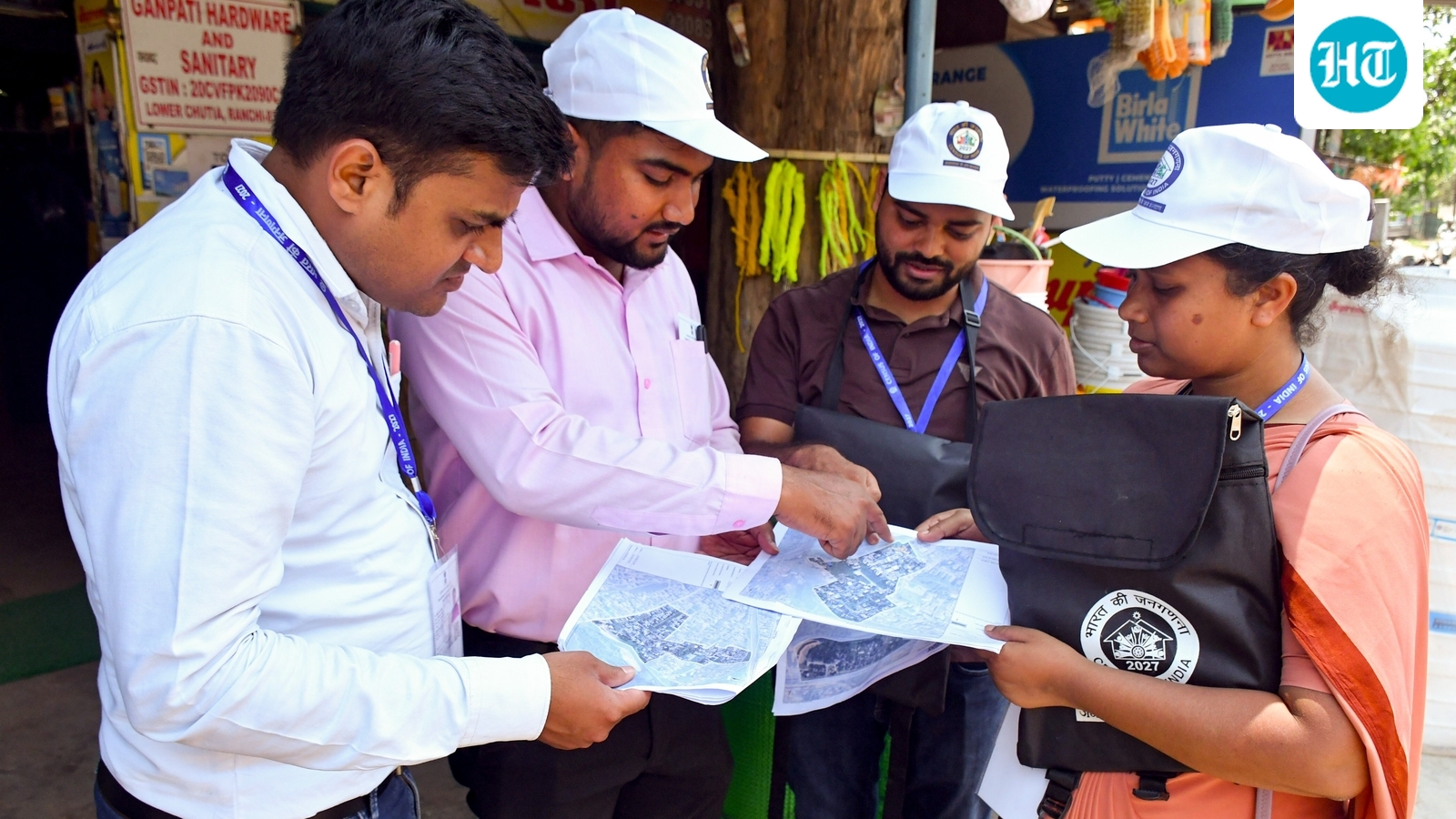
The Centre has developed a structural household interaction framework for training of enumerators for the second phase of the ongoing national census, population enumeration, in which they will have to engage with people on a more sensitive range of questions covering religion, caste, language, disability, migration, fertility and economic activity.
In a communique to all the states, Union territories and directorates of census operations (DCOs) earlier this week regarding training of 3.4 million enumerators, the registrar general of India (RGI) Mrityunjay Kumar Narayan conveyed that the margin of error in the population enumeration is “narrower” and that the exercise must produce a complete and accurate account of “who those people are, where they live, what work they do, and what they need”. HT has reviewed the note.
Also Read I Caste census: DMK chief Stalin urges Centre to avoid discrepancies, demands TN Assembly resolution
Population enumeration in poll-bound Goa, Uttar Pradesh, Punjab and areas other than snow-bound areas of Uttarakhand during Census 2027 will take place from December 1, 2026 to January 4, 2027. For the rest of India, the exercise shall be completed by March 1, 2027. The second phase is already underway in Ladakh and snow-bound non-synchronous areas of Jammu and Kashmir, Himachal Pradesh and Uttarakhand.
Engagement on wider, more sensitive questions
“Population enumeration, therefore, must produce a complete and accurate account of who those people are, where they live, what work they do, and what they need. This is what Phase II delivers, and this is why Phase II training matters as much as Phase I, and in some respects more: the questions are more numerous, more sensitive, and more consequential; the margin for error is narrower,” the RGI said.
The communique further said that population enumeration required enumerators to engage with respondents “on a wider and more sensitive range of questions covering religion, language, caste, disability, migration, economic activity and fertility, among others”.
Also Read I Census 2027 and politics of counting caste
“The dynamics of Phase II demand not only technical proficiency but also quality of human engagement that earns the trust of every respondent”.
Enumerators' ideals for Phase-II
The RGI added that to give an operation expression to this expectation, “a structured household interaction framework, PRAMAN (Pehchaan -Identity), Rishta (rapport), Anurodh (request), Madad (assistance), Aankada Shuddhata (data accuracy), Nishtha (commitment), has been developed for Census 2027 Phase II”.
“Training shall place special emphasis on sensitive and complex question categories covering religion, mother tongue, scheduled caste and scheduled tribe status, caste, disability, migration, fertility, and economic activity – with particular attention to appropriate probing techniques and the correct application of category codes,” the note said.
Also Read I Enumeration for Census begins in snow-clad areas
The census will ask 40 questions to every household, 11 more than in 2011. Question 10 asks respondents to declare caste in open-ended format, meaning enumerators record what is stated without matching it to any prepared list. Others seek parental details, passport, Aadhaar, voter ID, driving licence and mobile numbers.
Among the four poll-bound states, caste arithmetic is seen as a particularly key factor in Uttar Pradesh and Punjab.
KioskNews shows a cleaned-up reading view extracted from the publisher’s page — the original always lives on their site, not ours.