Israeli president picks Gadi Eisenkot, Netanyahu rival, to try to form government
Make this your preferred source to get more updates from this publisher on Google.
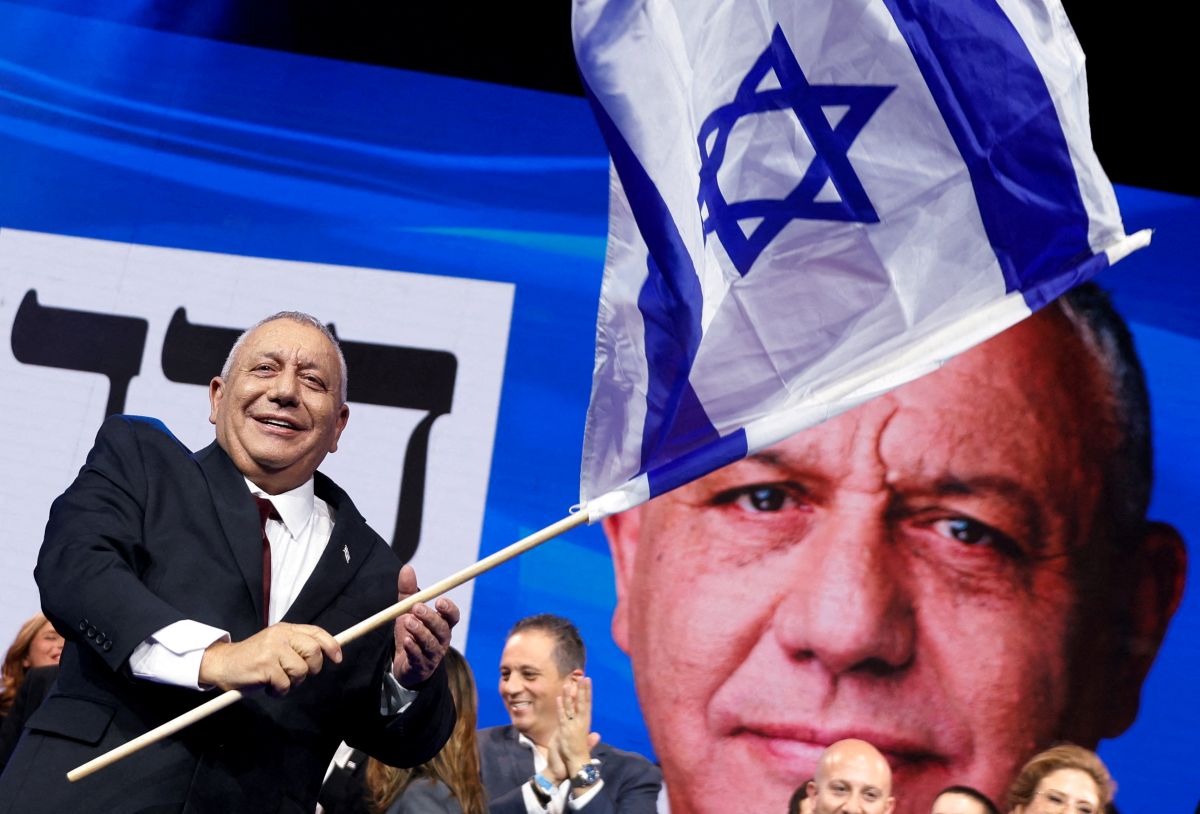
Israel's president on Saturday chose Gadi Eisenkot, Prime Minister Benjamin Netanyahu's strongest rival, to try to form a new government following a deadlocked election that left neither man with a clear path to power.
Netanyahu, Israel's longest-serving leader, is fighting to stay in office after his religious-nationalist coalition lost its majority in an October 27 election but still emerged as the largest bloc in parliament.
Eisenkot, a former military chief, has declined to join forces with Arab parties, with whose support he would have a majority of seats in parliament. But Arab leaders, incensed by what they view as the racist policies of Netanyahu and his far-right allies, still nominated Eisenkot to try to form a government first — giving him the most endorsements.
"President Herzog has invited Gadi Eisenkot to the President’s Residence, where he will be tasked with forming the government tomorrow," said the spokesperson of President Isaac Herzog, whose largely ceremonial role involves nominating a candidate to form a coalition after elections.
Eisenkot faces long-shot bid to form government
Weeks of protracted negotiations are expected to follow Eisenkot's nomination. He has 28 days to try to forge a government, with a possible 14-day extension.
His potential pathways to power include trying to form a minority government with Arab support from the outside; forming a coalition with ultra-Orthodox parties that he and his allies have shunned in the past; or forging a unity government with Netanyahu.
Analysts say that all three options are unlikely to take shape. If Eisenkot fails, another candidate can try to form a government and if that candidate fails, parliament can nominate another. There is a deadline for the process of around 100 days. If no one succeeds, another election is held.
Likud won the most seats of any single party with 27 in the 120-seat Knesset, but Netanyahu's wider religious-nationalist coalition garnered only 53 in total, short of a 61-seat majority.
Eisenkot's Yashar party emerged as the second-largest party with 21 seats, while his coalition, spanning four center-left to right-wing Jewish-led parties, won just 48 seats. Two parties representing Israel's Arab minority won an unprecedented 19 seats.
Eisenkot critical of settler violence
A son of Moroccan immigrants, Eisenkot, 66, would be the country's first prime minister from Israel's Mizrahi community, Jews who trace their roots to the Middle East and North Africa.
Reserved and media-shy, Eisenkot only entered politics in 2022. He briefly served in Netanyahu's wartime cabinet following Hamas' October 7, 2023, attack on Israel before returning to the opposition.
From opposition, he publicly rebuked Netanyahu over his leadership, including his management of the military campaign in Gaza, and has sworn that he would not serve in government with him.
Eisenkot's public standing is also bound up with the personal price his family has paid since 2023: a son and two nephews were killed fighting in Gaza.
Eisenkot highlighted his security credentials on the campaign trail, citing his "Dahiyeh doctrine" of responding to attacks with disproportionate force, which he deployed as a commander during Israel's 2006 war with Iran-backed Hezbollah in Lebanon.
Eisenkot has criticized settler violence against Palestinians, which has surged since 2023, raising tensions in Israel’s ties with Western states, and he opposes Netanyahu's far-right coalition partners Itamar Ben-Gvir and Bezalel Smotrich, who have both faced sanctions by some Western countries for inciting violence against Palestinians. — Reuters
KioskNews shows a cleaned-up reading view extracted from the publisher’s page — the original always lives on their site, not ours.