$24 billion deal: US arms Saudi Arabia with its most advanced F-35 jets as West Asia tensions soar
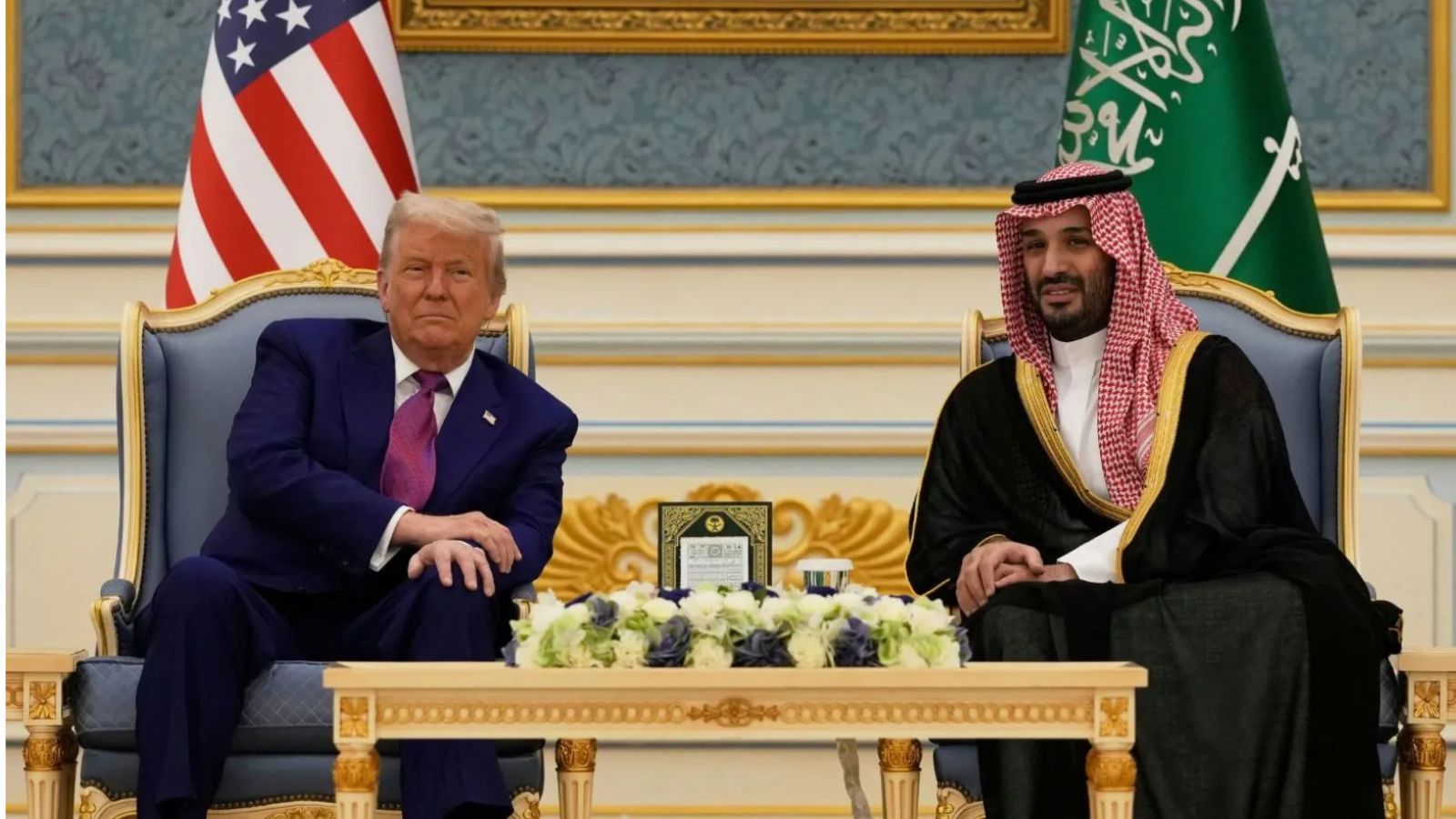
The US has told Congress it plans to sell up to 48 F-35 fighter jets to Saudi Arabia in a $24.3 billion deal, making the kingdom the first Arab state to gain access to the plane. Israel has long opposed the sale.
5 min readSep 18, 2026 07:54 AM IST First published on: Sep 18, 2026 at 07:37 AM IST
US President Donald Trump and Saudi Crown Prince Mohammed bin Salman. (File Photo)
The United States has told Congress it plans to sell up to 48 F-35 stealth fighter jets to Saudi Arabia, a deal set to cost Riyadh roughly $24.3 billion. The deal, which comes amid renewed tensions in West Asia, would make Saudi Arabia the first Arab country to get access to the advanced fighter jet.
The US Department of State in a statement on Thursday said the sale would support US foreign policy and security goals by strengthening a key partner in the Gulf. It said the move would help Saudi Arabia defend its own territory and work more closely with US forces, and would also improve the country’s ability to defend itself in the air.
The department added that the sale “will not alter the military balance in the region,” in line with long-standing US policy that Israel must keep a military edge over its neighbours.
Why has Israel objected to the deal?
Israel is currently the only country in the Middle East that flies the F-35, and its officials have raised concerns about the jet being sold to Saudi Arabia, even as the two countries have been under pressure to normalise ties.
While Saudi Arabia has sought for years to buy the world’s most advanced warplane, Israeli Prime Minister Benjamin Netanyahu had campaigned against the sale, so the announcement is being seen as a setback for him.
Story continues below this ad
The idea that Israel should hold a military edge over Arab states goes back to the Cold War. It became US law in 2008, requiring regular checks on arms sales to Arab countries. The F-35 itself can be sold with different levels of technology, in the same way a car can be bought in different trims, and reports say Saudi Arabia’s jets will not carry all the features fitted to Israel’s.
What is the F-35 and what can it do?
The F-35 Lightning II is a fifth-generation stealth fighter jet built by Lockheed Martin. It can fight other aircraft, strike ground targets and gather intelligence, all in one plane, and its shape and coating make it hard for radar to detect. It flies at around Mach 1.6, covers over 1,200 nautical miles without refuelling, and carries missiles and precision-guided bombs. So far, only the closest US allies, such as Israel and several NATO members, have been allowed to operate it Saudi Arabia would be the first Arab nation to do so.
Why is the timing of the sale important?
The announcement lands at a difficult moment for Saudi Arabia, which is facing missile and drone attacks from Yemen’s Houthi rebels. The group, backed by Iran, has taken control of Yemen’s entire Red Sea coast in recent fighting and has also targeted Saudi territory directly.
The F-35 deal is the latest in a string of major arms purchases by Saudi Arabia this year. Earlier in September, the US approved a $5 billion sale of more than 10,000 bombs, including large 2,000-pound weapons. This month also saw a $750 million deal for 60 tank engines, following a $1.96 billion agreement in July to supply guidance kits that turn rockets into precision-guided weapons.
Story continues below this ad
What concerns has the deal raised in Washington?
Some in the US defence and intelligence community worry that selling the F-35 to Saudi Arabia could give China a path to sensitive American technology. The New York Times reported this week that US intelligence officials had raised the possibility that Beijing could gain access to F-35 technology through its ties with Riyadh.
Democratic Congressman Raja Krishnamoorthi, a member of the House Intelligence Committee, spoke out against the sale on these grounds. He said it should not go ahead “when our own intelligence community is warning that it could put the crown jewels of American military technology within reach of the Chinese Communist Party.”
The US has so far limited F-35 sales to its closest allies, including several NATO members in Europe and Israel. Turkey was removed from the F-35 programme in 2019 after buying a Russian air defence system, over fears that Moscow could gain access to the jet’s technology through Ankara.
The State Department has formally notified Congress of the proposed sale, which still needs approval from US lawmakers before it can go ahead. No timeframe has been given for when the jets would actually be delivered.
Story continues below this ad
Washington has not sent its own forces into the fighting between Saudi Arabia and the Houthis, though a US official said this week that an American military task force is helping Saudi forces with intelligence sharing and planning.
The Express Global Desk at indianexpress.com which delivers authoritative, verified, and context-driven coverage of key international developments shaping global politics, policy, and migration trends. The desk focuses on stories with direct relevance for Indian and global audiences, combining breaking news with in-depth explainers and analysis. A major focus area of the desk is US immigration and visa policy, including developments related to student visas, work permits, permanent residency pathways, executive actions, and court rulings. The Global Desk also closely tracks Canada’s immigration, visa, and study policies, covering changes to study permits, post-study work options, permanent residence programmes, and regulatory updates affecting migrants and international students. All reporting from the Global Desk adheres to The Indian Express’ editorial standards, relying on official data, government notifications, court documents, and on-record sources. The desk prioritises clarity, accuracy, and accountability, ensuring readers can navigate complex global systems with confidence. Core Team The Express Global Desk is led by a team of experienced journalists and editors with deep expertise in international affairs and migration policy: Aniruddha Dhar – Senior Assistant Editor with extensive experience in global affairs, international politics, and editorial leadership. Nischai Vats – Deputy Copy Editor specialising in US politics, US visa and immigration policy, and policy-driven international coverage. Mashkoora Khan – Sub-editor focusing on global developments, with a strong emphasis on Canada visa, immigration, and study-related policy coverage. ... Read More
KioskNews shows a cleaned-up reading view extracted from the publisher’s page — the original always lives on their site, not ours.