A Robot Snake That Could One Day Travel Through Your Gut
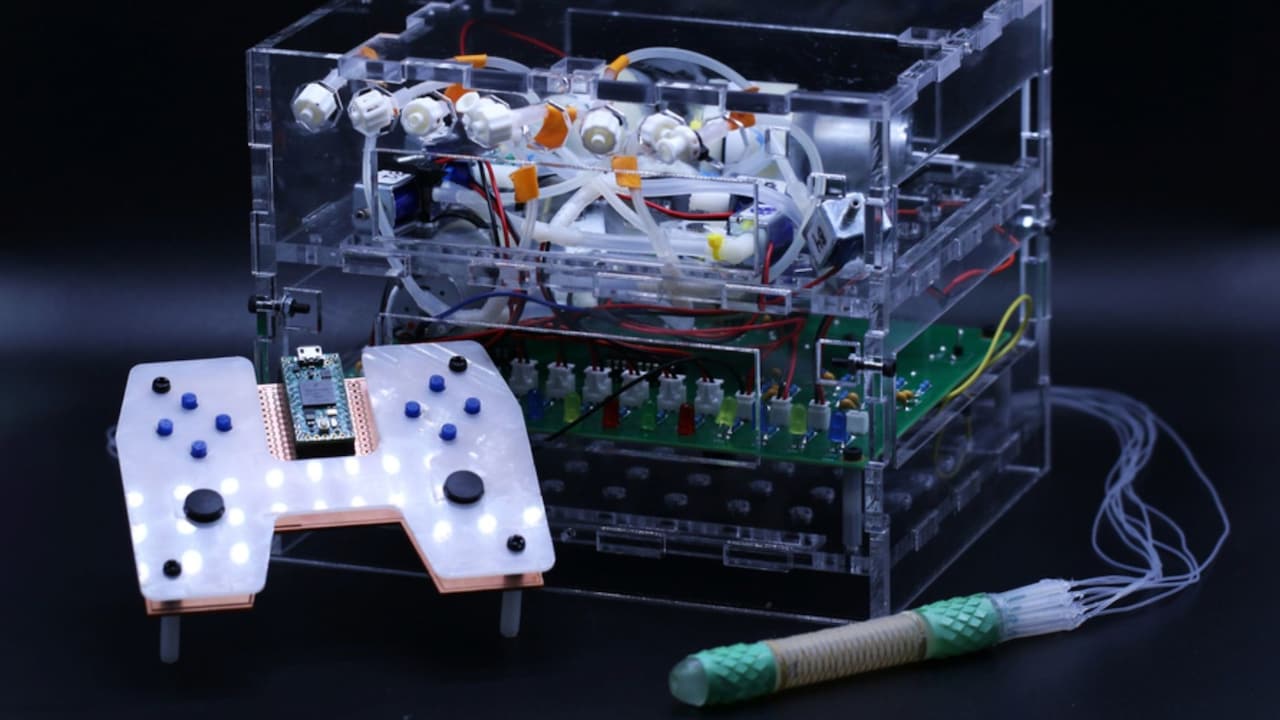
Imagine a tiny robot snake crawling inside your intestines, looking for trouble. Sounds creepy? But, it could actually help doctors save you from a lot of trouble.
Researchers at the Massachusetts Institute of Technology (MIT) have developed a soft, snake-inspired robot that can travel through the small intestine, one of the hardest parts of the human body for doctors to examine.
"In designing the new robot, the researchers were inspired by the locomotion of snakes, as well as the scaly skin that helps them gain traction on slippery surfaces.
"A special textured coating helps the robot remain attached to the mucosal lining of the intestine as it inches its way through the narrow tube," according to MIT.
Watch our quick take:
The device, called BIOSENTER, uses a combination of inflatable sections and small anchoring balloons to move forward. It expands and contracts in a controlled sequence, allowing it to grip the intestinal walls and inch its way through the gut.
The small intestine is more than 20 feet long. And examining it today can be a slow, complicated procedure involving balloon-assisted endoscopes.
"When we evaluate the small intestine, we do it for either diagnosis or treatment. If we find a little polyp that needs to be removed, this robot allows us to take a biopsy or remove it," said Giovanni Traverso, professor of mechanical engineering at MIT, and a gastroenterologist at Brigham and Women's Hospital.
The 'snake' also has specially designed gripping sleeves, inspired by kirigami - the Japanese art of cutting and folding paper. These help the robot hold its position as it moves.
"The robot contains tools including a camera for imaging, a sprayer for drug delivery, and clips that can take tissue biopsies or remove polyps," per MIT.
In tests inside pig intestines, the little snake robot travelled about six and a half feet and demonstrated its imaging, biopsy and drug-delivery capabilities.
"We hope we can continue to move it forward to eventually develop systems that can help achieve more automated evaluation of the small intestine," Traverso said.
KioskNews shows a cleaned-up reading view extracted from the publisher’s page — the original always lives on their site, not ours.