501 In 2006 To 469 In 2025: Global Student Scores Drop As Screen Time Rises

Students across 23 countries are performing worse in studies than they did a decade ago, according to the latest results from the Programme for International Student Assessment (PISA) 2025 assessment conducted by the OECD. The report shows that average scores in mathematics, science and reading have fallen significantly over time, raising concerns about learning levels among school students.
The PISA tests the abilities of 15-year-old students across countries. The 2025 results show a continued decline in performance. Mathematics scores have dropped from 501 in 2006 to 469 in 2025, while reading scores fell from 495 to 466 during the same period. Science scores also declined from 503 to 486. The sharpest fall has come since the COVID-19 pandemic.
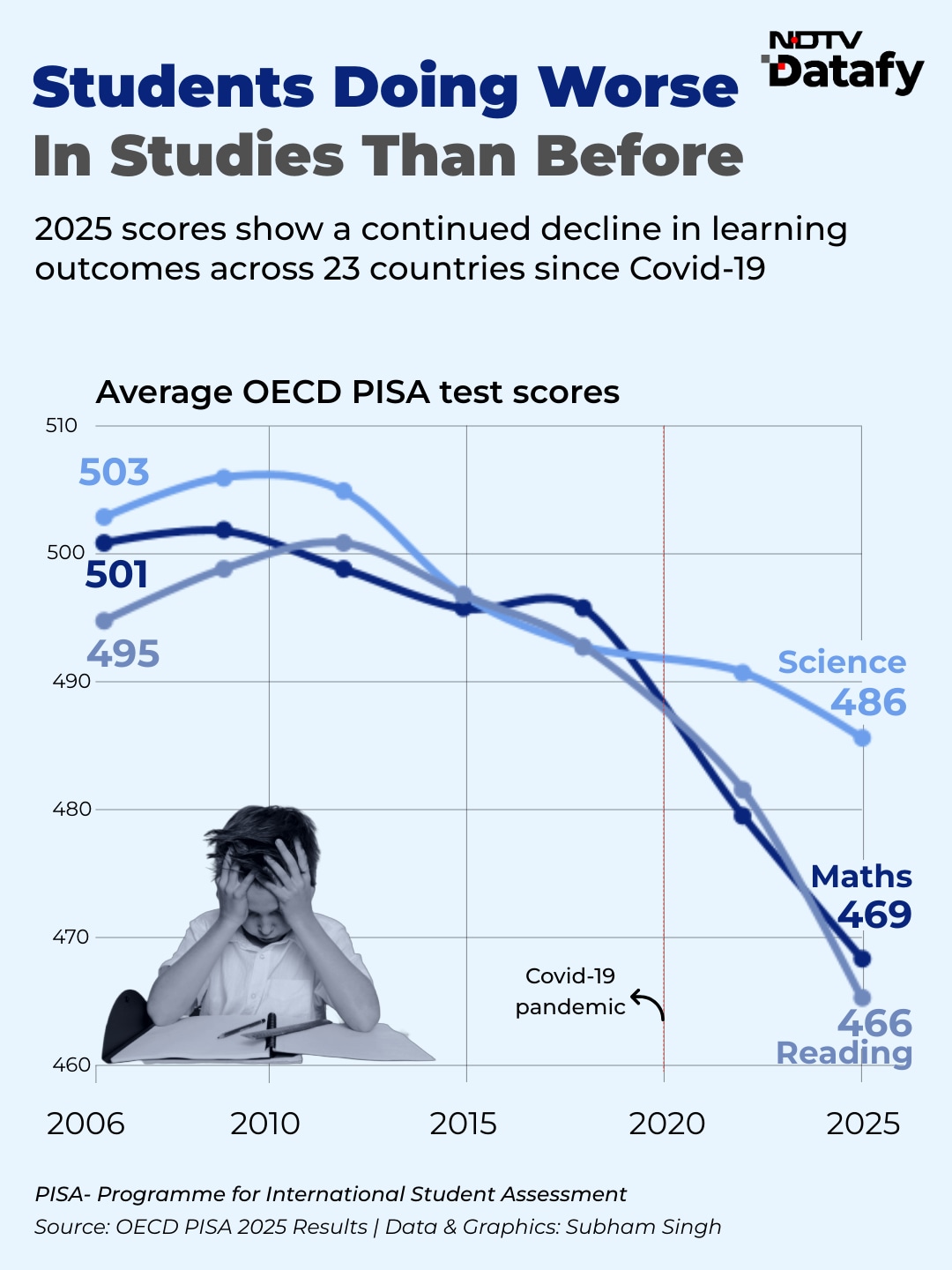
The data indicate that students are struggling across all major subjects rather than in just one area. While scores remained relatively stable during the late 2000s and early 2010s, the trend has turned downward in recent years. Reading and mathematics have seen particularly steep declines, reaching their lowest levels in the period covered.
More Screen Time, Lower Scores
The report also points to a relationship between digital device use and student performance. Students who spent up to one hour a day using digital devices recorded the highest average science score of 507. However, scores generally declined as screen time increased. Students using devices for more than two hours a day scored 482 on average, while those spending between five and seven hours recorded an average score of just 434.
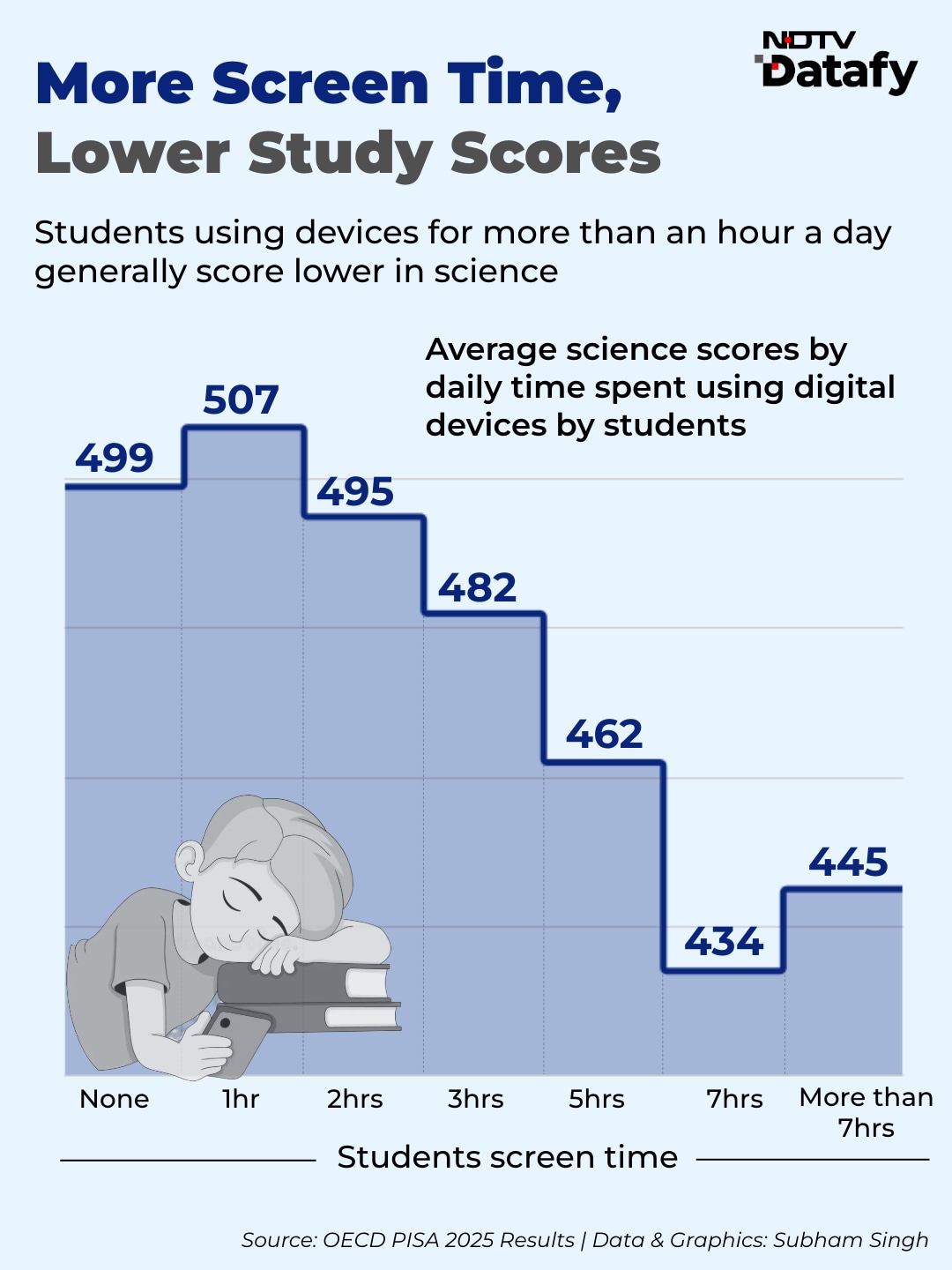
Students reporting no device use scored 499, suggesting that moderate use may be beneficial, but excessive screen exposure is associated with weaker performance. The findings do not prove that screen time directly causes lower scores, but they highlight a clear link between heavy device use and poorer learning outcomes.
KioskNews shows a cleaned-up reading view extracted from the publisher’s page — the original always lives on their site, not ours.