The subtle symbolism behind the silk scarves worn by the Apec leaders at Shenzhen summit
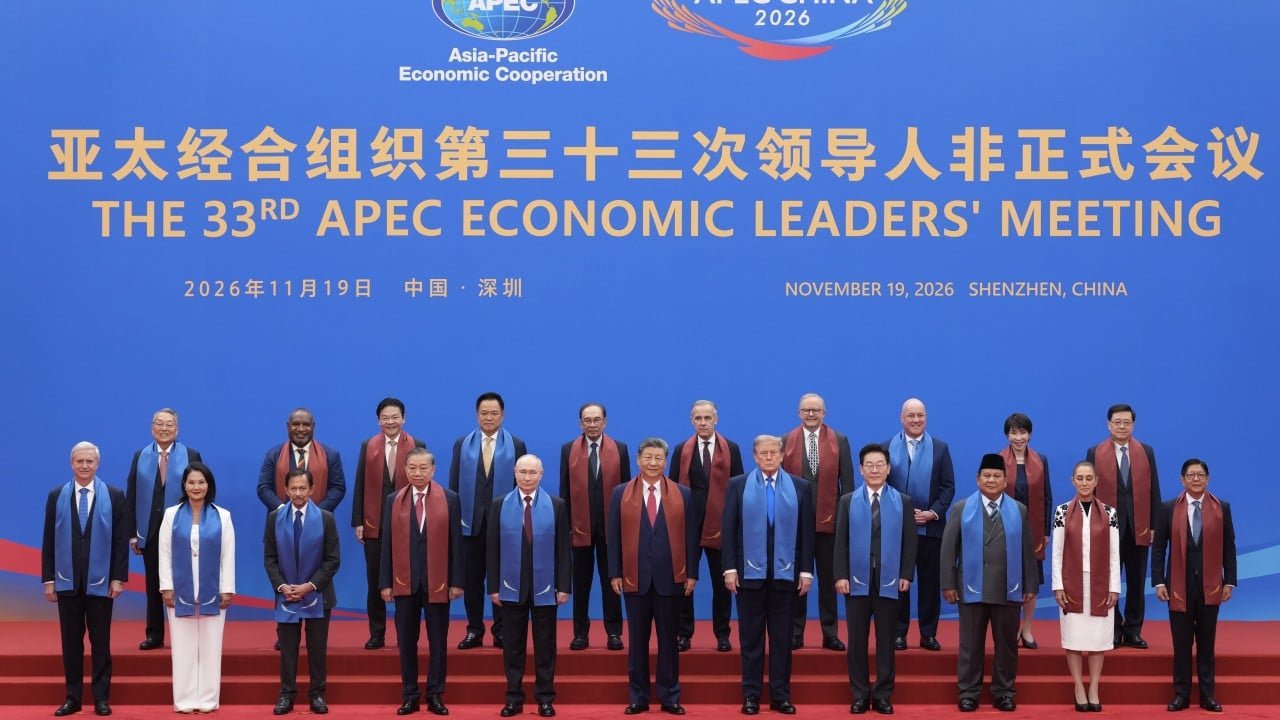
When Apec leaders assembled in Shenzhen on Thursday for their group photo, they kept up one of the bloc’s traditions by donning traditional garb from the host country.
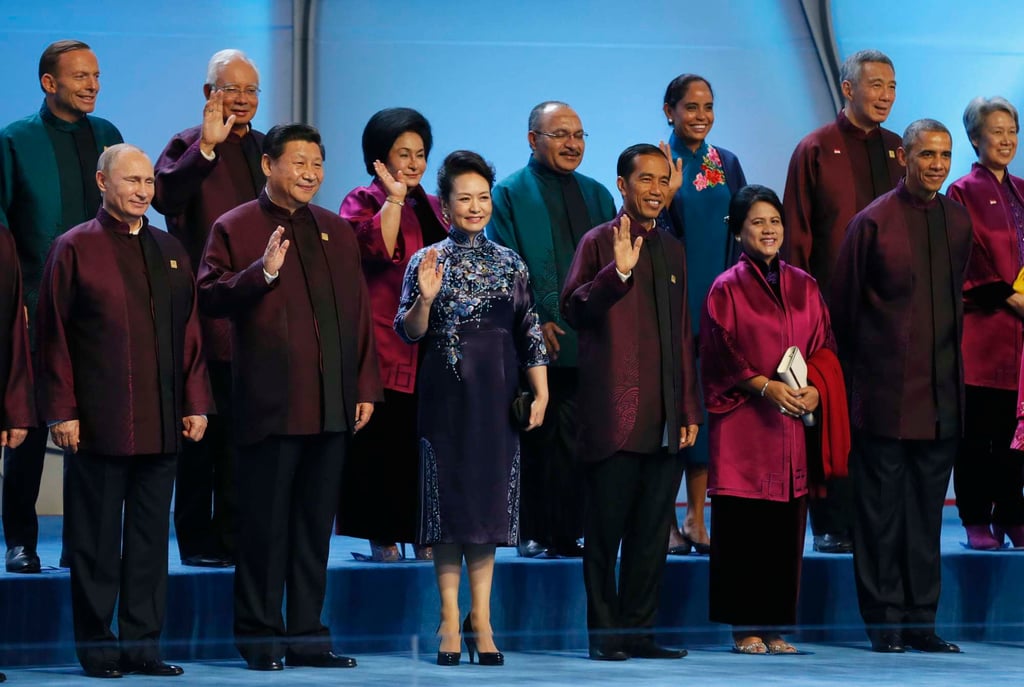
This time, rather than the more elaborate outfits worn at some previous summits – including the “new Chinese-style” jackets worn the last time China hosted the event – the leaders just slipped on an understated silk scarf over their formal clothing.
In keeping with China’s meticulous approach to major international gatherings, this seemingly simple choice was the result of careful, behind-the-scenes work by the designers and artisans who made them.
Each scarf has 21 threads of wild silk woven into the fabric to represent close, mutually beneficial cooperation among Apec’s 21 member economies, according to Wu Jianhua, chairman of its lead designer, the Suzhou Shangjiukai Silk Technology and Culture Company.
Wu told state news agency Xinhua that the firm hoped that when the leaders put on the scarf put they would “feel not only the depth of Chinese culture, but also a sense of an Asia-Pacific community”.
Wu also took charge of designing the fabric used in the jackets worn by the Asia-Pacific Economic Cooperation leaders in Beijing in 2014 that incorporated design elements from several dynasties.
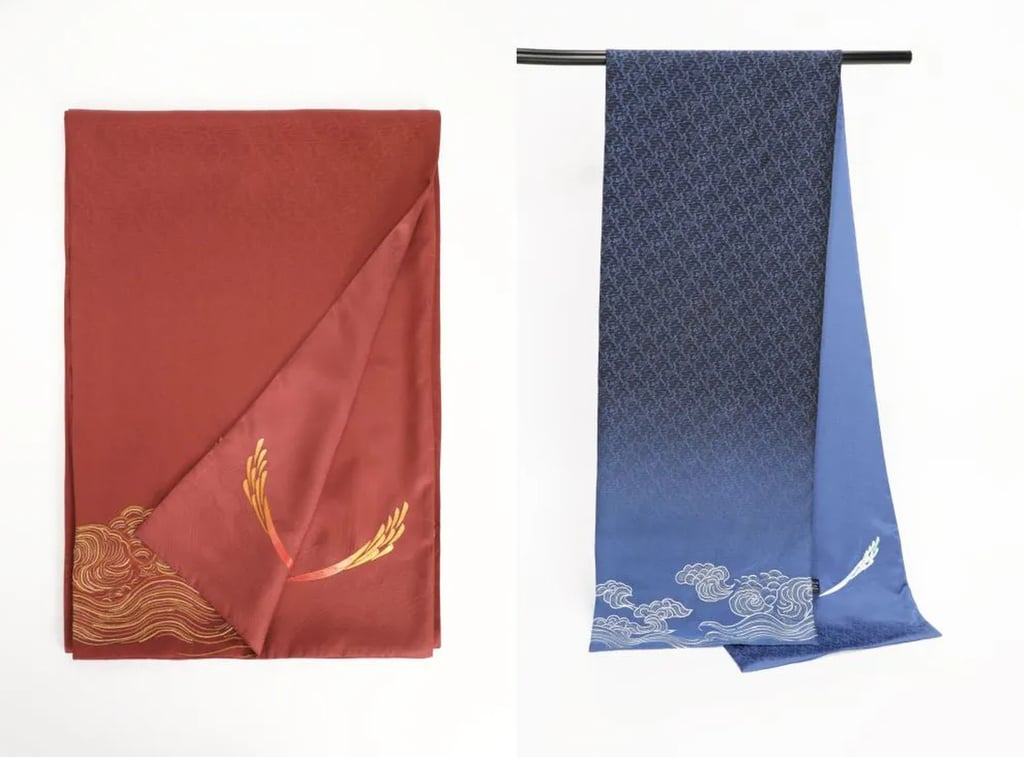
Leaders attending the Shenzhen Apec summit were given two options to wear – a deep red and a deep blue, the colours of the Apec emblem – each decorated using two separate traditional embroidery techniques and in muted tones designed to pair easily with formal wear.
The red version was crafted from gambiered Guangdong silk, also known as xiangyunsha, or fragrant cloud silk.
Wu told Beijing Daily that because the Guangdong gauze was dyed using extracts from the gambier plant, it was notoriously difficult to achieve a consistent hue, prompting artisans to run more than 300 test samples to ensure colour uniformity.
On the tips, one side was embroidered with golden auspicious clouds – one of the oldest and best-known Chinese decorative motifs – and rolling waves, while the reverse featured the Apec emblem in reddish-orange.
In Chinese culture, cloud and wave motifs symbolise good fortune, peace and enduring prosperity.
The blue version is woven from Song brocade, featuring silver cloud and wave patterns on one side and a blue-green emblem on the other.
The traditional silk fabric dates back to the Song dynasty (960–1279) and is inscribed on Unesco’s Representative List of the Intangible Cultural Heritage of Humanity.
The dyeing and finishing techniques for gambiered Guangdong gauze are also recognised as part of China’s national intangible cultural heritage, as are the Guangdong and Suzhou embroidery techniques used on the patterns.
Guangdong is the province where Shenzhen is located, while Suzhou is a city long famed for its silk and needlework.
Beyond the main motifs at either tip, the scarf’s subtle background pattern weaves together three elements: kapok blossoms, bougainvillea and auspicious clouds.
Known locally as the “hero flower”, kapok has become a symbol of the pioneering spirit of the Greater Bay Area, while bougainvillea is the official city flower of Shenzhen.
KioskNews shows a cleaned-up reading view extracted from the publisher’s page — the original always lives on their site, not ours.