The 10 Greatest Planetary Romance Books of All Time, Ranked


Luc Haasbroek is a writer and videographer from Durban, South Africa. He has been writing professionally about pop culture for eight years. Luc's areas of interest are broad: he's just as passionate about psychology and history as he is about movies and TV. He's especially drawn to the places where these topics overlap.
Luc is also an avid producer of video essays and looks forward to expanding his writing career. When not writing, he can be found hiking, playing Dungeons & Dragons, hanging out with his cats, and doing deep dives on whatever topic happens to have captured his interest that week.
Sign in to your Collider account
"Planetary romance" is one of those science fiction labels that can be slightly misleading. Romance, in this case, doesn't necessarily mean a love story; instead, it refers to adventure in its older sense, as in extraordinary journeys across alien worlds, where the planet itself becomes as important as any individual character.
These stories are defined by strange civilizations, unfamiliar ecosystems, and mind-bending alien life forms, as well as human responses to all this oddness. Usually that means exploration and culture clash. The titles below run the gamut from unapologetic swashbucklers to thoughtful allegories; they should include something for everyone.
10 'A Martian Odyssey' (1934)

"We are v-r-r-iends!" Published in the mid-'30s, this one was an important bridge between early pulp adventure and Golden Age sci-fi. It sees American chemist Dick Jarvis journeying across the Martian landscape after his rocket crashes far from the rest of his expedition. His long trek back becomes an episodic tour through a Mars overflowing with forms of life that don't behave according to conveniently human logic.
They include silicon-based creatures that construct pyramids out of their waste and predators that lure prey by projecting optical illusions of their loved ones. Most memorable is Tweel, the birdlike Martian Jarvis befriends despite the pair possessing no common language. Author Stanley G. Weinbaum makes their attempts at communication unusually convincing for a sci-fi story of that period: understanding develops imperfectly through gestures, repeated words, observation, and inference.
9 'The Survivors' (1958)

"The planet had a reputation for killing men." This one begins with colonists stranded on an incredibly hostile planet aptly named Ragnarok. There, the protagonists are subjected to crushing gravity, thin atmosphere, extreme weather, dangerous wildlife, and diseases for which the human body is spectacularly unprepared. The true "romance" of the book is the epic, slow-burn adaptation of the human species; the survivors undertake a century-spanning, multi-generation project to make the planet inhabitable... and eventually seek their revenge.
Crucially, the story treats planetary ecology not as window dressing, but as an active antagonist. Every resource must be painfully "MacGyvered", and eventually Ragnarok comes to feel like a character in its own right. A lot of the speculative tech here now feels fairly unexciting, with a very "1950s sci-fi" feel, but the novel's central idea of conquering an alien world remains compelling, and its DNA has lived on in countless stories since.
8 'Dragonflight' (1968)

"Drummer, beat, and piper, blow, Harper, strike, and soldier, go." Despite being focused on dragons, the Dragonriders of Pern series is actually a sci-fi saga set on a distant planet in the far future. Main character Lessa grows up hiding her identity after her family is murdered, waiting for an opportunity to reclaim her birthright. Her life instead becomes intertwined with the dragonriders of Benden Weyr when she bonds with the queen dragon Ramoth, placing her at the center of a much larger threat to the planet.
Here, author Anne McCaffrey essentially disguises a planetary-colonization story as a dragon epic. Instead of being magical, the dragons of Pern are the result of genetic engineering. Early human colonists took a small, native telepathic lizard species ("fire-lizards") and bio-engineered them into massive, fire-breathing protectors to survive the planet’s unique ecosystem, as well as the extraterrestrial organisms that occasionally fall from the sky to menace it.
7 'Lord of Light' (1967)

"His followers called him Mahasamatman and said he was a god." Lord of Light is perhaps the defining work by sci-fi master Roger Zelazny, who also wrote The Chronicles of Amber and This Immortal. The world of the story initially appears to be fantasy inspired by Hindu and Buddhist mythology. However, we gradually learn that these "gods" are actually just the technologically enhanced descendants of human colonists. Reincarnation is accomplished through transferring consciousness between bodies, and the ruling elites have constructed an entire theology around maintaining their grip on power.
From here, the plot focuses on a massive civil war for the fate of the planet. The protagonist, Sam, is an original crew member who rejects the tyranny of his peers. He begins spreading a subversive ideology, recruiting followers, and binding energy-based aliens to his will. In short, it's a philosophical sci-fi romp with a dash of sword-and-sorcery danger.
Collider Exclusive · Sci-Fi Survival Quiz Which Sci-Fi World Would You Survive? The Matrix · Mad Max · Blade Runner · Dune · Star Wars
Five universes. Five completely different ways the future went wrong — or sideways, or up in flames. Only one of them is the world your instincts were built for. Eight questions will figure out which dystopia, galaxy, or desert wasteland you'd actually make it out of alive.
💊The Matrix
🔥Mad Max
🌧️Blade Runner
🏜️Dune
🚀Star Wars
01
You sense something is deeply wrong with the world around you. What do you do? The first instinct is often the truest one.
02
In a world of scarcity, what resource do you guard most fiercely? What we protect reveals what we believe survival actually requires.
03
What kind of threat keeps you up at night? Fear is useful data — if you're honest about what you're actually afraid of.
04
How do you deal with authority you don't trust? Every dystopia has a power structure. Your approach to it determines everything.
05
Which environment could you actually endure long-term? Survival isn't just tactical — it's physical, psychological, and very much about where you are.
06
Who do you want in your corner when things fall apart? The company you keep is the clearest signal of who you actually are.
07
Where do you draw the line — if you draw one at all? Every survivor eventually faces a moment that tests what they're actually made of.
08
What would actually make survival worth it? Staying alive is one thing. Having a reason to is another.
Your Fate Has Been Calculated You'd Survive In…
Your answers point to the world your instincts were built for. This is the universe your temperament, your survival instincts, and your particular brand of stubbornness were made for.
The Matrix
You took the red pill a long time ago — probably before anyone offered it to you. You're a systems thinker who can't help but notice the seams in things.
- You're drawn to understanding how the system works before figuring out how to break it.
- You'd find the Resistance, or it would find you — your instinct for spotting constructed realities is the machines' worst nightmare.
- You function best when you have access to information and the freedom to act on it.
- The Matrix built an airtight prison. You'd be the one probing the walls for the door.
Mad Max
The wasteland doesn't reward the clever or the well-connected — it rewards those who are hard to kill and harder to break. That's you.
- You don't need comfort, community, or a cause larger than the next horizon.
- You need a vehicle, a clear threat, and enough fuel to outrun it — and you're good at all three.
- You are unsentimental enough to survive that world, and decent enough — just barely — to be something more than another raider.
- In the wasteland, that distinction is everything.
Blade Runner
You'd survive here because you know how to exist in moral grey areas without losing yourself completely.
- You read people accurately, keep your circle small, and ask the questions others prefer not to answer.
- In a city where humanity is a legal designation rather than a feeling, you hold onto something that keeps you functional.
- You're not a hero. But you're not lost, either.
- In Blade Runner's world, that distinction is everything.
Dune
Arrakis is the most hostile environment in the known universe — and you are precisely the kind of person it rewards.
- Patience, discipline, and political awareness are your core strengths — and on Arrakis, they're survival tools.
- You understand that the long game matters more than any single victory.
- Others come to Dune and are consumed by it. You'd learn its logic and earn its respect.
- In time, you wouldn't just survive Arrakis — you'd begin to reshape it.
Star Wars
The galaxy far, far away is vast, loud, and in a constant state of violent political upheaval — and you wouldn't have it any other way.
- You find meaning in being part of something larger than yourself — a cause, a crew, a rebellion.
- You'd gravitate toward the Rebellion, or the fringes, or whatever pocket of the galaxy still believes the Empire's grip can be broken.
- You fight — not because you have to, but because standing aside isn't something you're capable of.
- In Star Wars, that willingness is what makes all the difference.
6 'Planet of the Apes' (1963)

"I entrust this manuscript to space..." Before it was a classic movie, Planet of the Apes was a solid novel. In it, journalist Ulysse Mérou travels with an expedition to Betelgeuse and lands on Soror, an Earthlike planet where humans live as primitive animals while intelligent apes possess language, cities, institutions, and advanced technology. Boulle gets plenty of satirical mileage from that reversal: Ulysse knows he's intelligent, yet convincing his captors requires overcoming their assumption that a human simply cannot possess genuine reason.
Rather than using laser pistols or swords, Ulysse must fight his way out of subjugation using only his wits. He performs calculus, solves puzzles, and learns the simian language to convince his chimpanzee captor, Zira, that he is an equal. This cleverly upends the dynamics of the traditional sci-fi explorer narrative. Indeed, the story is loaded with thematic depth. The ending is also brilliantly cynical, albeit perhaps not as iconic as the movie's climax.
5 'Primary Inversion' (1995)

"War was what happened when diplomacy failed." This was the first installment in Catherine Asaro's cult classic Saga of the Skolian Empire. It introduces Sauscony "Soz" Valdoria, a formidable fighter pilot and member of the ruling family. The Skolians are locked in a long conflict with the Eubian Concord, whose ruling Traders maintain an empire built partly upon the enslavement of other human beings. Soz has particularly good reasons to hate them... which makes her attraction to a man connected to the enemy considerably more complicated.
Refreshingly, Asaro grounds many planetary romance tropes in real science. For example, the telepathy here involves bio-engineered neural structures. The space battles were highly praised for their attention to detail, utilizing calculations based on actual physics and plausible ideas around relativistic space travel and time dilation. That's what happens when the author has a PhD in chemical physics from Harvard!
4 'Red Mars' (1992)

"One day the sky will burn red as blood, too." Ranking among the very best sci-fi novels of the '90s, Red Mars by Kim Stanley Robinson delves into the nitty-gritty of what terraforming an entire world might actually entail. In the story, The First Hundred settlers arrive on the Red Planet equipped with scientific expertise and grand ambitions, but almost immediately disagree about what humanity has the right to do with the untouched Martian environment. This sets up a ferocious ideological conflict.
Ann Clayborne wants Mars preserved as closely as possible to its natural state, while Sax Russell views terraforming as an extraordinary scientific opportunity. These competing visions evolve over decades. Mars changes alongside them as settlements expand, technologies develop, and Earth's governments and corporations tighten their influence. The scientific detail is famously extensive, yet Red Mars is equally interested in what happens socially when humans have the opportunity to build something new.
3 'A Princess of Mars' (1912)
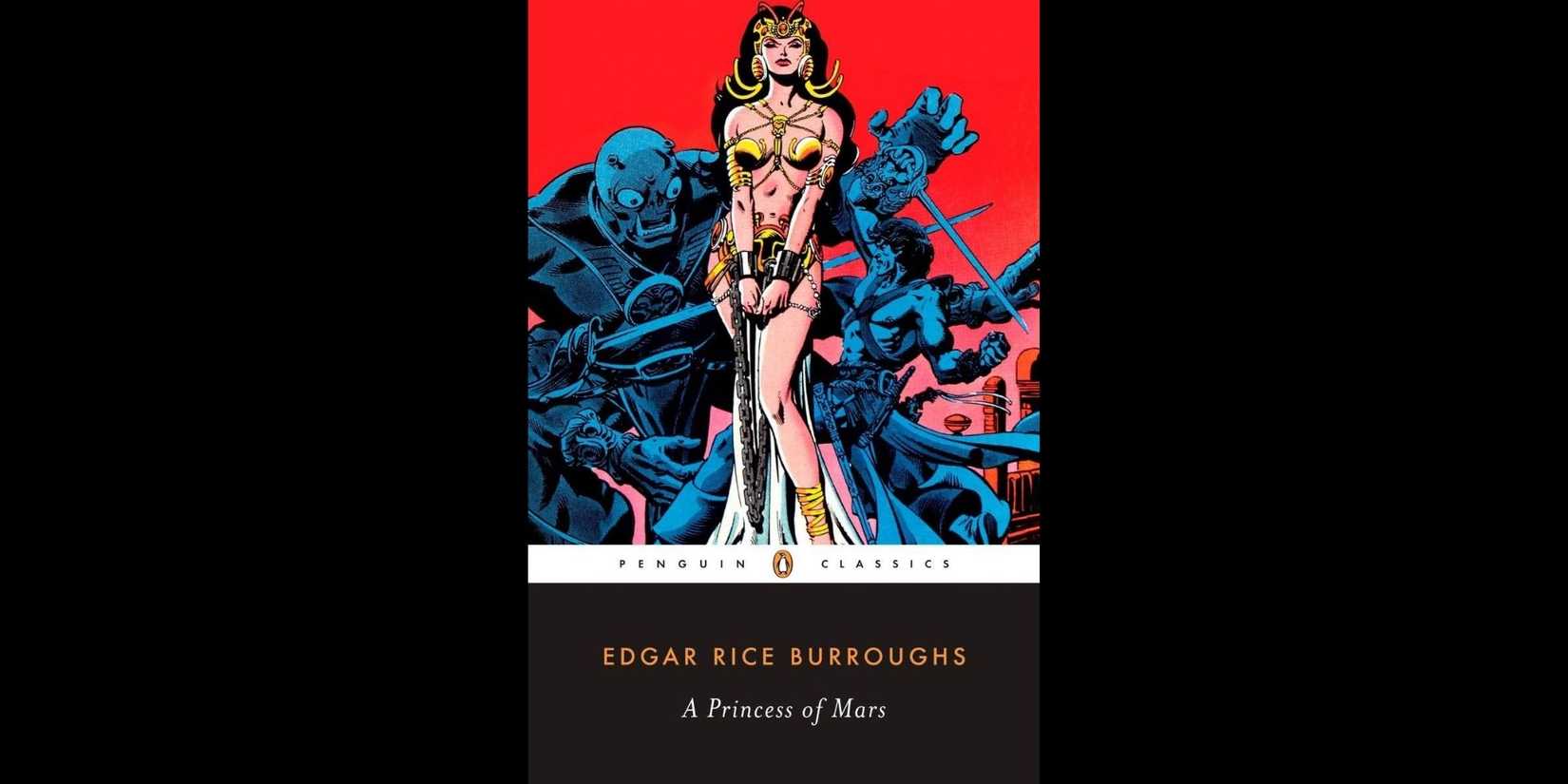
"I am a very old man; how old I do not know." This one is the quintessential planetary romance book, hugely shaping so much that followed. Indeed, huge sci-fi figures like Ray Bradbury, Arthur C. Clarke, Robert A. Heinlein, and Carl Sagan have also cited A Princess of Mars as an inspiration. It centers on former Confederate soldier John Carter to Mars (or Barsoom, as its inhabitants know it), where lower gravity gives him extraordinary physical abilities and almost immediately deposits him in the middle of conflicts between alien civilizations.
Along the way, Carter encounters the towering, four-armed Green Martians before becoming involved with Dejah Thoris, princess of the humanlike Red Martians of Helium. The result is pure pulp adventure in the best way: sword fights, escapes, strange creatures, warring cities, ancient technologies, romance, and enormous journeys across a dying world.
2 'The Left Hand of Darkness' (1969)
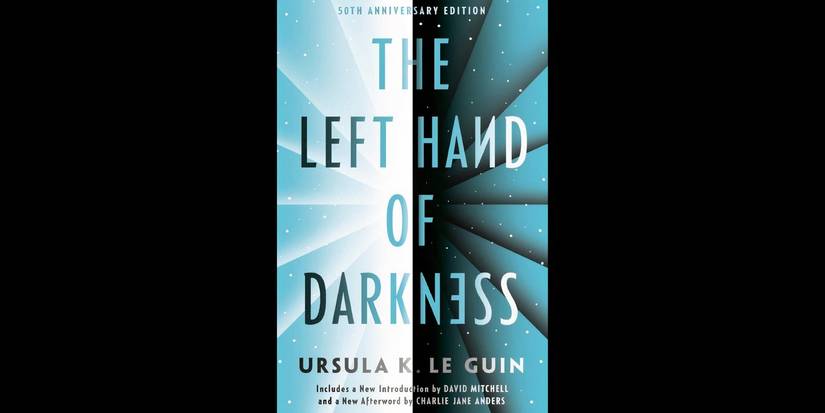
"I was taught as a child on my homeworld that Truth is a matter of the imagination." This sci-fi gem was written by the great Ursula K. Le Guin, author of the beloved Earthsea fantasy series. It sends protagonist Genly Ai to the bitterly cold world of Gethen as an envoy of the Ekumen, hoping to persuade its nations to join a wider interstellar community. His mission forces him to navigate unfamiliar political systems, social customs, and most famously, a population whose members are capable of switching between genders.
Le Guin uses that setup for a powerful social allegory, without ever scrimping on the genre thrills. In particular, the celebrated author uses Genly's outsider perspective brilliantly. He believes himself open-minded, yet repeatedly interprets Gethenians through faulty assumptions. His difficult relationship with Estraven becomes the emotional center of the book because genuine understanding requires Genly to recognize the limits of his perspective.
1 'Dune' (1965)
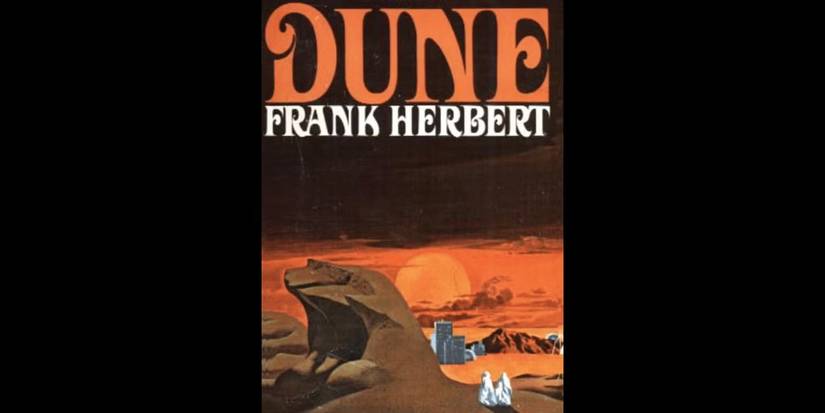
"A beginning is the time for taking the most delicate care that the balances are correct." Dune is perhaps the most well-rounded achievement in the subgenre's history, one that continues to exert a grip on the public imagination six decades later thanks to Denis Villeneuve's film adaptations. The planet Arrakis dictates politics across an interstellar empire because it's the only source of melange, the spice required for space travel. Yet its importance runs much deeper than economics.
The planet's scarcity of water shapes Fremen civilization, its sandworms determine the ecological cycle surrounding spice, and its brutal environment influences everything from clothing to warfare. Indeed, the worldbuilding on offer here is intricate and endlessly intriguing. The planet isn't merely a stage on which the story happens: Arrakis is the story. That's the defining principle of planetary romance, and arguably no novel has ever demonstrated it more powerfully.
KioskNews shows a cleaned-up reading view extracted from the publisher’s page — the original always lives on their site, not ours.