The 10 Greatest Movies Based on Books, Ranked


Diego Pineda has been a devout storyteller his whole life. He has self-published a fantasy novel and a book of short stories, and is actively working on publishing his second novel.
A lifelong fan of watching movies and talking about them endlessly, he writes reviews and analyses on his Instagram page dedicated to cinema, and occasionally on his blog. His favorite filmmakers are Andrei Tarkovsky and Charlie Chaplin. He loves modern Mexican cinema and thinks it's tragically underappreciated.
Other interests of Diego's include reading, gaming, roller coasters, writing reviews on his Letterboxd account (username: DPP_reviews), and going down rabbit holes of whatever topic he's interested in at any given point.
Sign in to your Collider account
Ever since the legendary Georges Méliès turned the likes of Cinderella and Hamlet into wonderful films, cinema has never stopped showing its love for adapting literature and turning it into movies. Indeed, throughout the decades, plenty of books — some highly acclaimed, some much more obscure — have been taken by filmmakers and transformed into some of the greatest motion pictures in history.
Artists like Francis Ford Coppola and Frank Darabont have, on repeated occasions, proved their mastery at turning novels and novellas into exceptional films. Some of the greatest movies of all time, from Apocalypse Now to The Shawshank Redemption, are excellent adaptations of wonderful literature, proving that these two art forms have a lot more in common than it may seem on the surface.
10 'Goodfellas' (1990)
Based on 'Wiseguy: Life in a Mafia Family' (1985) by Nicholas Pileggi
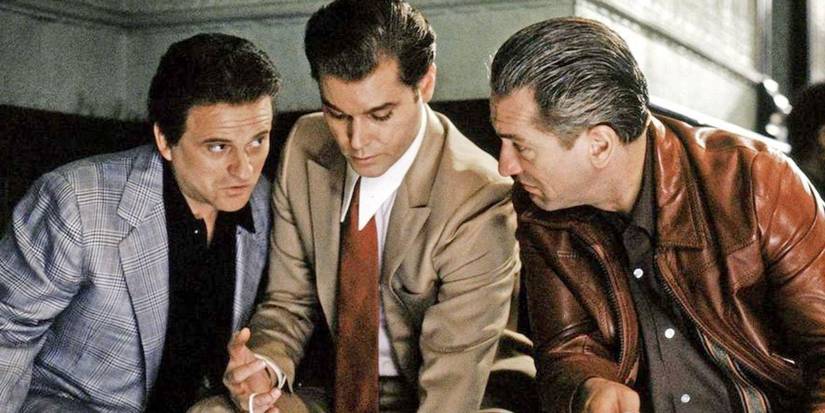
There are a handful of directors whose names tend to be immediately associated with a genre that they revolutionized. Martin Scorsese, the master of mob dramas, is one such director. Perhaps his best work in the genre is Goodfellas, the true story of Henry Hill and his life in the mafia, covering his relationship with his wife Karen and his partners, Jimmy Conway and Tommy DeVito.
The script, penned by Scorsese and crime reporter Nicholas Pileggi, is based on Pileggi's Wiseguy, a non-fiction book chronicling Hill's mafia career. The result is the perfect basis for what's probably the best gangster biopic ever. Brilliantly directed and with some stunningly great performances, Goodfellas is as stylish and entertaining as it is emotionally devastating.
9 'The Shawshank Redemption' (1994)
Based on 'Rita Hayworth and Shawshank Redemption' (1982) by Stephen King

One of the most-watched and highest-rated movies on IMDb, The Shawshank Redemption is proof that Stephen King isn't a one-trick pony. Directed by common Stephen King story adapter Frank Darabont, it's a prison epic about a banker wrongfully convicted of killing his wife. In prison, he forms an over a quarter-century-long friendship with a hardened convict, while maintaining his innocence and trying to remain hopeful through the whole ordeal.
There's a good reason why Shawshank is so beloved. Massively expanding the characters and story of King's novella, it's one of those films that far surpass their source material. The character arcs are deeply compelling, the story's emotional core is moving beyond words, and the third act is one of the most life-affirming in the history of cinema.
8 'The Silence of the Lambs' (1991)
Based on 'The Silence of the Lambs' (1988) by Thomas Harris

Not everyone agrees that The Silence of the Lambs is a horror movie, but the argument that it's a damn terrifying thriller is a universally accepted one. It's a police procedural where a young FBI cadet must receive the help of an incarcerated cannibal serial killer in order to catch another serial killer. With Oscar-winning performances by Jodie Foster and a chilling Anthony Hopkins in the lead roles, it's a psychological drama that should be perfectly able to send chills down anyone's spine.
The film, one of the best psychological thrillers of all time, is based on a horror thriller of the same title that's every bit as good, if not perhaps even better. The adaptation has perfect performances, perfect direction, and a perfectly nail-biting third act, making for an experience so intense that it's easy to forget to breathe while watching it.
7 'Schindler's List' (1993)
Based on 'Schindler's Ark' (1982) by Thomas Keneally
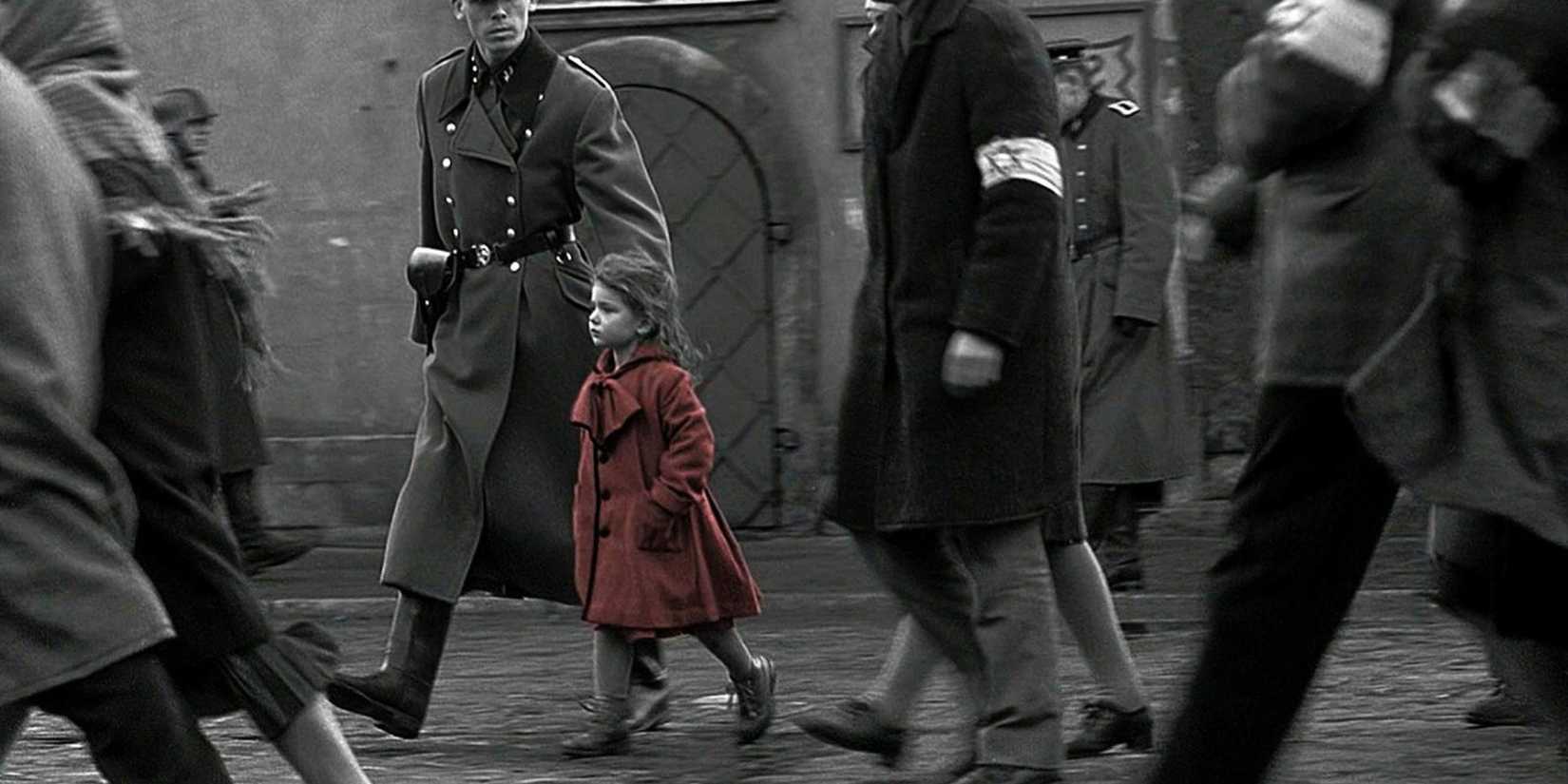
The great Steven Spielberg has directed some of the most entertaining and iconic blockbusters of all time (Jaws, in fact, originated the term "summer blockbuster"). However, he has also crafted some much more serious art that proves he's a far more interesting auteur than many people give him credit for today. Some would say that his single greatest movie is Schindler's List, which tells the story of Oskar Schindler, a German industrialist affiliated with the Nazi Party who leveraged his position during WWII to rescue as many Jewish workers as he possibly could.
One of the best-ever movies based on true events, Schindler's List is about as close to perfection as war dramas come. It's based on an award-winning historical fiction by Australian author Thomas Keneally, elevating the material beautifully. As gut-wrenching as it is hopeful and as bleak as it is life-affirming, Schindler's List is a celebration of unlikely heroism in the face of insurmountable tragedy.
6 'Apocalypse Now' (1979)
Based on 'Heart of Darkness' (1899) by Joseph Conrad

A film as famous for its tremendous quality as it is for its chaotic, near-deadly shoot, Apocalypse Now is the greatest Vietnam War movie ever made. Directed by Francis Ford Coppola, it's about an American Army officer serving in Vietnam, who's tasked with tracking down and assassinating a renegade Special Forces Colonel who sees himself as a god.
One of the most perfect films of the 1970s — a decade absolutely packed with flawless cinematic masterpieces —Apocalypse Now is an uncredited adaptation of Heart of Darkness, a legendary novella by British-Polish novelist Joseph Conrad. Throughout the centuries, Conrad's masterwork has been praised for its complex themes of morality and power, and for its powerful critique of European colonialism. Likewise, Apocalypse Now, which feels like a boat ride straight to Hell through the River Styx, is an incisive critique of the Vietnam War and a philosophically profound exploration of war's effects on men's psyches. It's a brilliant adaptation and an even more brilliant film.
Collider Exclusive · Oscar Best Picture Quiz
Which Oscar Best Picture
Is Your Perfect Movie?
Parasite · Everything Everywhere · Oppenheimer · Birdman · No Country
Five Oscar Best Picture winners. Five completely different visions of what cinema can be — and what it can do to you. One of them is the film that was made for the way your mind works. Ten questions will figure out which one.
🪜Parasite
🌀Everything Everywhere
☢️Oppenheimer
🐦Birdman
🪙No Country for Old Men
01
What kind of film experience do you actually want? The best movies don't just entertain — they leave something behind.
02
Which idea grabs you most in a film? Great films are driven by a central obsession. What's yours?
03
How do you like your story told? Form is content. The way a story is shaped changes what it means.
04
What makes a truly great antagonist? The opposition defines the protagonist. What kind of opposition fascinates you?
05
What do you want from a film's ending? The final note is the one that lingers. What do you want it to sound like?
06
Which setting pulls you in most? Where a film takes place shapes everything — mood, stakes, what's even possible.
07
What cinematic craft impresses you most? Every great film has a signature — a technical or artistic element that makes it unmistakable.
08
What kind of main character do you root for? The protagonist is the lens. Who you choose to follow says something about you.
09
How do you feel about a film that takes its time? Pace is a choice. Some films sprint; others let tension accumulate slowly, deliberately.
10
What do you want to feel walking out of the cinema? The best films leave a mark. What kind of mark do you want?
The Academy Has Decided Your Perfect Film Is…
Your answers have pointed to one Oscar Best Picture winner above all others. This is the film that was made for the way your mind works.
Parasite
You are drawn to films that operate on multiple levels simultaneously — that begin in one genre and quietly, brilliantly migrate into another. Bong Joon-ho's Parasite is a film about class, desire, and the architecture of inequality that manages to be darkly funny, deeply suspenseful, and genuinely shocking across a single extraordinary running time. Your instinct is for cinema that hides its true intentions until the moment it's ready to reveal them. Parasite is exactly that — a film that rewards close attention and punishes assumptions, right up to its devastating final image.
Everything Everywhere All at Once
You want it all — and this film gives you all of it. The Daniels' Everything Everywhere All at Once is one of the most maximalist films ever made: action comedy, multiverse sci-fi, family drama, existential crisis, and a genuinely earned emotional core that sneaks up on you amid the chaos. You are someone who responds to ambition, who doesn't want cinema to choose between being entertaining and being meaningful. This film refuses that choice entirely. It is overwhelming by design, and its overwhelming nature is precisely the point — because the feeling of being crushed by infinite possibility is exactly what it's about.
Oppenheimer
You are drawn to cinema on a grand scale — films that understand history not as a backdrop but as a force, and that place their characters inside that force and watch what happens. Christopher Nolan's Oppenheimer is a film about the terrifying gap between what we can do and what we should do, told with the full weight of one of the most consequential moments in human history behind it. You want your films to feel important without feeling self-important — to earn their ambition through sheer craft and the gravity of their subject. Oppenheimer does exactly that. It is enormous, complicated, and refuses easy comfort.
Birdman
You are drawn to films that foreground their own construction — that make the how of the filmmaking part of the what it's about. Alejandro González Iñárritu's Birdman, shot to appear as a single continuous take, is cinema examining itself through the cracked mirror of a fading actor's ego. You respond to formal daring, to the feeling that a film is doing something that probably shouldn't be possible. Michael Keaton's performance and Emmanuel Lubezki's restless camera create something genuinely unlike anything else — a film that is simultaneously about creativity, relevance, self-destruction, and the impossibility of ever truly knowing if your work means anything at all.
No Country for Old Men
You are drawn to cinema that trusts silence, that refuses to explain itself, and that treats dread as a form of meaning. The Coen Brothers' No Country for Old Men is a film about the arrival of a new kind of evil — implacable, arbitrary, and utterly indifferent to the moral frameworks we use to make sense of the world. It is one of the most formally controlled films ever made, and its controlled restraint is what makes it so terrifying. You want your films to haunt you, not comfort you. You are not interested in resolution if resolution would be dishonest. No Country for Old Men is honest in a way that most cinema never dares to be.
5 'Harakiri' (1962)
Based on 'Ibun Ronin-Ki' by Yasuhiko Takiguchi

When it comes to legendary Japanese cinema, the names that typically come up are Akira Kurosawa and Hayao Miyazaki. However, there are numerous other auteurs from the Land of the Rising Sun who are just as worthy of praise — one of the biggest ones being Masaki Kobayashi. His masterpiece is Harakiri, a samurai story set during the Edo period. It's about a ronin who arrives at a feudal lord's manor asking for a place to commit seppuku, an ancient samurai ritual of suicide by disembowelment. As he starts to retell the events that led him there, surprises start to reveal themselves.
Harakiri is one of the greatest Japanese action movies of all time, with some exhilarating swordplay set pieces and fascinating themes about the absurdity of fanaticism for codes of honor. Its biggest asset, though, is the flawless script by Shinobu Hashimoto. Based on an obscure Japanese story from the 20th century by Yasuhiko Takiguchi, it's a screenplay with masterful dialogue, intense character arcs, and a thrilling structure comprised of satisfying twist after satisfying twist.
4 'Mishima: A Life in Four Chapters' (1985)
Based on 'The Temple of the Golden Pavilion' (1956), 'Kyoko's House' (1959), and 'Runaway Horses' (1969) by Yukio Mishima
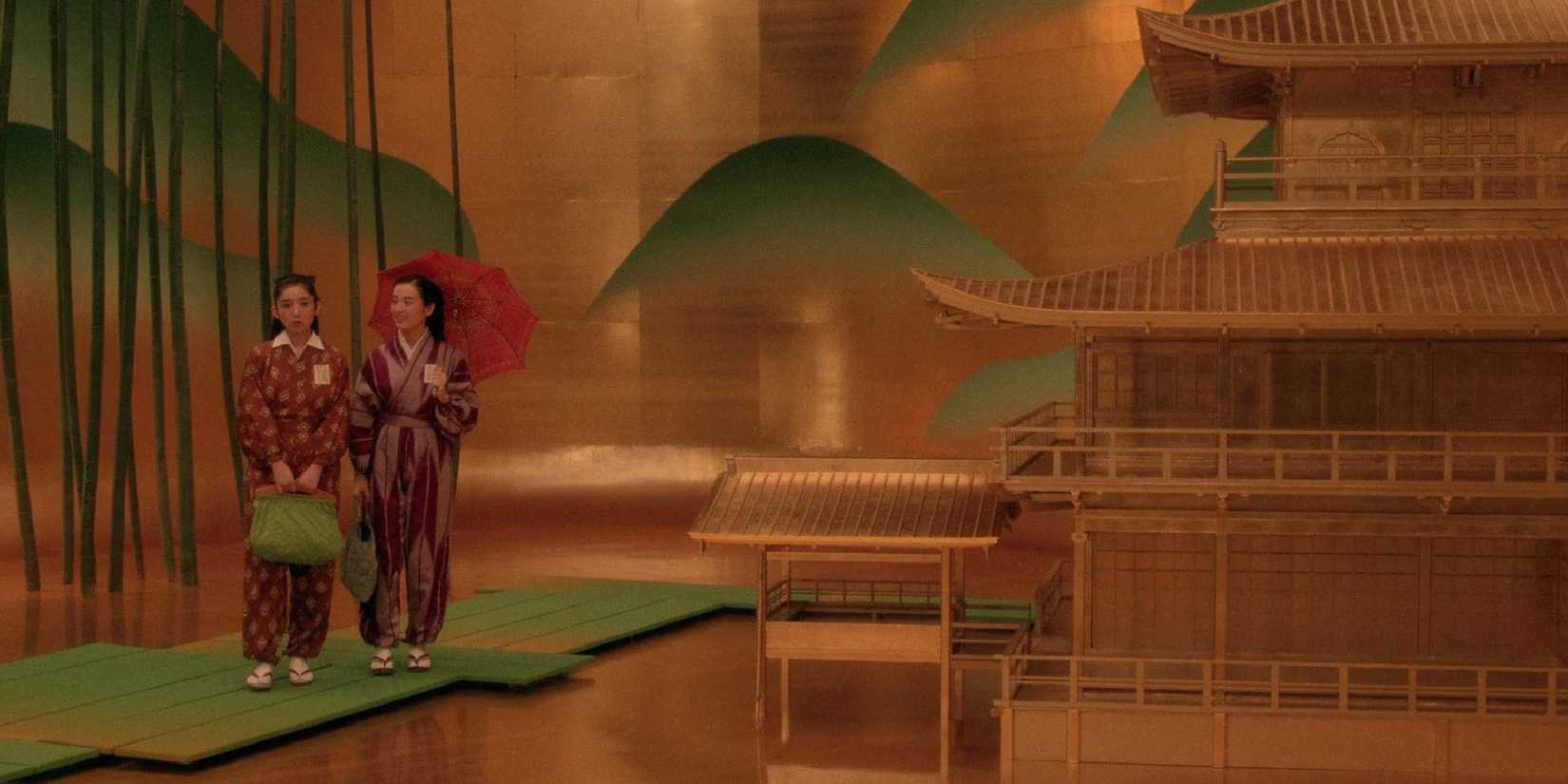
Of the (tragically few) Japanese writers well-known in the West, Yukio Mishima is probably the most popular — and for plenty of good reasons. These reasons are depicted in Paul Schrader's Mishima: A Life in Four Chapters. Instead of exploring Mishima's life and work linearly like most biopics tend to do, Schrader opted to instead dive headfirst into the spiritual and philosophical aspects of his mind and soul, in a non-linear narrative that partly adapts three of the author's most celebrated works.
Mishima feels like a journey through a beautiful, thought-provoking dreamscape, thanks to Schrader's gorgeous direction and his masterful script (which he co-wrote with his brother, Leonard, and Leonard's then-wife, Chieko). By far one of the greatest Japanese movies of all time, Mishima is the most profound exploration of a fascinating man and the themes of violence, sexuality, harmony, and artistic expression that characterized his life.
3 'Stalker' (1979)
Based on 'Roadside Picnic' (1971) by Arkady Strugatsky and Boris Strugatsky

The great Soviet auteur Andrei Tarkovsky was a poet with a camera, one whose career was tragically cut short by the dangerous shoot of what's many people's favorite film of his: Stalker. It's an arthouse sci-fi drama set in a fictional country where the government has closed off an area called the Zone, where there lies a place called the Room, which is said to grant visitors' innermost wish. A man guides a writer and a professor there, and on the journey, they discover all sorts of things about themselves.
One of the best sci-fi movies of all time, Stalker is a real gem of a movie that, like the rest of Tarkovsky's filmography, is methodically paced, visually striking, and rife with rich symbolism with all manner of possible interpretations. It's a powerful tale about a world without faith, full of memorable moments and interesting twists of the source material, an exceptional philosophical sci-fi novel by Soviet brothers Arkady and Boris Strugatsky.
2 'The Godfather' (1972)
Based on 'The Godfather' by Mario Puzo

Praised by many cinephiles as the greatest film ever made, The Godfather is Francis Ford Coppola's most celebrated movie. Based on Mario Puzo's crime novel of the same title (Puzo co-wrote the screenplay with Coppola), it's about the aging patriarch of an organized crime dynasty having to transfer control of his empire to his reluctant younger son.
The film's two sequels (the first one also one of the greatest films ever made; the second one much better than its bad reputation might indicate) weren't based on any books. This makes The Godfather's screenplay stand out even more. The book is flawless enough as it is, but Puzo and Coppola managed to turn it into an even more outstanding film. Masterfully crafted, thoroughly entertaining, and with plenty of scenes with surprising emotional impact, it's a movie that lives up to its reputation — and then some.
1 'The Lord of the Rings' Trilogy
Based on 'The Lord of the Rings' by J.R.R. Tolkien

There are no three movies that better embody the concept of a fantasy epic than Peter Jackson's adaptation of J.R.R. Tolkien's masterpiece: The Lord of the Rings. Full of imagination, emotion, excitement, and pure epicness, the story follows the journey of Frodo Baggins, a Hobbit tasked with journeying to destroy the secret weapon of a tyrannical overlord with the help of eight allies, sparking the eventful final stage of a mythical war.
Lord of the Rings was envisioned by Tolkien as a single work, but had to be published in three volumes for economic reasons. Jackson, Fran Walsh, and Philippa Boyens turned those volumes into three of the greatest screenplays of all time. Likewise, these screenplays bolstered what are easily three of the best fantasy films ever made, enthralling tales that both pay respect to Tolkien's legacy and expand it in all sorts of wonderful ways. There has never been a trilogy like the Lord of the Rings trilogy, and perhaps there never will again.
KioskNews shows a cleaned-up reading view extracted from the publisher’s page — the original always lives on their site, not ours.