8 Sci-Fi Books With the Most Interesting Characters, Ranked

Diego Pineda has been a devout storyteller his whole life. He has self-published a fantasy novel and a book of short stories, and is actively working on publishing his second novel.
A lifelong fan of watching movies and talking about them endlessly, he writes reviews and analyses on his Instagram page dedicated to cinema, and occasionally on his blog. His favorite filmmakers are Andrei Tarkovsky and Charlie Chaplin. He loves modern Mexican cinema and thinks it's tragically underappreciated.
Other interests of Diego's include reading, gaming, roller coasters, writing reviews on his Letterboxd account (username: DPP_reviews), and going down rabbit holes of whatever topic he's interested in at any given point.
Sign in to your Collider account
There are multiple ways in which a science fiction book can be exceptional. That is, after all, the reason why this has remained one of the most popular and prolific genres of speculative fiction for as long as it has. Perhaps it's through deeply intricate and memorable world-building, or though a tightly paced and imaginative plot, or—of course—through deeply interesting characters, but there are definitely infinite ways for a sci-fi novel to enshrine its place in history as one of the genre's best.
Indeed, it's one thing for characters to be cool, another thing for them to be memorable, and a wholly other thing altogether for them to be interesting. Here, we're talking about sci-fi characters that have intriguing backstories, the kind that you want to have a conversation with, the kind that you can never learn enough about. It's no coincidence that ten of the greatest sci-fi books of all time have characters that are, at the very least, incredibly interesting.
8 'Red Mars' (1992)

Kim Stanley Robinson's Mars trilogy is widely considered a cornerstone of modern hard science fiction, and one of the most foundational works of sci-fi about human colonization and terraforming of Mars. It all starts with Red Mars, one of the best sci-fi books of the 1990s, which follows the journey of an international team of scientists and engineers sent to Mars in 2026 to establish the first permanent human settlement.
What really allows Red Mars to make the absolute best of that premise is its having some of the best character writing.
It's a simple enough premise on paper, but what really allows Red Mars to make the absolute best of that premise is its having some of the best character writing of any hard sci-fi novel from the '90s. Where most sci-fi books about space exploration define their crewmate characters by their morality or function within the ship, Robinson treats her characters with a refreshing sense of complexity, agency, and psychological realism.
7 'A Memory Called Empire' (2019)

Winner of the 2020 Hugo Award for Best Novel, Arkady Martine's A Memory Called Empire is one of the greatest sci-fi debut novels of the century so far. It's the first chapter in Martine's exceptional Teixcalaan duology, following Mahit Dzmare, a newly appointed ambassador from an independent mining space station to the sprawling, Aztec-inspired Teixcalaanli Empire. She soon discovers that her predecessor has been murdered, and must uncover the mystery while preventing the expansionist Teixcalaan from absorbing her home station.
Where sci-fi books like A Memory Called Empire tend to be intensely plot-driven, this masterpiece is such a character- and theme-driven narrative that it should come as no surprise just how great Martine's character writing is. Mahit herself has an instantly gripping voice, and the way all the other characters complete this powerful critique of colonialism and cultural survival is nothing short of an admirable authorial feat.
6 'The Warrior's Apprentice' (1986)

Widely considered one of the most criminally underappreciated sci-fi book series of its time, Lois McMaster Bujold's Vorkosigan Saga saw its volumes written out of chronological order. The Warrior's Apprentice was the second novel published in the series and is the fourth main story, and it just so happens to also be one of the best sci-fi books of the 1980s. It follows Miles Vorkosigan, a brilliant young and disabled nobleman who accidentally becomes the leader of a mercenary fleet, while trying to cover up a botched attempt to pass his military academy entrance exams.
Delightfully clever and irresistibly funny, Warrior's Apprentice is a delicious subversion of traditional space opera tropes—including that of the traditional all-powerful protagonist hero. But aside from Miles, a main character made all the more interesting by his shortcomings and limitations, there's also a wide ensemble of fun side characters that connect to the book's themes of identity, disability, and the burdens of legacy.
5 'The Long Way to a Small, Angry Planet' (2014)

The first installment in Becky Chambers' Wayfarers series, The Long Way to a Small, Angry Planet is yet another one of the greatest sci-fi debut novels in recent memory. Trading the usual high-stakes, action-packed tropes of the space opera genre, the book instead explores a more deeply human story. In it, a young woman escaping her family's disgraced past joins the crew of an aging spaceship as they embark on a journey across the galaxy to build a wormhole.
It's a surprisingly cozy and character-driven slice of literary sci-fi comfort food, studying themes of community, empathy, and social friction through the creation of some of the most vivid and interesting characters that any space opera book has offered in years. There's an exquisite diversity of psychologies and personalities aboard the Wayfarer, offering an equally diverse number of sets of eyes through which to experience this enrapturing world.
4 'Leviathan Wakes' (2011)

Penned by James S. A. Corey, the pen name of Daniel Abraham and Ty Franck, Leviathan Wakes is the inaugural installment in the massively acclaimed The Expanse series. Just like its sequels, it's one of the greatest space opera books of all time, about an ice freighter officer and a washed-up detective who team up to uncover a sprawling solar-system-wide conspiracy, one that's pushing a Cold War between Earth and Mars to the brink of mutually-assured destruction.
Leviathan Wakes is one of the best hard sci-fi books of the century so far.
From its admirable commitment to scientific realism to its delightfully genre-bending blend of hard-boiled noir elements and space opera influences, Leviathan Wakes is one of the best hard sci-fi books of the century so far. It builds a fascinating ensemble of characters not by assaulting readers with a barrage of colorful eccentricities and archetypes, but rather by grounding said characters in moral greyness, class conflicts, and geopolitical themes. These are characters that truly do feel like products of their environment, and that only makes Leviathan Wakes' world-building all the more believable.
3 'Dune' (1965)
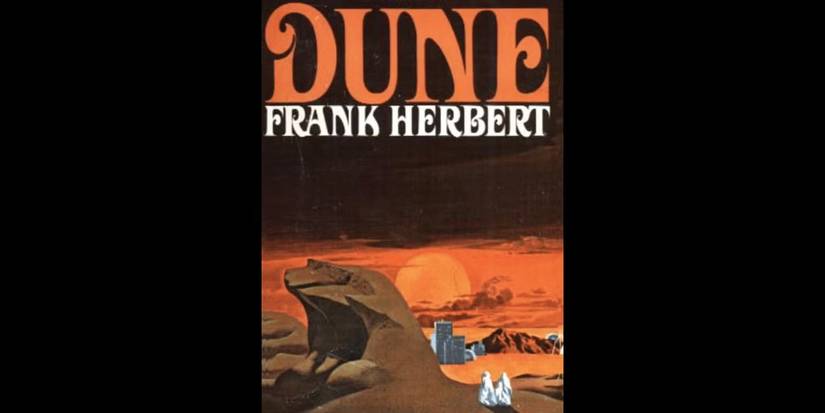
There are remarkably few books more deserving of the title of "greatest, most important, and most influential sci-fi novel of the 20th century" than Frank Herbert's Dune, one of the most iconic works of speculative fiction of modern times. It's one of the most essential sci-fi books ever written, about a royal family that moves to a dangerous desert planet with a monopoly on the universe's most valuable resource. They're betrayed, so the young Paul Atreides must rise up alongside the planet's indigenous people to claim back power.
It's a classic Hero's Journey in terms of plot, but in terms of themes and character arcs, Herbert offers a timeless cautionary tale against the dangers of charismatic leaders and religious fanaticism. He does that through some of the most layered and compelling character writing that the genre has ever seen. Paul is a fascinating anti-hero, and the contrasts between the Fremen and the representatives of House Atreides makes for some really juicy drama as the story goes on.
2 'The Left Hand of Darkness' (1969)

There are remarkably few authors more important to the history and trajectory of modern speculative fiction than the great Ursula K. Le Guin. Through masterpieces like The Left Hand of Darkness, one of the best Hugo Award winners of all time, Le Guin helped elevate sci-fi out of its purely pulpy days and prove that it could offer genuinely layered, patiently-paced works of high art. The book follows Genly Ai, a human native sent to the freezing world of Gethen to recruit its nations into an intergalactic alliance.
The Left Hand of Darkness has particularly special and noteworthy character writing largely thanks to Le Guin being a literary master of speculative anthropology, sociology, and political science. This is a book about characters constantly making an effort to unlearn their cultural conditioning and understand minds shaped by conditions completely alien to their own. This makes it so that even the reader's own assumptions about human nature are constantly being challenged by the book's own deeply engaging characters.
1 'Hyperion' (1989)

Dan Simmons' Hyperion Cantos book series is widely considered a cornerstone of modern sci-fi literature, with all of its installments constantly being ranked among the likes of Dune as some of the greatest books the genre has ever had to offer. There are those who would argue, however, that this is a series which peaked with its first entry: Hyperion, winner of both the Hugo Award for Best Novel and the Locus Award for Best Science Fiction Novel. Borrowing the structure of Geoffrey Chaucer's The Canterbury Tales, it's about seven pilgrims traveling to a remote planet on the eve of an intergalactic war, in order to confront a horrifying metal creature known as the Shrike.
The entire Hyperion Cantos is one of the sci-fi book series with the best lore, as well as some of the best character writing, and Hyperion has both in equal measure. As a natural ensemble piece composed of characters with seemingly irreconcilable views of the world, Simmons explores these pilgrims not as the typical adventure party one might expect from a story like this. Instead, he grants each protagonist a level of depth and personality that has allowed the novel to age like fine wine, all thanks to its arguably having the most interesting characters of any sci-fi book in history.
Collider Exclusive · Sci-Fi Survival Quiz Which Sci-Fi World Would You Survive? The Matrix · Mad Max · Blade Runner · Dune · Star Wars
Five universes. Five completely different ways the future went wrong — or sideways, or up in flames. Only one of them is the world your instincts were built for. Eight questions will figure out which dystopia, galaxy, or desert wasteland you'd actually make it out of alive.
💊The Matrix
🔥Mad Max
🌧️Blade Runner
🏜️Dune
🚀Star Wars
01
You sense something is deeply wrong with the world around you. What do you do? The first instinct is often the truest one.
02
In a world of scarcity, what resource do you guard most fiercely? What we protect reveals what we believe survival actually requires.
03
What kind of threat keeps you up at night? Fear is useful data — if you're honest about what you're actually afraid of.
04
How do you deal with authority you don't trust? Every dystopia has a power structure. Your approach to it determines everything.
05
Which environment could you actually endure long-term? Survival isn't just tactical — it's physical, psychological, and very much about where you are.
06
Who do you want in your corner when things fall apart? The company you keep is the clearest signal of who you actually are.
07
Where do you draw the line — if you draw one at all? Every survivor eventually faces a moment that tests what they're actually made of.
08
What would actually make survival worth it? Staying alive is one thing. Having a reason to is another.
Your Fate Has Been Calculated You'd Survive In…
Your answers point to the world your instincts were built for. This is the universe your temperament, your survival instincts, and your particular brand of stubbornness were made for.
The Matrix
You took the red pill a long time ago — probably before anyone offered it to you. You're a systems thinker who can't help but notice the seams in things.
- You're drawn to understanding how the system works before figuring out how to break it.
- You'd find the Resistance, or it would find you — your instinct for spotting constructed realities is the machines' worst nightmare.
- You function best when you have access to information and the freedom to act on it.
- The Matrix built an airtight prison. You'd be the one probing the walls for the door.
Mad Max
The wasteland doesn't reward the clever or the well-connected — it rewards those who are hard to kill and harder to break. That's you.
- You don't need comfort, community, or a cause larger than the next horizon.
- You need a vehicle, a clear threat, and enough fuel to outrun it — and you're good at all three.
- You are unsentimental enough to survive that world, and decent enough — just barely — to be something more than another raider.
- In the wasteland, that distinction is everything.
Blade Runner
You'd survive here because you know how to exist in moral grey areas without losing yourself completely.
- You read people accurately, keep your circle small, and ask the questions others prefer not to answer.
- In a city where humanity is a legal designation rather than a feeling, you hold onto something that keeps you functional.
- You're not a hero. But you're not lost, either.
- In Blade Runner's world, that distinction is everything.
Dune
Arrakis is the most hostile environment in the known universe — and you are precisely the kind of person it rewards.
- Patience, discipline, and political awareness are your core strengths — and on Arrakis, they're survival tools.
- You understand that the long game matters more than any single victory.
- Others come to Dune and are consumed by it. You'd learn its logic and earn its respect.
- In time, you wouldn't just survive Arrakis — you'd begin to reshape it.
Star Wars
The galaxy far, far away is vast, loud, and in a constant state of violent political upheaval — and you wouldn't have it any other way.
- You find meaning in being part of something larger than yourself — a cause, a crew, a rebellion.
- You'd gravitate toward the Rebellion, or the fringes, or whatever pocket of the galaxy still believes the Empire's grip can be broken.
- You fight — not because you have to, but because standing aside isn't something you're capable of.
- In Star Wars, that willingness is what makes all the difference.
KioskNews shows a cleaned-up reading view extracted from the publisher’s page — the original always lives on their site, not ours.