In 1994, Aretha Franklin bought Detroit’s Rose Estate
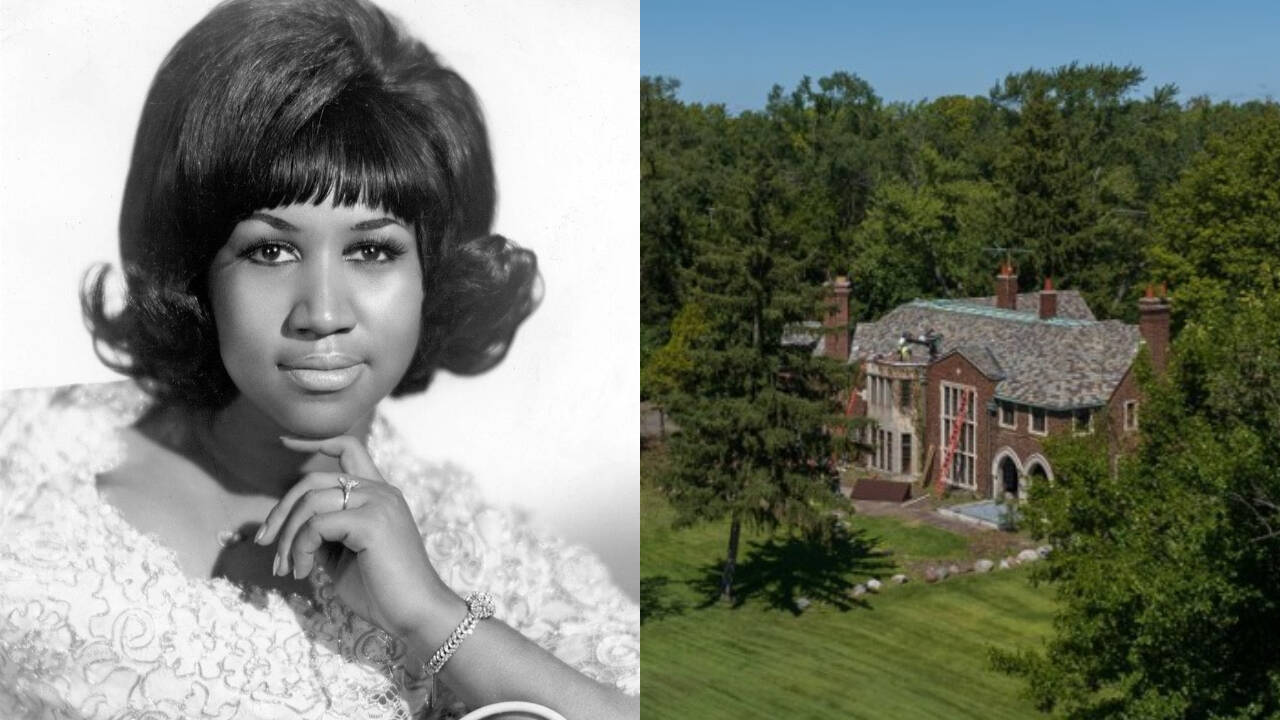
In 1994, Aretha Franklin bought Detroit’s Rose Estate; after her death, the mansion fell into disrepair before a multimillion-dollar restoration
Aretha Franklin, widely known as the Queen of Soul, left behind a remarkable musical legacy when she died in August 2018. However, her influence extended beyond music, with several places connected to her life continuing to attract attention.
One such property is the Rose Estate, a historic mansion in Detroit, Michigan, that the singer purchased in 1994. After years of neglect, the house eventually underwent a multimillion-dollar restoration led by its current owners, who wanted to preserve its architectural features and connections to two influential women.
Aretha Franklin purchased the Rose Estate in 1994
Located in Detroit’s Palmer Woods neighbourhood, the Rose Estate was built in 1927. The approximately 5,623-square-foot Tudor-style house sits beside the Detroit Golf Club and became one of Franklin’s residences after she purchased it in March 1994.Before Franklin acquired the property, it belonged to Patricia Hill Burnett, a portrait artist and women’s rights advocate who had also been a runner-up in the Miss America competition. Burnett painted portraits of several prominent personalities, including Rosa Parks, Margaret Thatcher, Betty Ford and Ruth Bader Ginsburg.According to a report by USA TODAY, Franklin was drawn to the property partly because of its previous owner.
The singer already had a primary residence in Bloomfield Hills and used the Rose Estate as a second home and a place to host gatherings.Franklin retained many of the mansion’s original features while adding personal touches. These included gold sconces near the drawing room fireplace, a purple-tinted chandelier in the great hall and a striking red acrylic bathtub in the main bedroom, which she converted into a spa-like space.
The mansion fell into disrepair after years of neglect
Over time, Franklin’s health deteriorated, and the property was eventually left behind. The once-grand house gradually fell into disrepair, with its windows boarded up and significant water damage affecting the interiors.Franklin died on August 16, 2018, at the age of 76. Following her death, the mansion was sold in October 2018 for $300,000 to Michigan developer Anthony O. Kellum.The property’s condition remained a concern in the following years.
In May 2019, Deadline Detroit reported that the house was back on the market and still required major renovation work.The mansion’s deterioration was particularly striking given its size, distinctive architecture and association with Franklin. Although the property retained some of its original character, restoring it would require extensive work.
New owners took on the multimillion-dollar restoration
The next major chapter in the Rose Estate’s history began when Detroit residents Trevor Thomas and Brandon Lynum acquired the property in June 2023.
Thomas and Lynum had invested more than $2 million in the restoration.The work involved repairing damage while bringing the home’s original details back to life. Limestone-framed windows, hardwood floors and decorative plasterwork were among the features receiving attention. Detroit-made Pewabic tiles were also preserved as part of the effort to retain the property’s architectural character.The project involved nearly 50 contractors, craftspeople and other workers.
Rather than treating the house as just another renovation, the owners approached it as an opportunity to protect an important part of Detroit’s history.
The restoration uncovered more of the house’s history
Alongside the physical work, Thomas and Lynum researched the stories of the women who had lived in the mansion.Their efforts included examining old newspaper clippings and archival material connected to Burnett at the University of Michigan. They also discovered approximately 600 original documents belonging to Burnett in a concealed compartment in the house’s library.The research helped them understand the property’s significance beyond Franklin’s ownership. Burnett had established herself as an artist and advocate, while Franklin became one of the most influential singers in American music.The restored interiors also incorporate photographs and memorabilia connected to the home’s former residents. Among the items displayed are a signed Andy Warhol print, clothing worn by Jennifer Hudson in the 2021 film Respect, which portrayed Franklin’s life, and a gold-record plaque for Franklin’s 1998 album A Rose Is Still a Rose.These items help connect the restored property to the people whose lives shaped its history.
The Rose Estate is being preserved as a piece of Detroit history
The restoration has given the Rose Estate a new purpose while keeping its past at the centre of the project.
Thomas and Lynum have welcomed nonprofit events, school groups and visitors interested in the mansion’s history and its connection to Franklin and Burnett. Their plans also extend beyond the initial renovation, with further work on the slate roof, third floor and basement expected as the project continues.For Franklin’s admirers, the house offers another way to connect with the singer’s life beyond her recordings and performances. For Detroit, it represents an effort to preserve a historic property that might otherwise have continued to deteriorate.
KioskNews shows a cleaned-up reading view extracted from the publisher’s page — the original always lives on their site, not ours.