5 Classic Books Better Than 'Pride and Prejudice'

At any given moment, Scott Simone has at least three books jockeying for his attention. He’ll never turn down a campus novel with a literary bent, nor will he hesitate to add yet another mystery to his Leaning Tower of Pisa-inspired to-be-read pile — which is built upon the bedrocks of too many short story collections, how-are-these-real true crime books, and classics waiting to be cracked open again. Topics that have him ripping through pages the fastest include closed-circle murders, unhappy professors, life-questioning philosophical deep dives, so long as they feature sharp sentences, a dark sense of humor, and at least a little malice.
He’s spent so much time in book shops over the years he is, to his wife’s chagrin, continuing to build a library that doesn’t quite respect the dimensions of the apartment meant to contain it.
Sign in to your Collider account
Here's the thing about Pride and Prejudice: For all of the classic novel's love and proposals, marriage and family, gleaming prose, and groundbreaking views of female autonomy, the remarkable perks of being ordinary remain at its heart. There's gossip about neighbors. There's embarrassment when trying to impress someone. There's a time or two when we must admit our own foolishness. Jane Austen knew how to make it all worth reading about. In Pride and Prejudice, she turns the everyday business of love, marriage, family, and friendship into something we can't get enough of. There are no grand adventures or great mysteries to unravel. But somehow their troubles become every bit as engrossing as our own.
Austen wasn't the only writer to recognize how much there was to explore in ordinary human lives. Plenty of other novelists drew on the same familiar concerns. They wrote about people who married for the wrong reasons. People who wanted more out of life than they had. And, of course, there were those who made an absolute mess of things while remaining convinced they were in the right. The greatest classic novels captured the worlds they lived in without confining their stories to them. So centuries later, the customs may seem foreign, but the people are as familiar as ever. That's why generation after generation has found something of itself in their pages.
'The Age of Innocence' (1920)

It's one thing to recognize the absurdity of society's rules. It's another to stop following them when everyone around you expects you to play along. Edith Wharton builds The Age of Innocence around that contradiction. The book revolves around a cast of New York aristocrats who spend much of their lives worrying about appearances. There's the proper way to announce an engagement and the right families to associate with. There’s a never-ending list of things that simply aren't done. And while it's easy enough to laugh at all these conventions, Wharton makes us see just how difficult it can be to escape them.
Take Newland Archer, a young lawyer who considers himself considerably more enlightened than the people around him. He recognizes the hypocrisy of his social circle, especially when it comes to the treatment of women. But when Countess Ellen Olenska considers divorcing her husband, Newland convinces her not to do it. He knows the rules are unfair; he just can't bring himself to stop following them. That's what makes Wharton's novel so good: We watch people sacrifice their own happiness in order to satisfy societal expectations they don't always believe in — and watch as, all the while, they convince themselves they're doing the sensible thing.
'Madame Bovary' (1857)

There's always something better waiting around the corner: A nicer house. A more exciting romance. A life in which things finally turn out the way we'd imagined. Gustave Flaubert knew how easily we could convince ourselves of all this. And in Madame Bovary, he gives us a woman consumed with yearning for more. Emma Bovary has read enough romantic novels to know what her life ought to look like. There should be passion, grand gestures, and excitement. But she's married to a country doctor who's perfectly happy with their ordinary existence. The more Emma thinks about everything she's missing, the more miserable she becomes with everything she has.
What's so good about Flaubert is that we can see right through Emma's fantasies, even as we find ourselves understanding them. Take the scene at an agricultural fair, where one of her lovers whispers declarations of passion while prizes are being handed out for livestock in the background. Emma is swept away by the romance. We're left wondering how she can possibly take the man seriously. And so on it goes. She buys expensive things she can't afford and falls for men who promise more than they intend to deliver. None of it lives up to the hype. We know she's making a mess of things; we can see the trouble coming. But we see ourselves in the life unwanted. That's where Flaubert gets us: For the mundanity that seeps from the novel, it's the moments she briefly breaks from it, the periods of anticipation that somehow she may finally feel fulfilled, onto which we hang.
'Les Misérables' (1862)

There's enough happening in Les Misérables to fill a dozen novels. There's poverty and political upheaval. There's a doctorate's level of French history. But for all its scope, Victor Hugo never lets us forget the people caught up in it. That's what makes the novel so timeless. We see how easily a person's life can be ruined by circumstances beyond their control. We see how little sympathy society has for those who fall on hard times. We see how a single act of kindness can change everything. Hugo takes the troubles of people who would otherwise be forgotten and makes them impossible for us to ignore.
Take Jean Valjean, who spends 19 years in prison after stealing bread and repeatedly trying to escape. Once he's released, his criminal record follows him everywhere. Nobody wants to employ him. Hardly anybody will even give him a place to sleep. Then a bishop takes him in, and when Valjean steals the man's silver, the bishop tells the police it was a gift. That bit of kindness does more to change Valjean than nearly two decades of punishment ever managed. And Hugo keeps finding ways to make us think about the world around his characters. There's Fantine, who loses her livelihood and is driven to desperate measures to provide for her daughter. There's Inspector Javert, who follows the law so faithfully that he can't seem to recognize when enforcing it does more harm than good. So, amid the uprisings and turmoil, we find ourselves caring about the fate of these individuals as much as that of France itself.
Collider Exclusive · 8 Questions · 2 Minutes Which Broadway Musical Soundtrack Is Your Life Story? Hamilton · Wicked · Les Misérables · Rent
Answer eight quick questions and we will tell you which cast recording is secretly about you. Four of the biggest shows ever staged, four completely different people at the centre of them, and all four made it onto a cinema screen.
🖋️Hamilton(2015)
💚Wicked(2003)
🚩Les Misérables(1985)
🕯️Rent(1996)
01
What were you like at school? Pick the one that sounds most like you.
02
What drives you most? One answer only.
03
What is your friendship group like? Pick the closest answer.
04
Pick a film for tonight. No wrong answers here.
05
What do you belt out in the car? Windows up, nobody listening.
06
How do you handle money? Be honest.
07
What do you do when the boss is wrong? Pick the closest answer.
08
What do you want your life to add up to? Last one. This is the one that decides it.
Overture, Curtain, Lights Your Show Is…
Every one of these four started as a cast recording people played until the disc wore out, and every one of them eventually turned into a film. Here is yours, what it says about you, and the case for it being the best of the four.
Hamilton
You work like the clock is against you, because in your head it always is. Hamilton is three hours about a man who cannot stop producing, cannot stop arguing and cannot leave a single thing alone, and you recognised yourself in it immediately.
- You are the most ambitious person in most rooms and you are slightly embarrassed about how much you like that.
- It won eleven Tony Awards in 2016 and the Pulitzer Prize for Drama the same year.
- Disney paid a reported seventy-five million for the filmed stage version and put it out in 2020 instead of in cinemas.
- Your flaw is the one the show spends its second half on, which is not knowing when to stop writing.
Wicked
People made up their minds about you early and they were wrong. Wicked takes the most famous villain in American children's fiction and asks what the story looks like from her side, which is a question you have asked about yourself more than once.
- You are an acquired taste and the people who get you would go to war for you.
- Jon M. Chu's first film was nominated for ten Academy Awards in 2025 and won two.
- Wicked: For Good opened to a hundred and fifty million dollars in 2025 and was then shut out of the Oscars entirely.
- Your risk is spending so long being underestimated that you start enjoying it.
Les Misérables
You cannot walk past something unfair. Les Mis is a show about a man who spends his entire life trying to make one wrong right, and about everybody around him deciding what they are prepared to lose for other people.
- You are the one who speaks up, and you have paid for it more than once.
- The original London reviews were terrible and it is now the longest-running musical in West End history.
- Tom Hooper shot the 2012 film with the cast singing live on set, and Anne Hathaway won Best Supporting Actress for it.
- Your weakness is taking on so much of other people's weight that nobody carries yours.
Rent
You are not interested in saving it all for later. Rent is a year in the life of people with no money, no plan and a very clear sense that the time they have is the only thing they genuinely own.
- Your friends are your family, and you would rather be broke among them than comfortable without them.
- Jonathan Larson died suddenly the night before the first preview and never saw what the show became.
- It won the Pulitzer Prize for Drama and the Tony for Best Musical in 1996, and his story became tick, tick… BOOM! in 2021.
- Your flaw is that living entirely for now leaves somebody else to deal with later.
'Anna Karenina' (1878)

In all honesty, it’s hard to sum up just how much Leo Tolstoy seems to know about us. The petty jealousies we'd rather not admit to. The way we can spend an entire afternoon worrying about something that, come morning, hardly seems worth the trouble. The endless pursuit of happiness, even when we haven't the faintest idea what that happiness looks like. In Anna Karenina, Tolstoy takes us into the minds of people from every walk of Russian society. And the more time we spend in their company, the more it feels as though we're living their lives alongside them.
There's Levin, who spends a day mowing alongside the workers on his farm and finds himself happier than he's been in ages. But then he's back to worrying about the meaning of life and his marriage — about whether he's doing any of it right. Then there's Anna, who becomes so consumed by her relationship with Count Vronsky that an offhand remark can send her into a fit of jealousy. And then there's her brother Stiva, who can make a complete mess of his marriage and still find plenty to enjoy about his day. Tolstoy makes us privy to all their private thoughts, their contradictions, and the little things that occupy their minds. And somehow, over hundreds upon hundreds of pages, we become invested in every last one of them.
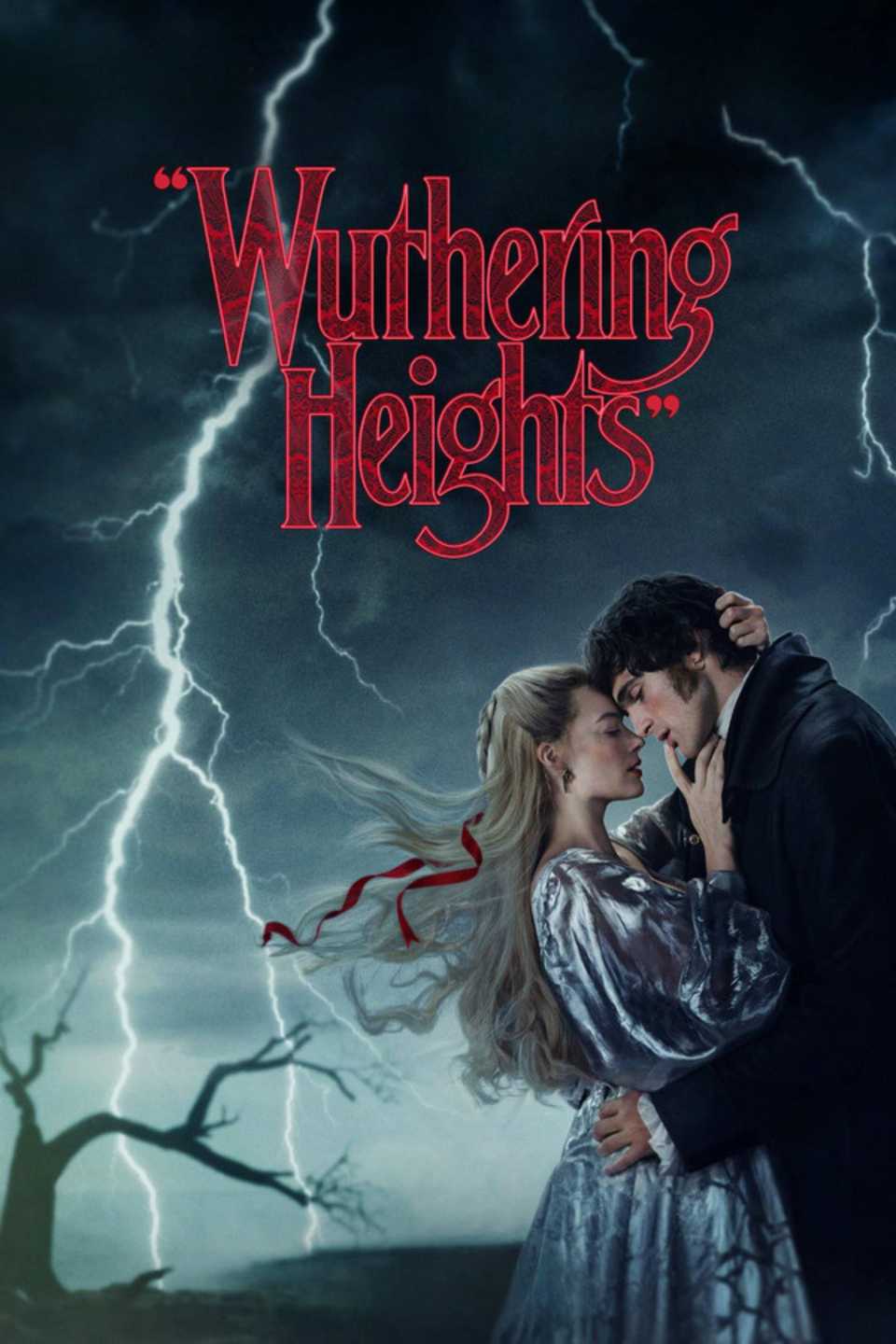
'Wuthering Heights' (1847)

Emily Brontë understood that love could make fools of us all. She knew that, sometimes, it could make people downright awful. In Wuthering Heights, she gives us Catherine Earnshaw and Heathcliff, two people whose feelings for each other seem to make them miserable more often than happy. There's jealousy and there’s resentment; there's wounded pride and compounding cruelty. And yet, Brontë makes it almost impossible not to conspire with them. We can see where their anger comes from, even when we can't begin to excuse what they do with it.
That's what makes the novel so interesting. Heathcliff has good reason to resent the people who mistreated him. But then he starts taking his revenge on people who had nothing to do with his suffering. And then there's Catherine, who can have us sympathizing with her one moment and wanting to shake some sense into her the next. We keep finding reasons to feel sorry for people we were condemning only a few pages earlier. Brontë doesn't give us a hero to admire or a villain to despise; she gives us people whose worst qualities are tangled up with the very things that make them human. And somehow, even when we know they're making a terrible mistake, we still want to see what they'll do next.
Wuthering Heights
2 10
- Release Date
- February 13, 2026
- Runtime
- 136 Minutes
- Director
- Emerald Fennell
- Writers
- Emerald Fennell, Emily Brontë
-

Catherine Earnshaw
-

Heathcliff
- Producers
- Margot Robbie, Tom Ackerley, Emerald Fennell, Josey McNamara
- Main Genre
- Drama
- Executive Producer(s)
- Anthony Tittanegro, Pete Chiappetta, Andrew Lary
KioskNews shows a cleaned-up reading view extracted from the publisher’s page — the original always lives on their site, not ours.