Article 370 to statehood demand: J&K’s evolving constitutional status
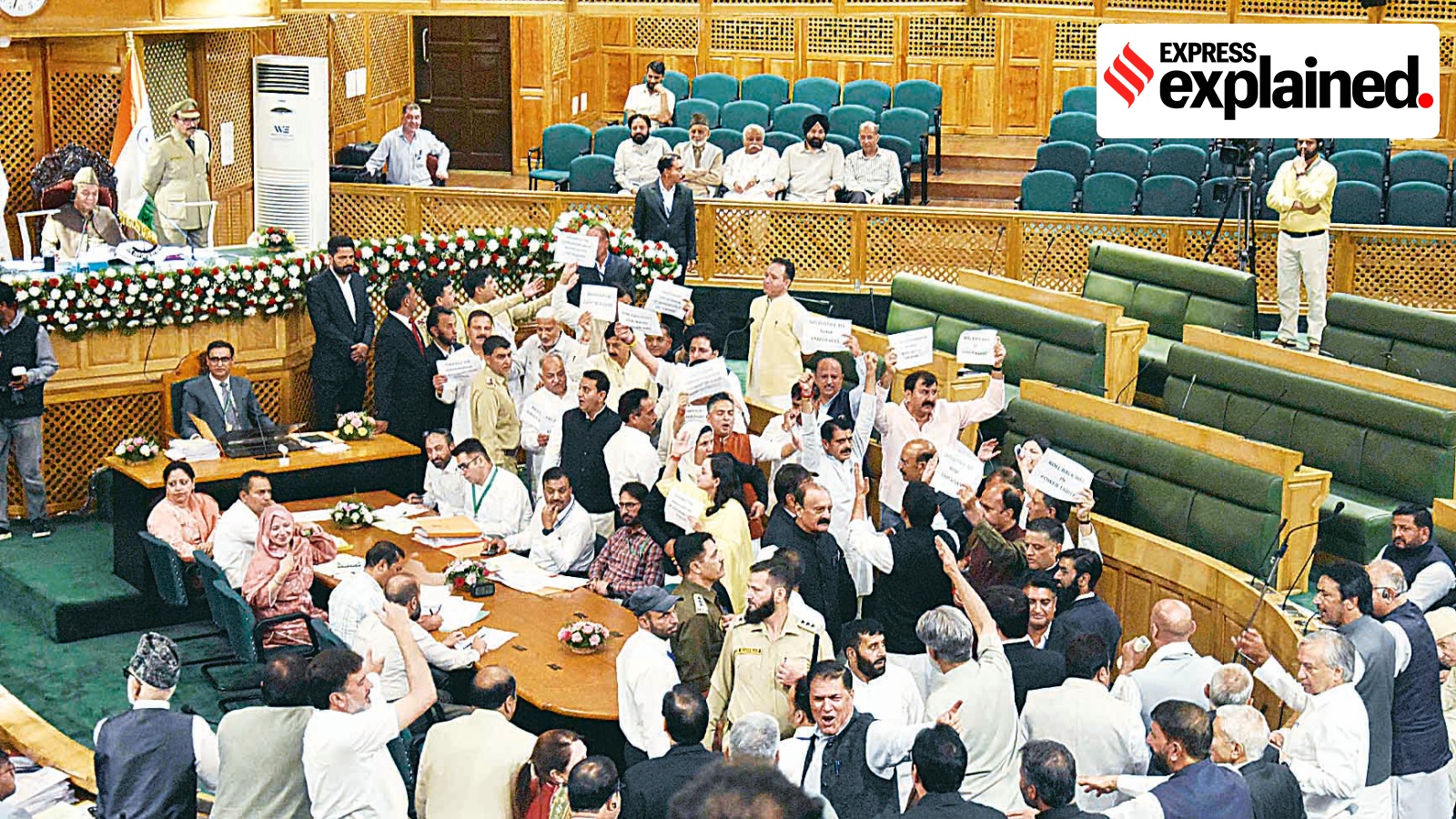
BJP MLAs protests interrupt Question Hour on the first day of the Jammu and Kashmir Legislative Assembly's Autumn Session, in Srinagar. (Express photo by Shuaib Masoodi)
7 min readNew DelhiSep 30, 2026 06:51 AM IST First published on: Sep 30, 2026 at 06:51 AM IST
As Chief Minister Omar Abdullah brought a resolution seeking immediate restoration of statehood for Jammu and Kashmir in the Assembly on Monday (September 28), several amendments were moved, some of which sought the inclusion of Articles 370 and 35 A, which existed before August 5, 2019. The amendments were later withdrawn, but brought under the spotlight the various constitutional provisions associated with Jammu and Kashmir.
What was Article 370?
Article 370 of the Indian Constitution provided for special status to Jammu and Kashmir, ensuring that Parliament could legislate on just three subjects in relation to the state — defence, foreign relations and communication. These were mentioned in the Instrument of Accession that made the princely state of Jammu and Kashmir a part of India. Jammu and Kashmir was allowed to have its own constitution, standing apart from other states of the Union. Only Article 1, defining the territory of India, and Article 370 itself applied to the state, apart from extension of subjects under the aforesaid three subjects.
KioskNews shows a cleaned-up reading view extracted from the publisher’s page — the original always lives on their site, not ours.