6 Cartoon Network Anime From The 2000s That Are Aging Like Milk
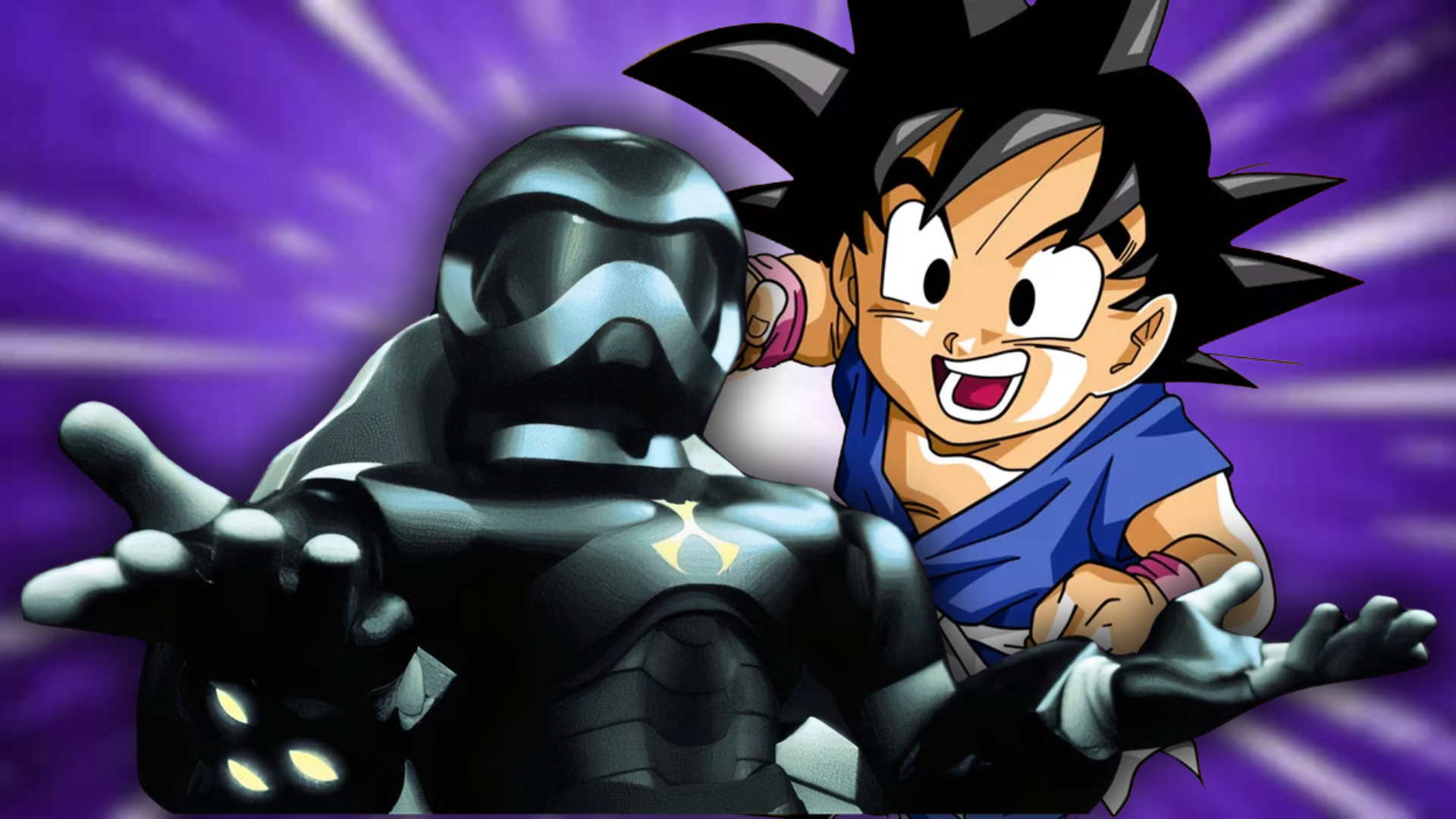
For many fans, Cartoon Network was the entry point to the world of anime. It played a major role in popularizing Japanese animation in the West since the late 1990s, and for decades continued to serve as the go-to channel for new viewers. Many of the biggest anime, such as Naruto, One Piece, Dragon Ball, and many more, have been broadcast on Toonami, but not every anime they presented has aged as well as others.
From 2000 to 2009, Cartoon Network aired a few series that time hasn’t been as kind to, whether because of outdated storytelling and animation or because they fell short of a series’ potential. While nostalgia can leave behind fond memories of certain titles, rewatching some of these anime today simply doesn’t have the same impact that many original fans and viewers once remembered.
Duel Masters

Duel Masters premiered on Cartoon Network’s Toonami in 2004. The series follows Shobu Kirifuda, a young boy who is determined to become a Kaijudo Master like his long-lost father. Using cards tied to five civilizations, Light, Darkness, Nature, Water, and Fire, Shobu gradually builds mana battles against increasingly difficult opponents in duels that summon monsters similar to Yu-Gi-Oh!.
While the series did well in Japan, its overseas reception was far less enthusiastic, leading to an early cancellation. Duel Masters did have a few saving graces, including its humor and willingness to break the fourth wall. Its limited run in the West was enough to understand that Shobu’s journey was a rather straightforward underdog story with unique creature designs and elemental civilizations. Yet, in the end, the anime simply failed to capture the attention of Western audiences.
Unfortunately, the series never did get better with time, especially since the anime relied on pop culture references, dated slang, and jokes that only land well with an early 2000s audience. Paired with the dated CGI animation, Duel Masters doesn’t provide an incredibly rewarding viewing experience, and its humor won’t always land as it was originally intended to.
Tenchi in Tokyo

Tenchi in Tokyo is part of the Tenchi Muyo! franchise, a series that is often credited for popularizing the harem genre in anime. Tenchi in Tokyo first premiered on Toonami in 2000 and takes place in its own alternate universe rather than being set within the same continuity as other Tenchi Muyo! series.
The story centers on Tenchi Masaki as he travels to Tokyo to train as a shrine priest and falls in love with a classmate. However, his alien roommates track him down, sparking intense jealousy all while a new supernatural conflict threatens Tenchi’s family and all of Tokyo. Tenchi in Tokyo was made to be a fun retelling of the original story, but instead it became a polarizing installment in the long-running franchise.
Whereas the original series thrived on high stakes and drama, Tenchi in Tokyo relied on formulaic tropes and was made with rather poor animation. Along with the fact that the central cast spent far less time together and many characters were completely stripped of what gave them depth and made them unique, Tenchi in Tokyo became notorious as one of the worst releases in its franchise.
Blue Dragon

Based on the Xbox 360 video game by Hironobu Sakaguchi (Final Fantasy) and Akira Toriyama (Dragon Ball), Blue Dragon seemed well positioned to become a major hit when it aired on Cartoon Network in 2008. It follows Shu, Jiro, and Kluke after their village is attacked, leading to them gaining the ability to manifest their shadows into powerful monsters, with Shu inheriting the Blue Dragon. Together, the three set out to put a stop to the tyrannical Lord Nene.
While the Blue Dragon video game remains a nostalgic classic JRPG, the anime series failed to hold up well over time due to several major factors. Studio Pierrot designed the anime to target a much younger audience, making the series repetitive, sanitized, lacking depth and character growth, and, overall, not offering high stakes despite the massive potential of its storyline.
Beyond that, the anime unnecessarily deviated from the plot, completely changing the character dynamics, and its episodes were heavily padded, making many feel like filler. Especially compared to the source material, the Blue Dragon anime fell short of expectations and didn’t deliver a satisfying payoff by the end of the series.
Rave Master

Rave Master is one of Hiro Mashima’s earliest works, preceding Fairy Tail and Edens Zero. It centers on Haru Glory after he inherits the title of Rave Master and sets out to recover the scattered Rave Stones to put a stop to an evil organization known as the Demon Card or Shadow Guard in the English dub. Along the way, he teams up with Elie and Plue as well as other loyal allies known as the Rave Warriors.
The anime was first released in Japan in 2001, but didn’t make it to Cartoon Network until 2004. When it did, it was unfortunately very heavily censored and sanitized to cater to a younger audience. The anime was also made on the heels of the manga, and the series was forced to stretch out certain scenes and confrontations with excessive dialogue and recap sequences.
That said, the most unfortunate part of Rave Master is that it abruptly came to an end without offering a proper conclusion. Instead, it leaves off on a cliffhanger while leaving several massive threads open, making a rewatch feel pointless or doomed to result in disappointment.
Bobobo-Bo Bo-Bobo
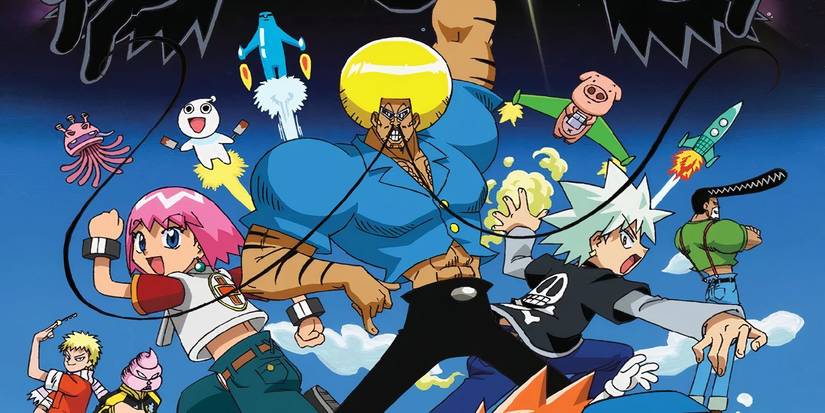
Bobobo-Bo Bo-Bobo was released on Toonami in 2005 and stands out as an unconventional, absurdist action anime that parodies traditional shōnen tropes. It centers on the titular character as he fights against the Chrome Dome Empire’s Hair Hunt, a regime that forces everyone to shave their heads and go bald. However, Bo-Bobo is armed with his Super Fist of the Nose Hair, and with his equally bizarre allies, he takes on any opponent who comes his way.
The series felt like a fever dream with its absurd premise and equally bizarre cast, power system, and world. For fans who enjoy absurdist, random comedy, Bobobo-Bo Bo-Bobo may still be considered a worthwhile watch. However, years after its debut, it’s become increasingly clear that the series is definitely a product of its time and the humor simply doesn’t land the same way it once did in the 2000s.
When it was first introduced, the series stood out for breaking multiple conventions, but when revisiting it, the anime now lacks the shock value that made it so unique in the first place. Paired with dated pop culture references and slang and its lack of a proper ending, Bobobo-Bo Bo-Bobo unfortunately hasn’t aged well.
Dragon Ball GT

Dragon Ball GT is set years after the conclusion of Dragon Ball Z. The original anime series first aired on Cartoon Network’s Toonami in 2003 and continued Goku’s story after he’s turned into a child following a wish on the Black Star Dragon Balls before they’re scattered across the universe. Along with Trunks and Pan, Goku begins a journey to recover them before the Earth is destroyed.
From the beginning, it was clear the spin-off struggled to find its footing, and by the time it did, the viewing experience had already been heavily impacted.
Among Dragon Ball fans, Dragon Ball GT is extremely polarizing, with some praising its ambition while others criticizing its execution. Decades later, it’s easier to admit that certain elements of GT were thrilling and offered fresh ideas to the franchise, however, at the end of the day, it’s hard to deny that GT is far from a perfect installment.
From the beginning, it was clear the spin-off struggled to find its footing, and by the time it did, the viewing experience had already been heavily impacted. Even certain arcs and scenes that were highlights of the series no longer feel necessary, given all the new material available to fans. For example, Super Saiyan 4 has found a new home in Dragon Ball Daima, and fans who enjoyed the Baby Saga will find that Dragon Ball Super’s Granolah the Survivor shares many similarities, making a rewatch of Dragon Ball GT feel even less worth it now than ever.
KioskNews shows a cleaned-up reading view extracted from the publisher’s page — the original always lives on their site, not ours.