Rushdie’s plea for artistic freedom takes centre stage in Naseeruddin Shah’s 27 Seconds
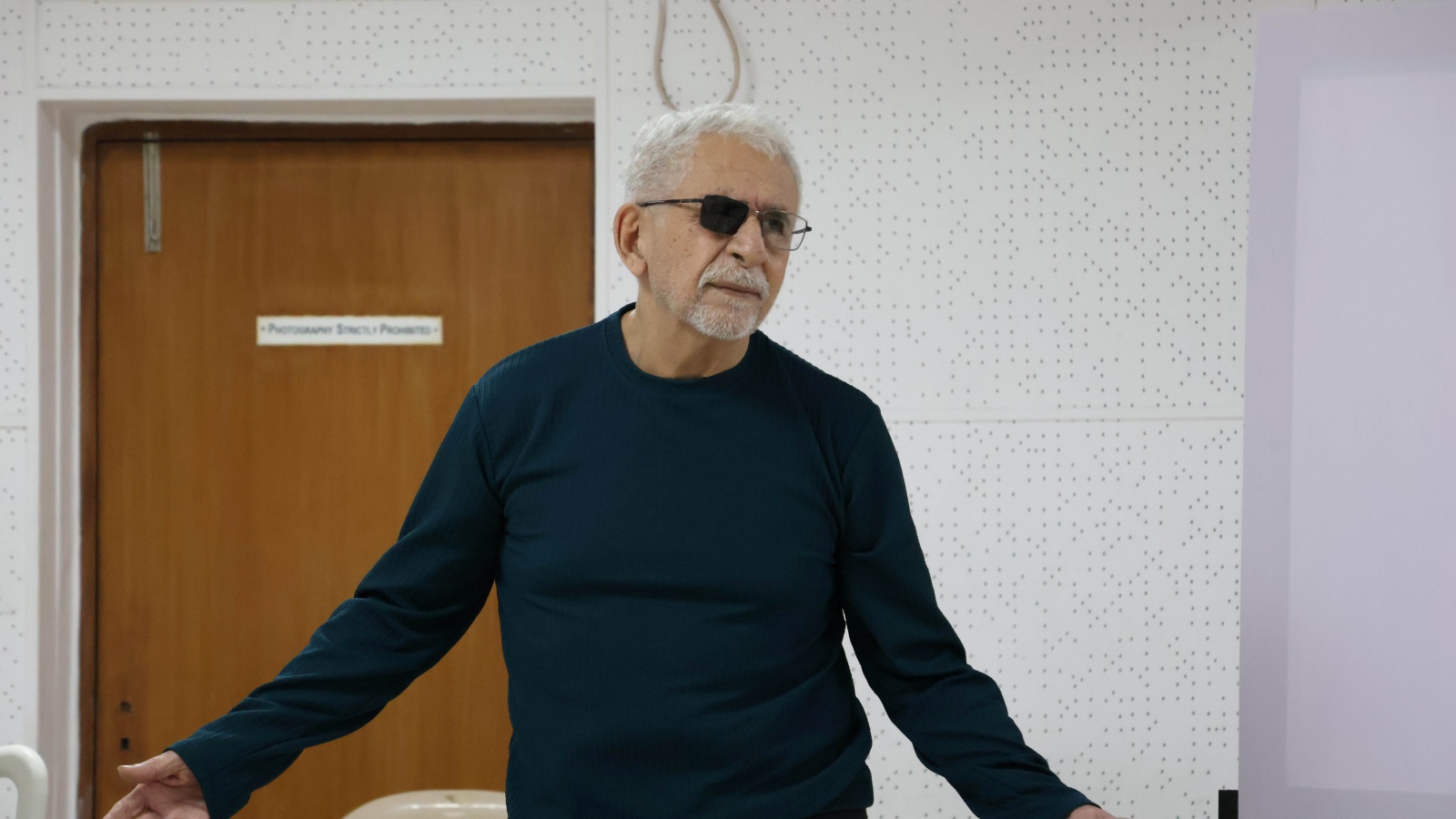
Removing his glasses, the right lens of which is darkened, Naseeruddin Shah addresses the audience with a plea for the freedom of artistic expression. “Art is not a luxury. It stands at the essence of our humanity and it asks for no special protection except the right to exist. Without art, our ability to think, to see freshly, and to renew our world would wither and die,” the actor-director says.
These lines are part of the closing dialogue of 27 Seconds, Shah’s upcoming play. The play is based on Knife: Meditations After an Attempted Murder, Salman Rushdie’s autobiographical account of the stabbing attack on him in August 2022 at New York’s Chautauqua Institution. The darkened lens is a reminder of the attack’s lasting consequences: the Booker Prize-winning author permanently lost sight in his right eye.
The play, adapted by Kolkata-based Koushik Sen and Shah from Knife, will open the annual Prithvi Theatre Festival in Mumbai, with performances scheduled for November 2 and 3. Its title refers to the approximate duration of the attack, during which Rushdie was stabbed around 15 times in the neck, eye, chest, abdomen, hand and thigh. The assault left Rushdie, in his own words, “without a normal field of vision” and with “one-eyed man perspective”.
Shah considered adapting Knife as a play about two years ago, following Sen’s suggestion. What inspired him to adapt the writer’s memoir is its insistence on “talks about the freedom of artistic expression”, he says. “Knife is not a justification of Rushdie’s approach to religion. We are not getting into that territory at all. It carries an important message, not just for our country but for the whole world. It’s a plea for freedom of artistic expression. I thought it was dramatic enough to hold an audience’s interest,” Shah elaborates.
Calling the book “very humane and poignant”, Shah says the play remains faithful to Rushdie’s writing, although it is structured to meet the demands of the stage.
Arghya Lahiri, a Mumbai-based theatre and cinema artist who is co-directing the production with Shah, says words spoken during the performance come from Knife. Talking about the process of adapting Knife, Lahiri says: “Koushik and Naseer worked on the stage adaptation a couple of years ago. They found a sort of structural hook to hang the show on. This year, Naseer further worked on the text.” He is quick to clarify that Shah is not impersonating Rushdie in 27 Seconds. In the play, the actor’s character is simply called the ‘writer’.
For Lahiri, one of the most striking aspects of Knife is how it departs from Rushdie’s familiar literary voice. Known for his playful and magical-realist fiction, the writer adopts a more reflective tone in this memoir, he observes. “In Knife, I was expecting an account of someone who had survived, first, the fatwa and then this horrific attack. It’s visceral and absolutely urgent when it talks about those things,” says Lahiri, “The book is full of ideas about art, censorship and the place of art in our lives.”
Story continues below this ad
For Lahiri, Rushdie’s survival represents more than a triumph over physical violence. “Rushdie looked it in the face and he survived it. The attack didn’t change the way he thinks, or his beliefs. What a remarkable victory that is. Now, I believe he’s free.”
Translating such a layered account into a theatrical performance, however, comes with its own limitations. The 100-minute-long play does not attempt to re-create the attack. “It is impossible to cover the ground that spanned months and years in a play — the attack, its aftermath, and the questioning that it brought. So, we’re not even going to try. This is a depiction of events that we wanted to convey to the audience,” he says.
For Lahiri, the play’s closing appeal for freedom, equality and compassion is particularly significant when spoken by Shah. “Naseer has consistently used his public voice to stand behind such ideas. It’s important that we reflect on it,” Lahiri adds.
After the opening, 27 Seconds returns to Prithvi Theatre for another run from November 24 to December 6. It will also travel to other cities, including New Delhi, Chandigarh and Bengaluru.
KioskNews shows a cleaned-up reading view extracted from the publisher’s page — the original always lives on their site, not ours.