The 6 Best Horror Books Released Since 1990, Ranked
A film shows you the thing in the hallway. A book gives you three details, lets you build the rest yourself, then quietly suggests your version is still not bad enough. That is why the right horror novel can contaminate an entire week. You close it, walk into another room, and realize some stupid part of your brain brought the book with you.
The six horror books on this list here frighten in completely different directions. One traps tourists somewhere vegetation itself feels malicious. Another lets an old act of violence mature for years before collecting payment. These are the ones I would recommend with a tiny bit of guilt, because once somebody reads them, certain images are theirs forever too.
6 'The Ruins' (2006)

Image via Knopf Doubleday Publishing Group
The Ruins traps four American tourists and their companions at an isolated archaeological site in Mexico, where a seemingly ordinary vine prevents them from leaving and begins revealing increasingly horrifying abilities. Scott Smith wrote it, and he gives the characters almost no useful escape route once they understand what they have walked into.
The horrible pleasure is how practical the fear becomes. Water runs low. Injuries get worse. Nobody knows enough Spanish or Mayan to communicate properly with the armed villagers guarding the perimeter. Then the vine starts imitating sounds, manipulating them, and invading bodies in ways I would rather let a new reader discover firsthand. The 2008 movie adaptation is nasty fun, but the novel has more time to grind hope down until every sensible idea feels temporary. I remember finishing it and feeling genuinely irritated at plants for a while.
5 'The Only Good Indians' (2020)

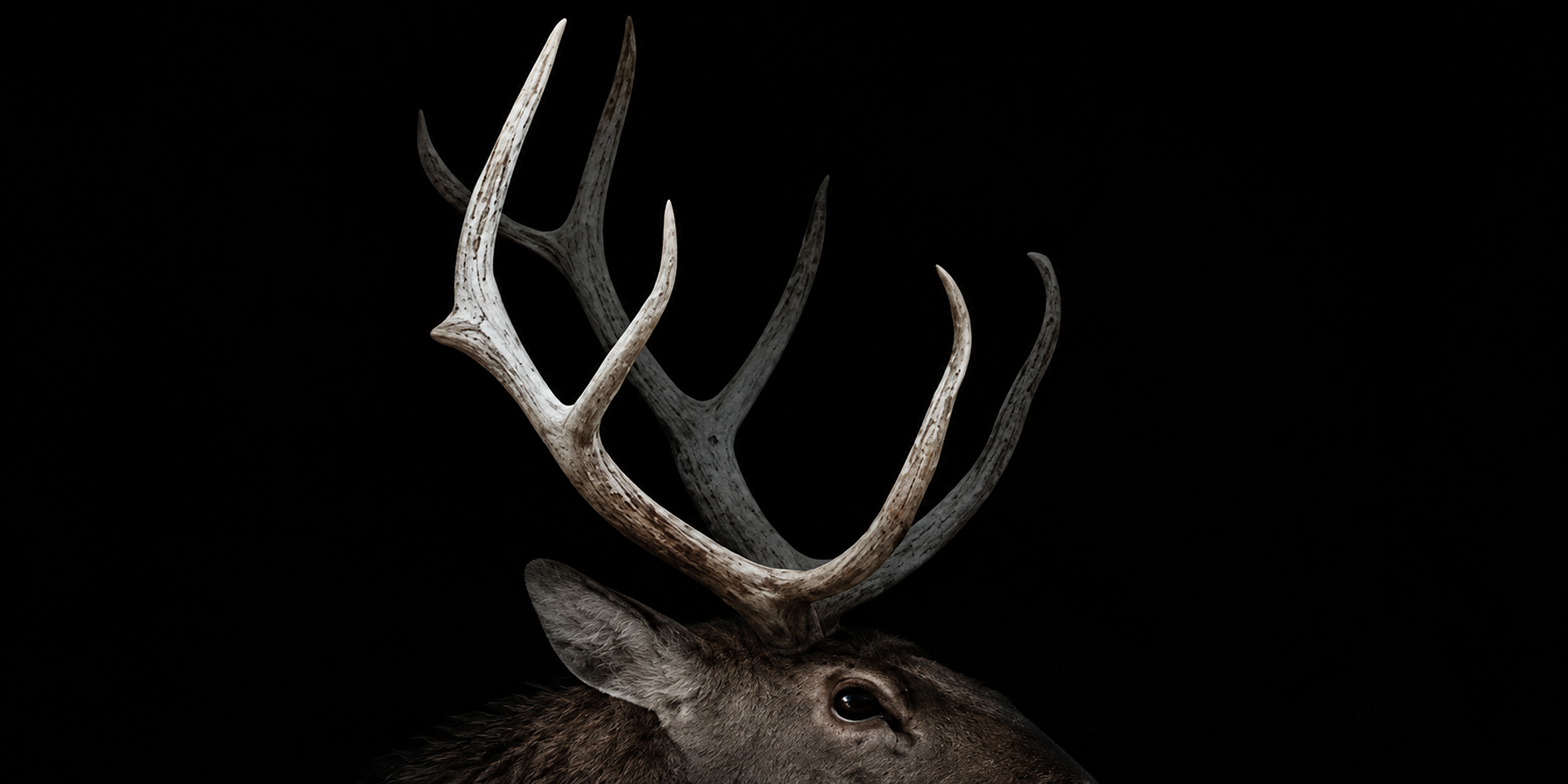
The Only Good Indians follows four Blackfeet men who are confronted years later by the consequences of an elk hunt they carried out on forbidden tribal land, as something tied to that killing begins pursuing them one by one. Stephen Graham Jones wrote it, and the horror is inseparable from memory, community, masculinity, and the things people convince themselves they left behind.
There is an early section with Lewis that becomes unbearable because he knows something is wrong long before he can explain it without sounding irrational. From there the book keeps changing shape. At points it feels like stalking horror. At others it becomes grief, revenge, or a reckoning between generations. And somehow basketball becomes crucial without ever feeling like a gimmick. Jones understands that guilt can survive perfectly well without the supernatural. The supernatural simply gives it teeth and enough patience to wait.
4 'The Fisherman' (2016)

The Fisherman is about two widowers, Abe and Dan, whose shared love of fishing leads them toward Dutchman’s Creek in upstate New York, a place connected to an old story about grief, resurrection, and a figure known as the Fisherman. John Langan wrote it, and the book gradually opens that modest setup into something much older and much larger than either man expects.
This one got me through sorrow rather than shock. Abe fishes because loss has hollowed out his normal life. Dan arrives carrying his own absence. Then a long story told inside the story reveals what happened around Dutchman’s Creek generations earlier, and suddenly a weekend fishing trip feels connected to something almost cosmic. The scale keeps expanding, yet the book never loses the simple temptation underneath it: if somebody you loved were gone, and there were even the smallest chance of getting them back, how far would you follow that chance? That question is scarier than most monsters.
3 'Let the Right One In' (2004)

Let the Right One In follows Oskar, a lonely and badly bullied twelve-year-old boy in suburban Sweden who befriends Eli, the strange new child next door, without initially understanding that Eli is a vampire who survives by feeding on people. John Ajvide Lindqvist wrote it, and his version of vampirism is far uglier and more physically grounded than the romantic mythology usually attached to it.
Oskar and Eli’s friendship is still the heart of the book, which is exactly what makes everything around them so disturbing. Oskar wants somebody who sees him as more than prey for bullies. Eli needs companionship while living inside a cycle of dependence and violence. Then there is Håkan, whose relationship with Eli pushes the novel into territory both film adaptations understandably soften. The Swedish 2008 movie is excellent, and Let Me In offered a strong American reinterpretation in 2010, but the novel is rougher around the edges and much more uncomfortable. It gives you tenderness without cleaning the blood off it first.
2 'The Terror' (2007)

The Terror reimagines the lost Franklin expedition by following the crews of HMS Erebus and HMS Terror after their ships become trapped in Arctic ice, leaving the men to face cold, starvation, disease, failing leadership, and a creature hunting them outside the ships. Dan Simmons wrote it, using the real disappearance of Franklin’s expedition as the foundation for a survival nightmare.
The supernatural creature is frightening. Honestly, the canned food may scare me more. Simmons spends so much time on scurvy, poisoned provisions, frozen ships, dwindling fuel, and men slowly realizing nobody is coming that the monster starts feeling almost unfairly unnecessary. Captain Francis Crozier becomes the person you cling to because competence is one of the only things left to trust. AMC’s 2018 adaptation turned the story into tremendous television and made brilliant changes for the screen. You do not visit that ice. You get stuck there.
1 'House of Leaves' (2000)
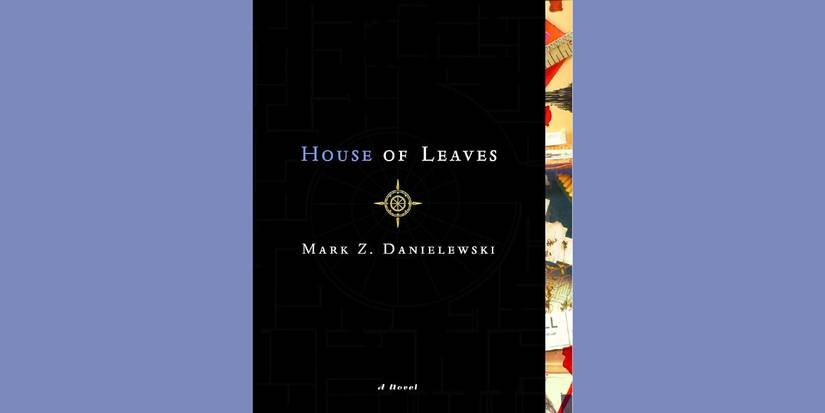
House of Leaves begins when Johnny Truant discovers a dead man’s manuscript analyzing a documentary called “The Navidson Record,” which supposedly chronicles a family discovering that their new house is slightly larger on the inside than it is on the outside. Mark Z. Danielewski wrote it, and that single impossible measurement eventually opens into hallways, rooms, footnotes, missing sources, fractured typography, and several competing layers of narration.
This is the rare horror book where the physical object in your hands becomes part of the problem. Text starts shrinking. Pages become nearly empty. Sentences run sideways. Footnotes lead into other footnotes and sometimes into sources that never existed. You can read it obsessively, casually, analytically, or while increasingly convinced that you missed something important fifty pages ago. Beneath all the formal chaos is a beautifully simple fear: a home, the one place that should obey familiar dimensions, has developed an interior no human being can measure. There is no definitive film adaptation to replace that sensation, and I hope there never is. House of Leaves needs you holding the book, turning it around, and wondering whether you are reading it correctly.
Collider Exclusive · 8 Questions · 2 Minutes What Is Your Biggest Horror Nightmare? Elm Street · Chucky · Scream · The Conjuring
Four horror franchises. Four completely different ways of scaring you. One waits until you fall asleep. One makes sure nobody believes you. One is already in your group of friends. And one is in the house with your family. Answer eight quick questions about how you actually watch horror, and find out which nightmare was built for you.
😴Elm Street(Freddy Krueger)
🧸Chucky(Child's Play)
📞Scream(Ghostface)
🕯️The Conjuring(The Warren Files)
01
Which horror scene makes you cover your eyes? Four classic images. One of them is worse than the others for you.
02
You are home alone and you hear a noise. First thought? Everybody has one. It arrives before you have decided anything.
03
Which horror movie rule would you break first? Everybody thinks they would survive. Almost nobody actually does.
04
Something genuinely frightening happens. What do you do? Not in a film. In your actual living room, tonight.
05
How do you actually watch a horror film? Be honest about this one. Nobody is checking.
06
Somebody offers you serious money. Which do you still refuse? The amount does not matter. There is one on this list you are not doing.
07
Which feeling stays with you a week after the film? Good horror does not stop when the credits do.
08
Something wakes you at 3am. What is the worst possibility? Eight questions in, this is the one that decides your nightmare.
The Lights Just Went Out Your Nightmare Is…
Four franchises, four completely different ways of getting underneath your skin. This is the one built out of your particular fear, why it works so well on you, and what it would leave behind.
Elm Street
Your nightmare does not wait outside the door. It waits for you to close your eyes, which you are going to have to do eventually, because nobody has ever won that particular argument.
- Freddy is horror's cruellest idea: a threat that lives in the one place you cannot guard, cannot lock, and cannot avoid forever.
- You are the one who is fine during the film and wide awake at two in the morning. Your own head is where this does its damage.
- These films understood exhaustion as a horror engine. The kids on Elm Street do not lose because they are weak. They lose because they are tired.
- You can lock every door in the house. You still have to sleep.
Chucky
Your nightmare is not really the doll. It is the face of the person you tell, and the way they decide, very kindly, that you have imagined all of it.
- Chucky works precisely because he is absurd. That is the trap: the more accurately you describe him, the less anybody is going to believe you.
- You are the one shouting at the screen because the characters are not listening. You know that feeling from real life too.
- The franchise is at its best when the adults in the room are the real obstacle, and you have met those adults.
- By the time somebody finally believes you, you will have handled most of it on your own.
Scream
Your nightmare has your number, knows your name, and has almost certainly been inside your house before. The worst part is that you already know them.
- Scream is the only one of these where the killer takes the mask off and turns out to be somebody who was at the party.
- You are the person who calls the twist out loud before it lands. You watch people the same way you watch films.
- The franchise made the rules of horror part of the plot, which means the survivors are the ones paying attention. You would be paying attention.
- Everybody is a suspect, including the person who just offered to walk you home.
The Conjuring
Your nightmare is not really about you. It is about the people asleep down the hall, and the feeling that whatever is here is not interested in leaving.
- The Conjuring films are domestic horror. The house, the family, the perfectly ordinary room that quietly stops feeling ordinary.
- Your instinct is to get everybody into one room. Your fear is protective rather than personal, which is rarer than it sounds.
- This is the one franchise where belief is the weapon. The people who come through it are the ones who are not alone and refuse to be.
- Whatever is here did not come for you. It came for the household, and you are the one standing in the hallway.
KioskNews shows a cleaned-up reading view extracted from the publisher’s page — the original always lives on their site, not ours.