Selfies, queues and confusion, but Huanggang Port’s wow factor shines through
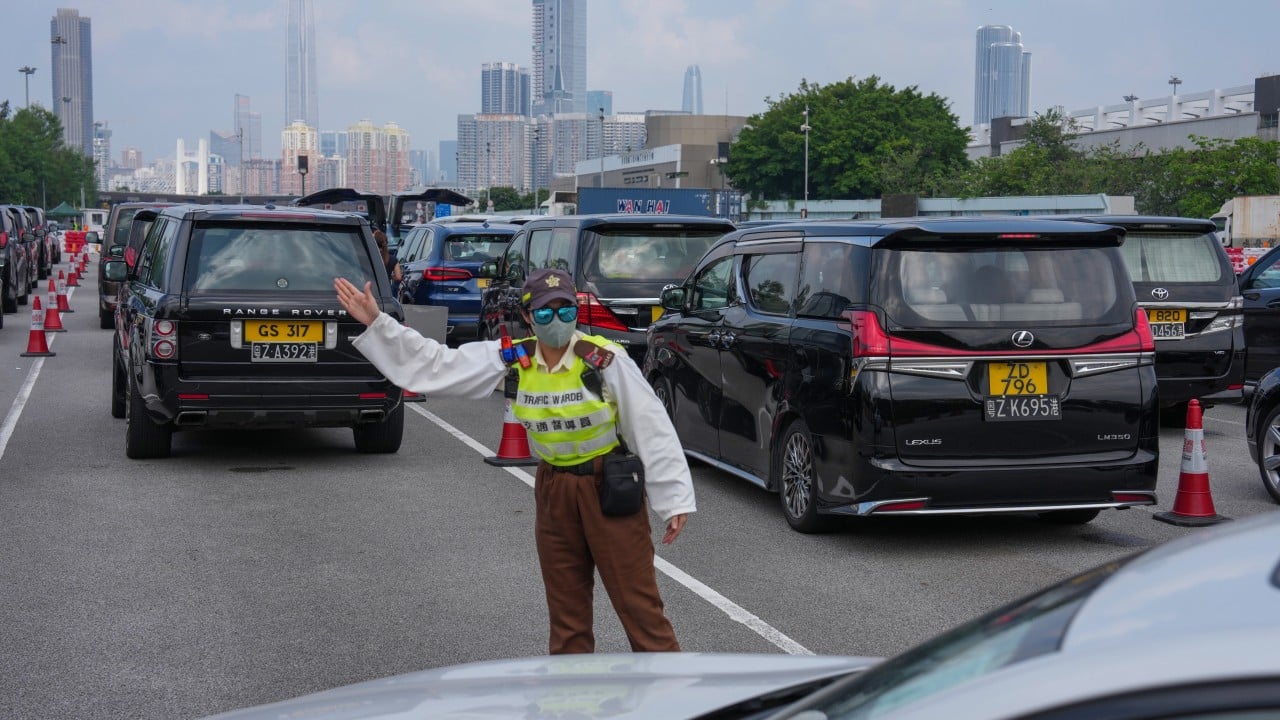
The much-anticipated opening of the revamped Huanggang Port border crossing between Hong Kong and Shenzhen on Monday was marked by excitement, eagerness and confusion.
At around 8am, 1½ hours after the control point opened, many private vehicles were neatly lining up for immigration clearance. The use of new technology, a new location and a new facility meant that extra time and patience were needed.
Visitors, mostly tourists and retirees travelling on foot, had a wow moment inside the modern facility, prompting plenty of selfies.
Vehicles queued at a temporary traffic buffer zone on San Sham Road in the morning before making their way to the new facility, where police cordoned off roads and directed traffic towards the building.
03:45
Revamped Huanggang Port officially opens amid bid to boost Greater Bay Area connectivity
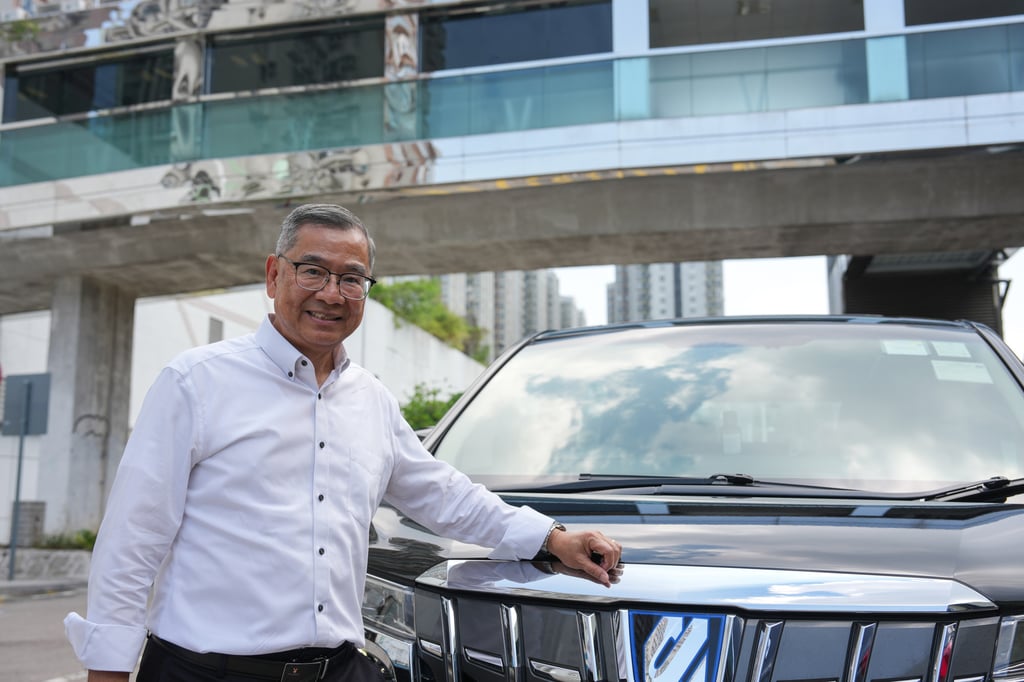
Driver Ho Shun-ping, in his sixties, waited 25 minutes in the buffer zone and another 30 minutes at the “integrated information collection device” before finally crossing the border into mainland China by car.
“It actually took a long time because many drivers were using the device from the car for the first time,” he said.
“They parked a bit far from the device and had to jump out of the car to check. The staff inside the booth then had to help manually one by one.”
Ho said the process had reversed the usual pattern at the old crossing: cars used to wait for passengers crossing on foot, but on Monday it was the other way round.
“The overall process took longer than expected compared with my usual experience at the old crossing,” he said, adding that he used to spend only 10 to 20 minutes crossing at the old checkpoint, “even waiting for five to 10 minutes would have been long enough in the past”.
The opening of the facility marked the end of the 37-year run of the Lok Ma Chau/Huanggang control point, which began operating in 1989.
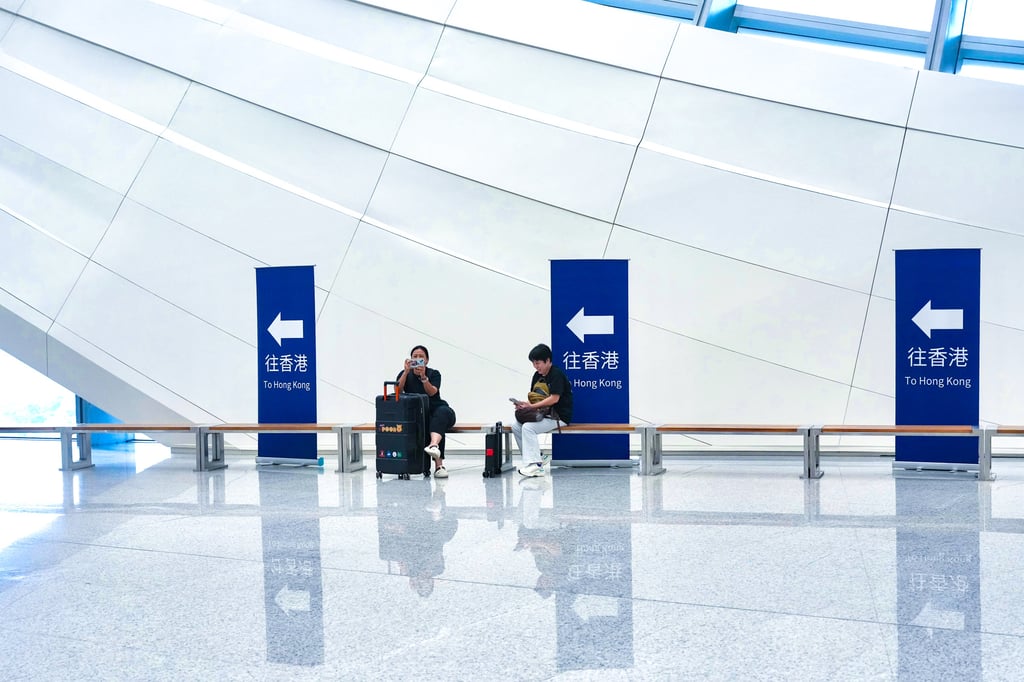
Chief Executive John Lee Ka-chiu on Sunday called the revamped port “a critical milestone” for connectivity in the Greater Bay Area, saying the landmark project would allow the city to better integrate into and serve the overall development of the country.
He described it as the most important 24-hour passenger land boundary checkpoint, with a designed daily capacity of 200,000 passenger trips.
The border crossing has introduced a new “collaborative inspection and joint clearance” model, which is designed to cut clearance time from about 30 minutes to around five.
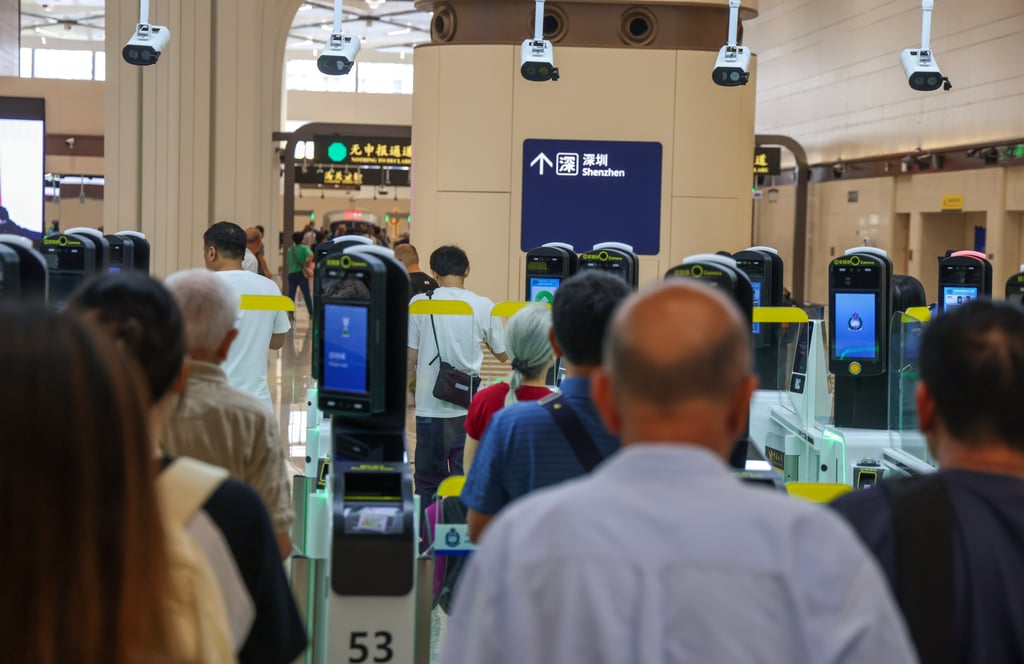
Eligible passengers can complete both departure and entry clearance procedures by presenting one identity document and passing through an automated channel with three gates.
Ringo Lee Yiu-pui, honorary life president of the Hong Kong, China Automobile Association, urged Shenzhen authorities to update electronic maps and road signs. He said unclear signs had caused confusion among Hong Kong motorists.
“Some drivers spent at least 10 minutes around the Shenzhen side of the border and could not tell the road signs for the new or old border [crossing],” Lee said.
Three retirees – a couple surnamed Liu and their friend surnamed Lam – set off from Sheung Shui to visit the crossing as a tourist attraction. They spent almost 30 minutes crossing the border.
That included a bathroom break, photo-taking at every opportunity, connecting to the free Wi-fi, and asking an immigration officer how to register for the “joint clearance” channel.
The actual time they spent crossing through the “joint clearance” channel was less than a minute.
The spaciousness and the fluid design of the checkpoint building made it a popular photo spot for travellers.
The Liu couple took photos on the escalators leading to the departure hall on level 5, while Lam stopped to photograph a vast glass wall overlooking Shenzhen as he passed the arrival hall on level 4.
“It has high ceilings. The environment’s great, the air quality’s great. It’s very comfortable,” Mr Liu, 80, said.
Shortly after 1pm, queues of about 20 people had formed at each of the “joint clearance” lanes in operation. The three retirees had waited for 12 minutes.
Five minutes into the wait, Lam said he wished authorities would open all the clearance lanes. While most of the automated lanes were in use, about five were cordoned off at the first gate.
“They should open all the lanes so we don’t have to queue. If they had expected many people to come, then they should open up more lanes,” Lam said.
All three retirees said they preferred the Heung Yuen Wai checkpoint, which they could reach with a HK$2 fare from their homes in Sheung Shui.
The fare to the revamped Huanggang checkpoint was HK$4.10 as they first had to take a minibus to the San Tin interchange before switching to a bus.
“We have already retired, so we like to save every penny we can,” Lam said. “I’d come here if I needed to, but not for the sake of it again.”
KioskNews shows a cleaned-up reading view extracted from the publisher’s page — the original always lives on their site, not ours.