In 1841, flesh and blood rained down in Tennessee
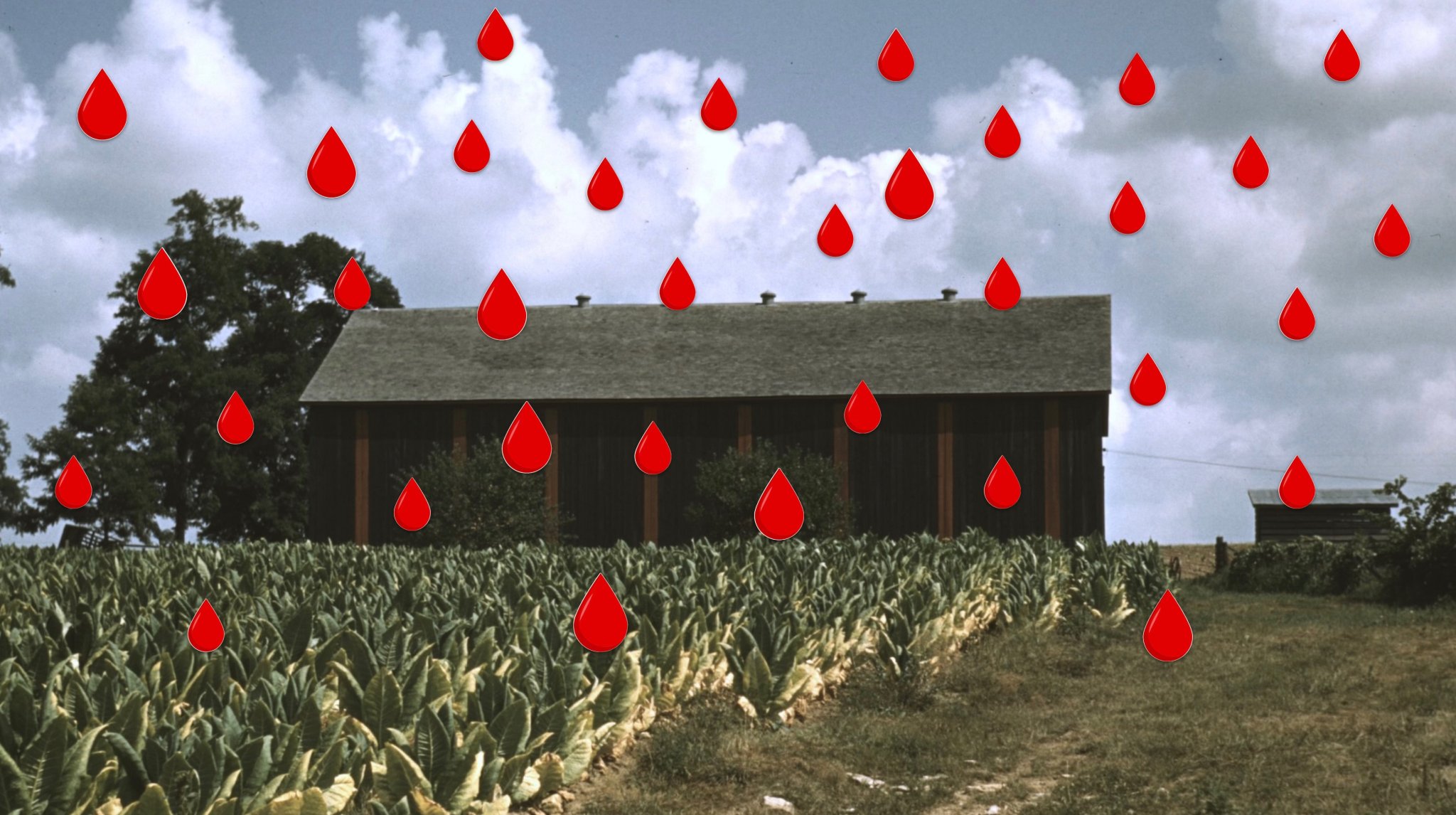
One August day in 1841, near Lebanon, Tennessee, two enslaved people heard the sound of rain pattering on the tobacco leaves around them. But this was no ordinary rain: It was a deep red color. The sky, it seemed, was raining blood. Even more alarming, small pieces of flesh and fat seemed to be raining down, too. The two witnesses took the leaves inside to show their enslaver, Mr. E.M. Chandler, who quickly reported the event to his neighbors.
In an attempt to clear things up, pieces of fallen material were sent to Dr. Gerard Troost, a renowned scientist and collector of natural history specimens. Upon opening the package, Troost noted that it “had the offensive smell of putrid animal matter.” After a thorough analysis, Dr. Troost’s assessment was clear: “There is no doubt but that this substance is animal matter and belongs to our globe.”
The flesh and blood fall near Lebanon in 1841 was far from the only time blood rain or flesh has fallen from the sky, nor was it the last. Both experts and lay people have put forward various explanations for blood rains and flesh falls, including animals being torn up by storms, hoaxes, carcasses dropped by vultures, meteor dust, algal spores, or even red discharge from butterflies.
How Nat Turner’s famous revolt connects to Lebanon’s 1841 blood rain
The 1841 blood rain incident in Lebanon has to be contextualized within the buildup to the Civil War, and a massacre that happened almost exactly 10 years earlier. In 1831, an enslaved carpenter and preacher named Nat Turner in Southampton, Virginia began having visions of “lights in the sky to which the children of darkness gave other names than what they really were—for they were the lights of the Saviour’s hands,” followed by sightings of “drops of blood on the corn, as though it were dew from heaven.”
When Turner later found hieroglyphic marks written in blood on leaves in the woods, he took it as an omen: Shortly afterwards, he led one of the deadliest uprisings of enslaved people in U.S. history. From August 21 to August 23, 1831, Nat Turner and his followers killed 55 white people. In response, local militias and roving mobs killed an unknown number of both enslaved and free Black people. Nat Turner and some of his followers were sentenced to death and executed.
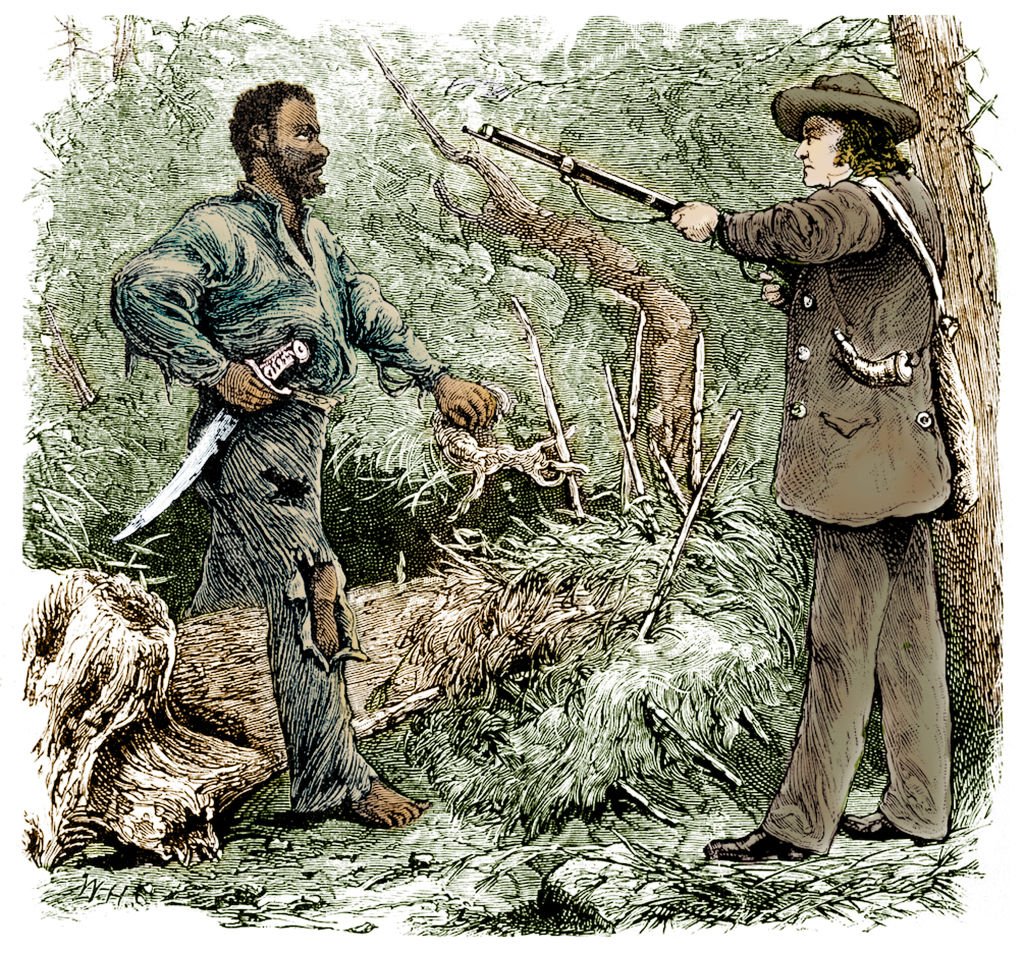
When enslaved people discovered blood on the tobacco leaves in Lebanon in 1841, the fuss was enormous, and echoed Nat Turner’s accounts of bloody rain. Locals in Lebanon wrote about their local blood rain incident in letters to relatives, newspapers from near and far reported on it, and the farm became somewhat of a circus.


A visitor from another town, William F. Cooper, wrote in his journal that “the smell of this fallen matter was very offensive, polluting the whole air.” Cooper also described the extent of the fall as “from 40 to 60 yards in width, and six or eight hundred yards in length,” equivalent to around six to eight football fields.
After Dr. Troost later analyzed the material and determined it was, in fact, animal matter, the flesh fall was reported in the American Journal of Science. Troost’s primary theory was that a strong wind “might have taken up part of an animal which was in a state of decomposition, and have brought it in contact with an electric cloud, in which it was kept in a state of partial fluidity or viscosity.”
Was the blood rain in Lebanon, Tennessee, a hoax?
After the Lebanon flesh and blood fall, stories of Nat Turner and the slave rebellion were revived in full force. Many white Southerners feared another uprising. On the other hand, Northerners saw the blood rain as a heavenly critique on the practice of slavery.
On September 10, 1841, The Wisconsin Enquirer reported that residents in Northern states had likened the Lebanon event to the blood fall in Virginia that occurred before Nat Turner’s uprising, and “construed the mysterious shower [in Lebanon] into a judgment from heaven, designed to warn the slave-holding states of the iniquity of their traffic in flesh and blood.”
The mystery of the flesh and blood fall in Lebanon was never totally resolved, and was eventually dismissed as a hoax perpetrated by the two enslaved people who witnessed it first. This was later rebutted in The Western Journal of Medicine and Surgery in December 1841.
“People have a need for an explanation, just any explanation, regardless of whether or not it is the explanation,” says Tom Maxwell, writer, blood rain researcher, and host of The Night Parade podcast. “In this case, I think culturally a lot of people needed it to be a hoax.”
Other blood rains and flesh falls across history
Blood rains and flesh falls stretch far back into history. They are mentioned in both The Iliad and the Bible. Philosophers, scientists, and storytellers have described numerous incidents throughout the centuries, including in ancient Rome, medieval Ireland, the 19th century United States, and around the world today.
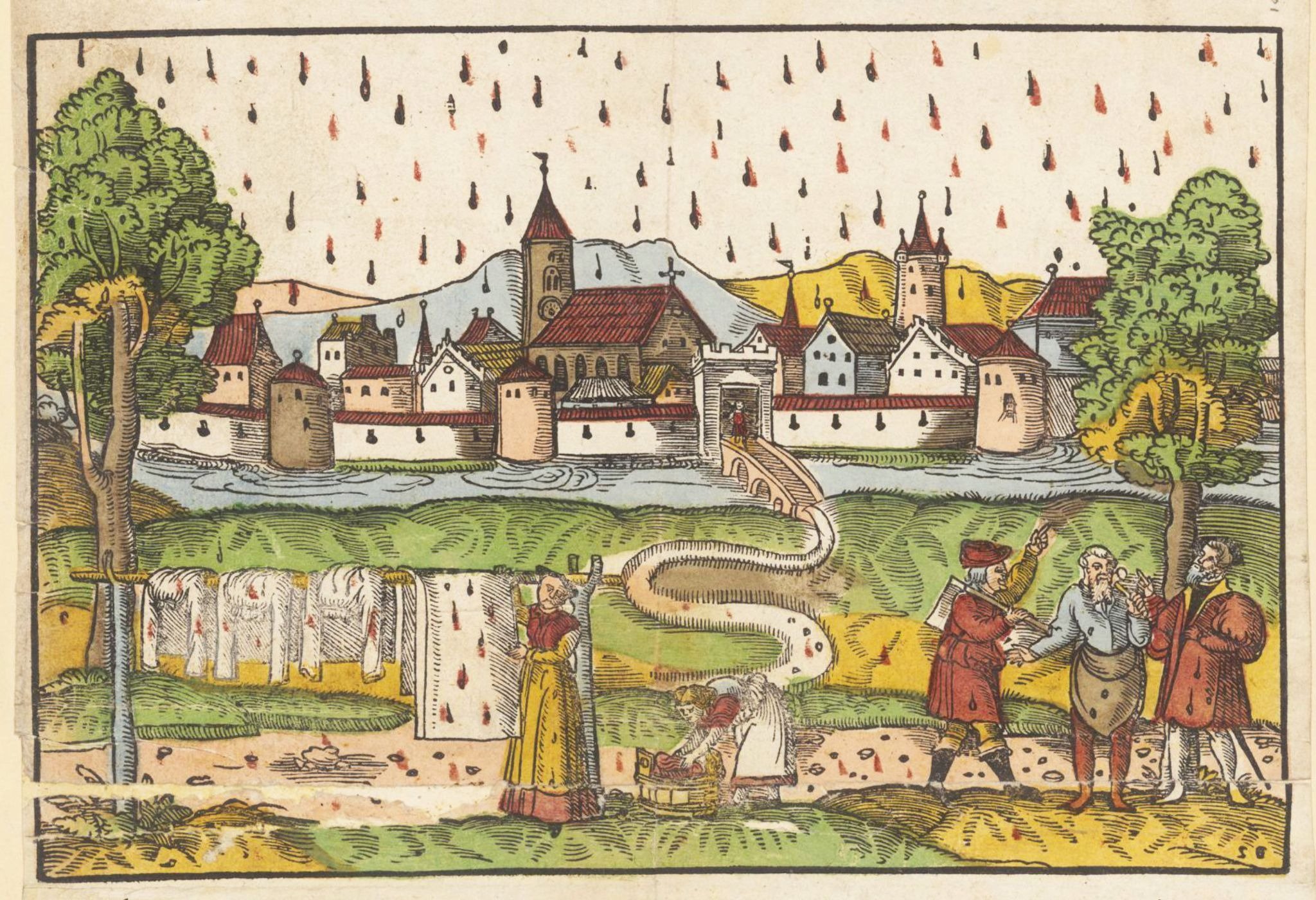
Nineteenth-century scientists even attempted to find a scientific reason for these falls with microscopes. These scientists could determine “it was always blood. It was always animal material,” says Maxwell. “The question was how did it get where it got, not what it was.” Contemporary scientists have narrowed in on these two separate questions: First, what is falling from the sky, and second, how did it get in the sky?
While blood rains and flesh falls are often discussed together, there are likely different mechanisms behind them. One common explanation for flesh falls lines up with what Troost proposed in 1841: a strong storm, or even vultures, can sweep flesh up into the sky and drop it down later. Strange weather events like this are not unheard of, and fish falls, insect tornadoes, or even frogs falling from the sky have all been documented before.
Blood rain, on the other hand, has a completely different explanation. In these cases, the rain is red because it likely contains dust or microorganisms rather than animal matter. This was hard to detect in the past.
“They didn’t have the science,” says Dr. Patrick McCafferty, a researcher at Chemnitz University of Technology who has studied how myths and literature often record real-world comets, meteor strikes, or other catastrophes. “So [from their perspective] this seems to be something sent by God to punish them.”
The reality is that since Christians were largely familiar with the concept of an impending doomsday and blood rain in the Bible, “They would interpret these things as blood,” says McCafferty. “They’re also primed to look out for these signs of the end of the world.”
21st century blood rain in Kerala, India
Bloody rains studied in the past few decades have given clues as to what the substance may be, at least in some cases. One key example of this is the blood rain that fell in Kerala, India, in 2001.

Strangest Weather on Earth: Red Rain
Researchers collected samples of the red rain, and found it contained algal or seaweed spores, which caused the red coloration. Another research group argued the Kerala blood rain was the result of dust blown over from desert areas in West Asia.
Yet another group asserted that the Kerala blood rain was red because it was full of “bacteria-like material that had been swept to Earth from a passing comet.” They argued that if a comet had broken apart in the Earth’s atmosphere, extraterrestrial particles could have made it into the clouds, raining down as blood-red droplets.
Despite the frequent co-occurrence of meteors or comets and blood rain (a route of investigation also pursued by McCafferty) the explanation has not been widely adopted.
Blood rains really do happen, but we still don’t fully understand them
With so many eyewitness accounts of blood rains and flesh falls across the centuries, it’s hard to dismiss the phenomenon. “Chances are, it was real. Chances are, it was caused by something,” says McCafferty. “I’m conscious that things happen that do not have a good explanation.”
When it comes to meat, fat, or red rain falling from the sky, we shouldn’t be too quick to dismiss what it really looks like: flesh and blood. “The classic example is the [French Academy of Sciences] completely dismissing accounts that stones fell from the sky,” says McCafferty.
“So when anybody would come to them with a meteorite, they would say ‘This was hit by thunder or this was hit by lightning. This is a thunderstone. It was hit by lightning. It did not fall from space. It’s stupid to believe stones fall from space.’ And then it turns out that, oh, actually they do.”
Many questions about blood rain and flesh falls remain unanswered. In Maxwell’s opinion, that’s okay: “In the face of the inexplicable,” he says, “I think the most appropriate epistemological response is ‘I don’t know.’”
In That Time When, Popular Science tells the weirdest, most surprising, and little-known stories that shaped science, engineering, and innovation.
KioskNews shows a cleaned-up reading view extracted from the publisher’s page — the original always lives on their site, not ours.