Rapper and actor Eve looks back: ‘I was the only girl in the boardroom in major label meetings – that Philly girl had to come out’

Born Eve Jihan Jeffers in Philadelphia in 1978, rapper Eve released her debut album, Let There Be Eve … Ruff Ryders’ First Lady, in 1999; it entered the Billboard 200 at No 1. She followed its success with the platinum-selling Scorpion, which went on to win a Grammy for the single Let Me Blow Ya Mind. As an actor, she appeared in the Barbershop films and starred in her own sitcom, Eve. She married London-based entrepreneur Maximillion Cooper in 2014; together they have a son, and she is stepmother to his four children. Eve will tour the UK and Europe in 2027.
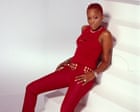
This was taken in Miami, where I was recording Scorpion. I was obsessed with red because of its astrological affiliation with Scorpio – everything had to be that colour. My hair is short because I convinced my hairstylist to put both a perm relaxer and colour in, which you’re not supposed to do. All my hair fell out, but thankfully it looked good. I felt powerful and sexy.
I knew I wanted to be a rapper as far back as 15. I was that kid at school who tried her hand at everything, whether it was tap dance or violin. I started rapping at 11, and four years later I said to my mum: “I know you probably want me to go to college, but I really want to do music.” I thought she would be upset, but she wasn’t. There was only one plan B, and that was special-effects makeup. Some days I still think about retraining in it.
Coming from Philadelphia definitely shaped the rapper I went on to become. Philly girls are known for being feisty, for not taking no for an answer. It’s the underdog city – close to New York, but people usually skip over us to get there – and as a result Philly people are used to working their asses off. Growing up, it was a lot more dangerous than it is now, so I saw a lot of drugs and guns, but the dealers were also guys who looked out for me – they were friends. I still knew I wanted to get out. I had a sheer determination that things would turn out different for me.
My rap battles started at school. I was battling the boys, often in patois, which is so ridiculous, because I’m not even Jamaican. I would talk about their dick size, but also how they lived with their mum and were broke and taking the bus to school, ignoring the fact that I was, too. I loved words, and when I wasn’t in a battle trying to destroy someone’s ego, I was also obsessing over poetry.
In my late teens, I met Ma$e. Like a birdie on my shoulder, he started telling me I should take rap seriously. After that, I got signed to Dre’s Aftermath. At the time, I was calling myself Eve of Destruction, because I really was that girl – I had an attitude. Eight months later, I got dropped. It was devastating to have my dream taken away, but if I hadn’t experienced that initial failure, I probably wouldn’t have had the success I had next. After I had spent a month depressed on my mum’s couch, Jimmy Iovine called and said I should meet Ruff Ryders [a hip-hop label and collective that included DMX, the Lox, Jadakiss, Swizz Beatz].
Ruff Ryders were my safe place. I’d gone through a lot of haunting experiences trying to get my music out there previously – the kind of bullshit that all women go through in most industries. I’d go to New York to play my demo to some producer, and instead of taking me seriously he’d hit on me and say, “Let’s go for dinner.” By comparison, Ruff Ryders were the opposite. If anything, they were trying to cover me up, as I loved to wear little heels and shorts and tube tops. They were like: “Here, put this vest on! Get these Timberlands on!” They also taught me how to format a song. At the start, I was just a battle rapper, but working with them was a hip-hop boot camp.
All of which led to the success of Scorpion. I was a huge fan of all genres of music, from Biggie Smalls to No Doubt, and when I wrote Let Me Blow Ya Mind I knew we should get Gwen Stefani to feature on it. I was the only girl in the boardroom in those major label meetings and that Philly girl often had to come out. They were initially resistant because I was a rapper and she was a rock star, but I said: “Guys, this will work. Trust me.”
Even though I won that particular fight, the response to a lot of my suggestions was often: “Oh, that’s cute. We’re not doing that.” I felt I couldn’t be my full, excited self because there were so many miserable motherfuckers around me in those boardrooms. The atmosphere made me feel like I had to suppress myself and stay small. Decades later, my old A&R actually called up and apologised. He said: “I really wish we listened to you a little bit more – you had some good ideas.” That was validating.
When things took off, there was no time to celebrate. I was on to the next studio, on to the next show. But I remember hearing my voice in an SUV on Hot 97, one of the biggest hip-hop radio stations in New York, and thinking, “This is it. This is the moment.” I’d meet young women with the same paw prints tattooed on their chest as mine, who would tell me it had gotten them in trouble with their parents. “This is amazing,” I’d say, “but I did not tell you to do that!”
after newsletter promotion
The grind was gruelling, and in the aftermath of Scorpion I was burned out. I struggled with anxiety and depression, but nobody talked about mental health back then. Instead, I was encouraged to drink and get on with whatever we had to do that day. Like every young artist, I was definitely tortured. I hung around the wrong people, did the wrong things to try to cope, and went down the path of self-medicating. There were many moments when I would call home and cry to my mum and tell her: “I can’t do this any more.” I was sad and lonely and my friendships were breaking up. I was always thinking, “Wait, who changed? Did I change? Did you? Did we change?” I’d lost a sense of belonging that I’d always had.
I realised that being a musician was a gruelling ass life, and had a period of time where I straddled the disciplines of being a rapper and actor and a TV personality. But that was exhausting, too. I would go to the club, get in at 2am, and have to be on set at 9am, all of which was unsustainable. One day I looked at myself and thought, “What life do you really want? I just want to be happy and healthy.” I started implementing things like therapy, acupuncture and healing work. I still have days where I am overwhelmed – life is not perfect – but at least I have the tools to cope.
Rapping in my 40s is a different act than it was in 2001. What remains is my feistiness – it still comes out when it needs to. But this time I am present. I don’t have anybody breathing on my neck, saying: “We’ve got to sell these records.” I also have a total sense of wonder about my life, that it’s taken me this far. I wake up and think, “Damn. How did a girl from Philly get here?”
KioskNews shows a cleaned-up reading view extracted from the publisher’s page — the original always lives on their site, not ours.